Common Yet Endangered Palms

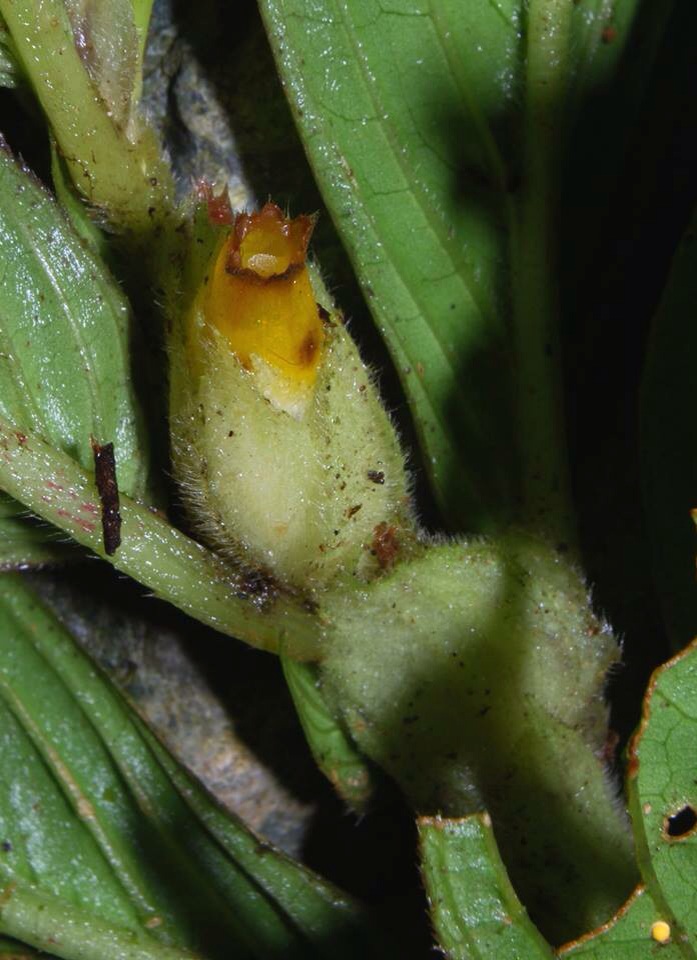
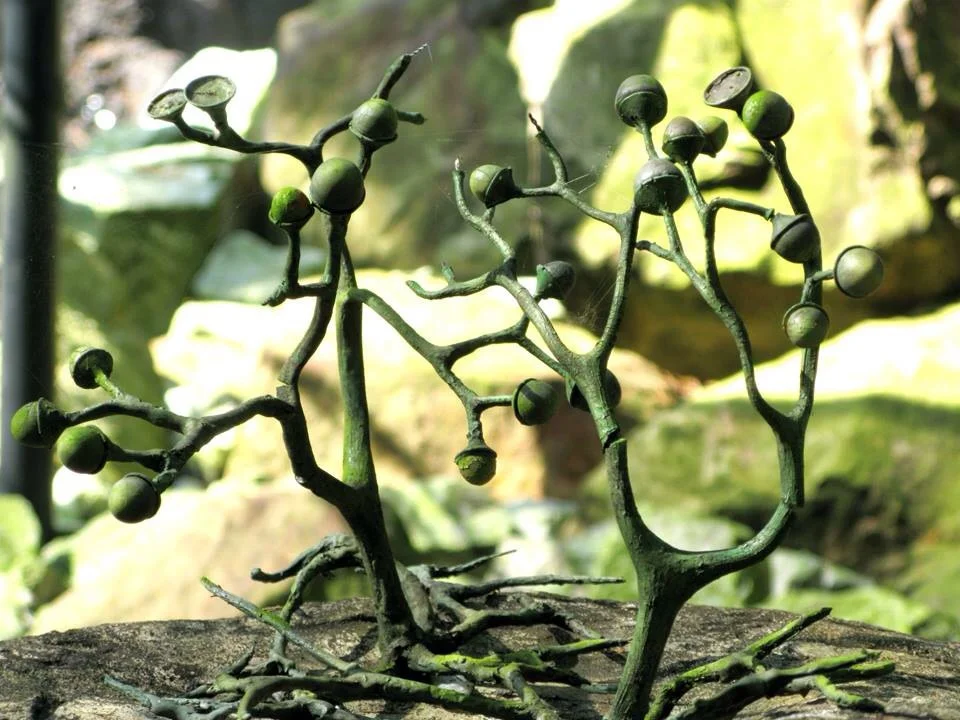
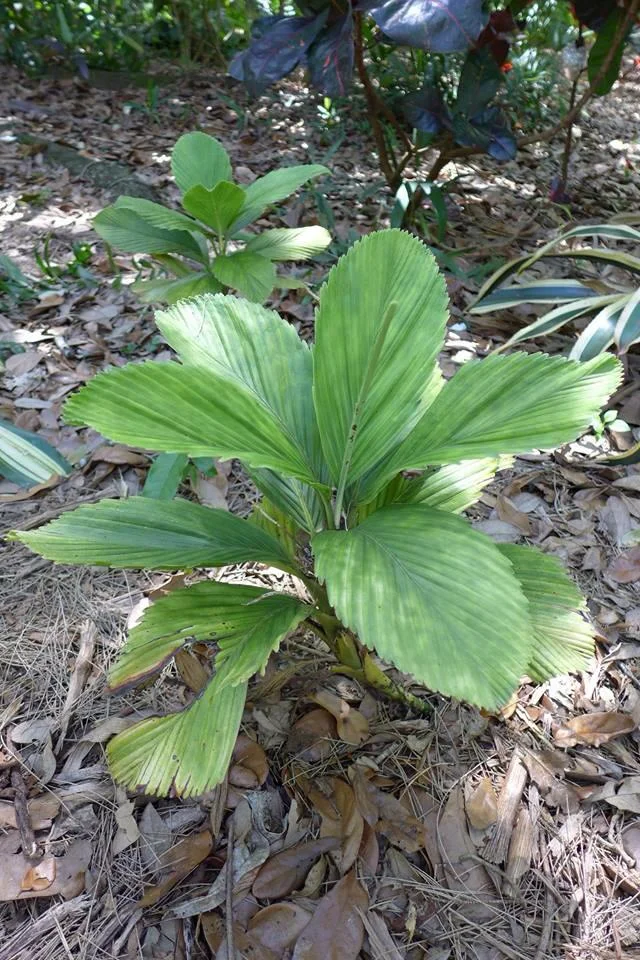
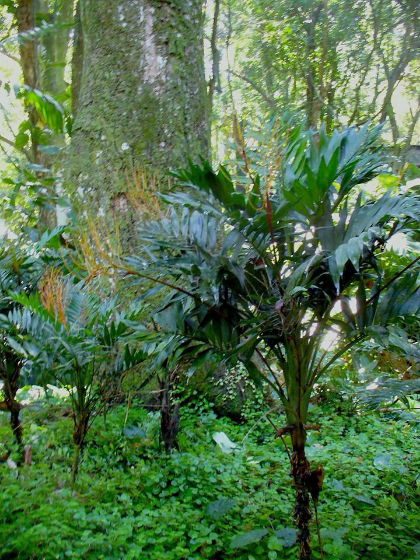
Raise you hand if you have ever had a parlor palm (Chamaedorea elegans). I see most of you have raised your hands. Palms in the genus Chamaedorea are the most commonly kept palms on the market. They are small, very shade tolerant, and nearly indestructible. The clear winner in this regard is the parlor palm. We have all given these little palms a shot at one time or another. They are so common that we rarely give a second thought as to where they come from. Surely they did not evolve in a nursery. It may surprise you that for as ubiquitous as these palms are, they are actually quite threatened in the wild.
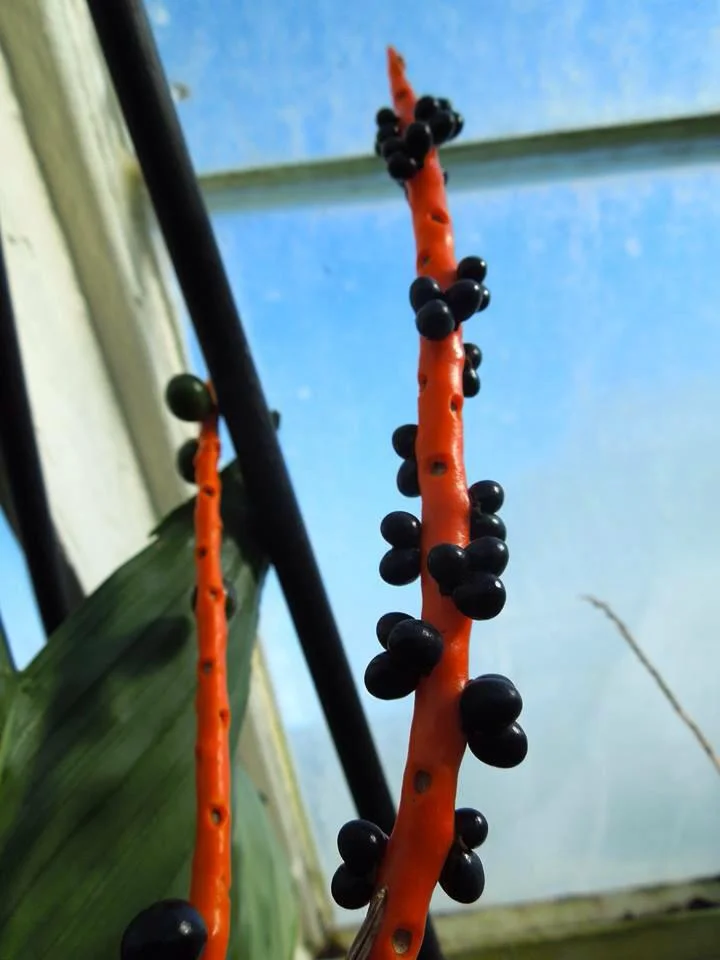
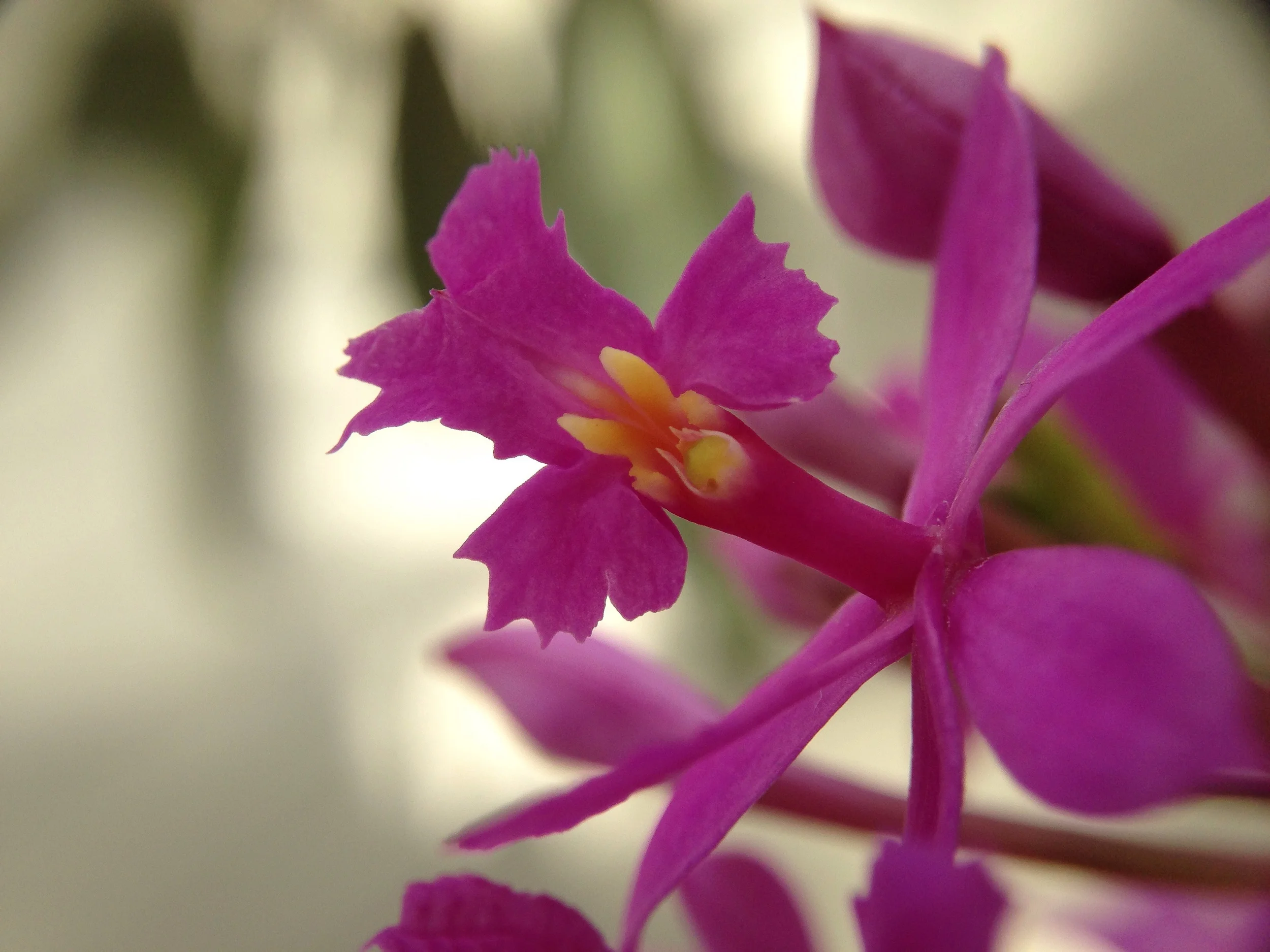
The genus Chamaedorea is endemic to sub-tropical forests of the Americas and is comprised of roughly 80 species. They are understory palms that are most at home under the deep shade of the canopy. Most species are generally pretty small, rarely growing over 10 feet. All of these factors add up to some resilient and fun houseplants. It doesn't take much to keep them happy. Every once in a while they will produce flowers. Though small, they are often brightly colored. The preferred method for mass cultivation is via seed. However, seed production outside of their native range is notoriously difficult and often requires human intervention. For this reason, a vast majority of nursery grown palms are grown from wild collected seeds.

This may not seem like a bad deal until you look at the numbers. I have seen reports of over 500 million seeds exported from Mexico annually. Couple this with the fact that many species of Chamaedorea are known to grow in very restricted ranges and suddenly the picture becomes very bleak. Over collecting of seeds has decimated wild populations. Without seeds there is no recruitment, no seedlings to take the place of adult plants.

Another considerable threat to these palms comes from the cut flower industry. Palm fronds are notoriously gorgeous and many people like to include them in their displays. Most of the leaves cut come from wild plants. Normally palm fronds are harvested in a manner that doesn't kill the plant, however, in Mexico children are often employed to collect them and their lack of experience can severely damage wild populations.

On top of all of this, the forests in which these palms grow are now being converted to agriculture. If actions are not taken to limit the abuse of wild populations, it is likely that some of the most commonly encountered house plants are going to be extinct in the wild. This is a hard pill to swallow. If you have any of these species growing in your home, take care of them. Perhaps knowing how uncertain the future is for many of these palms will earn them a little more respect.
10394534_1069406709752860_2870126728832887767_n.jpg

Here is a list of some of the most threatened species in this genus:

Chamaedorea amabilis
Chamaedorea klotzschiana
Chamaedorea metalica
Chamaedorea pumila
Chamaedorea sullivaniorum
Chamaedorea tuerckheimii

Photo Credits: Michael Wolf (http://bit.ly/16suMsf), scott.zona (http://bit.ly/1zHdUII),

Further Reading:
http://bit.ly/1ADC3mw
Stained Glass Leaves


Producing flowers is a costly endeavor for plants. They require a lot of resources and give nothing back in the way of photosynthesis. The showier the flower, the greater the investment. It should be no shock then that some plants utilize more energy efficient strategies for attracting pollinators. One of the more interesting ways in which a plant has evolved to save energy on flowering comes from a rather surprising family. 

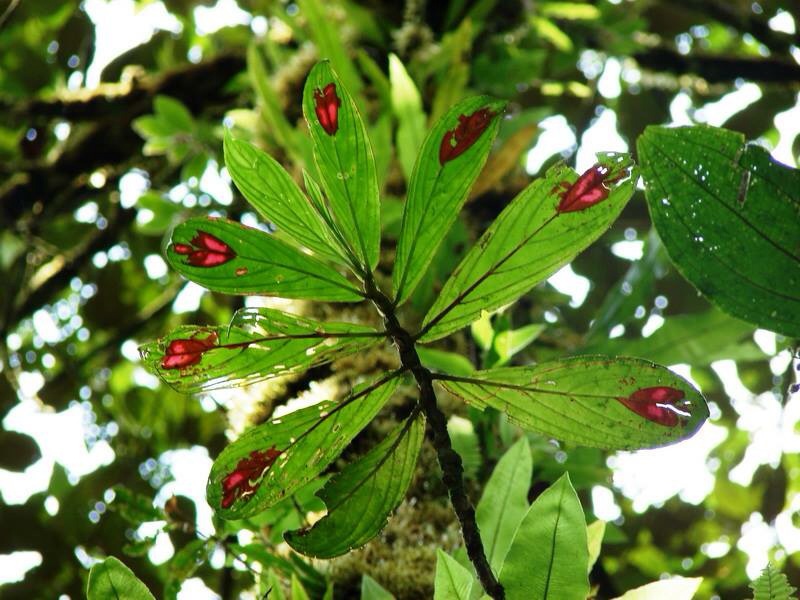
Gesneriads are known for their showy flowers. There are many variations on the theme but most are rather colorful and tubular. However, in the jungles of Central and South America grows two species of Columnea that make such generalizations a waste of time. The flowers of C. consanguinea and C. florida are small, drab affairs, especially for a Columnea. They arise from the stem at the base of the leaves and would largely go unnoticed without close inspection. It is amazing that anything could find them among the chaos of the jungle understory let alone pollinate them. That is where the leaves come in. 

Photo by alex monro licensed under CC BY-NC 2.0

Photo by alex monro licensed under CC BY-NC 2.0

Towards the tip of the long, blade-like leaves are heart shaped red spots. They are translucent and to stand below one conjures a mental image of stained glass windows. Against the background of greens, these spots really stand out. Their purpose is to attract pollinators, specifically the green-crowned brilliant hummingbird (Heliodoxa jacula), which can then locate the nectar-rich flowers, pollinating them as they feed. By producing these translucent red spots on their leaves, these plants are able to save a lot of energy. Leaves are retained for much longer than flowers are and, of course, they photosynthesize.

Photo Credit: Jardín Botánico Nacional, Viña del Mar, Chile (http://bit.ly/1CXtToh) and alex monro (http://bit.ly/1uVwf0x)

Further Reading:

http://onlinelibrary.wiley.com/doi/10.1111/j.1365-2745.2008.01465.x/full

An Abominable Mystery

Photo by Shizhao licensed under CC BY-SA 2.5

Photo by Shizhao licensed under CC BY-SA 2.5

We all love flowers but for all the attention we pay them, their origin remains elusive. Darwin called their sudden appearance in the fossil record an “abominable mystery.” Since Darwin's time, we have been able to clarify that picture a little bit. Even so, our understanding of the origin of the angiosperm lineage is dubious at best. When and why did flowers evolve?

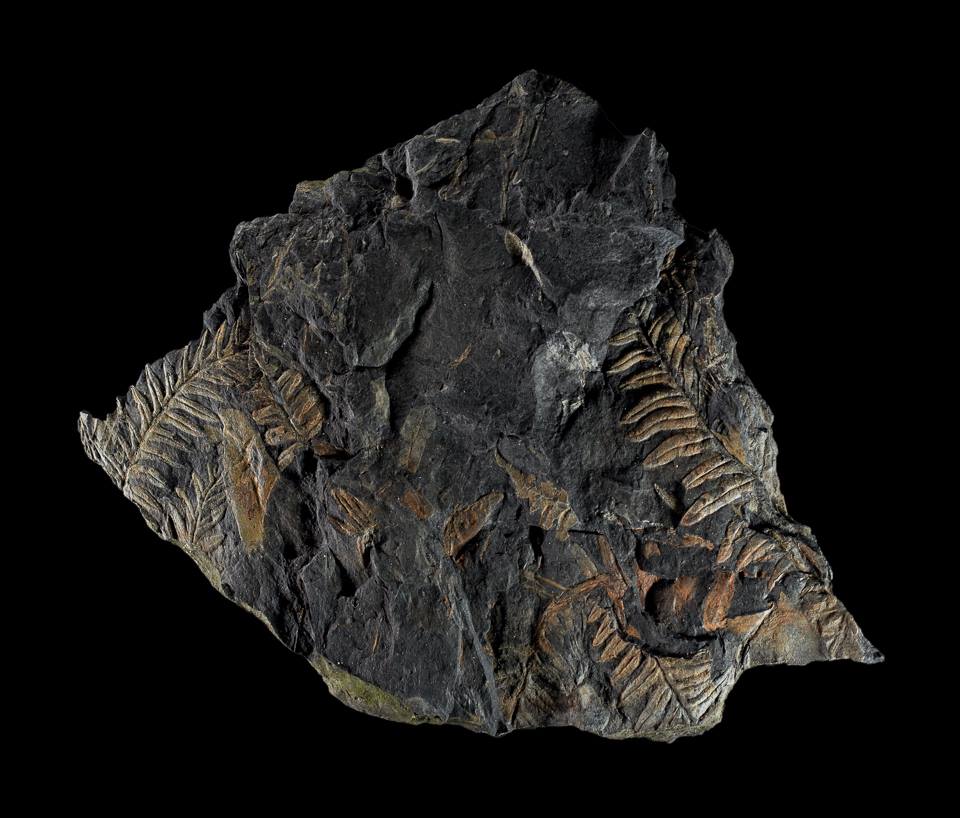
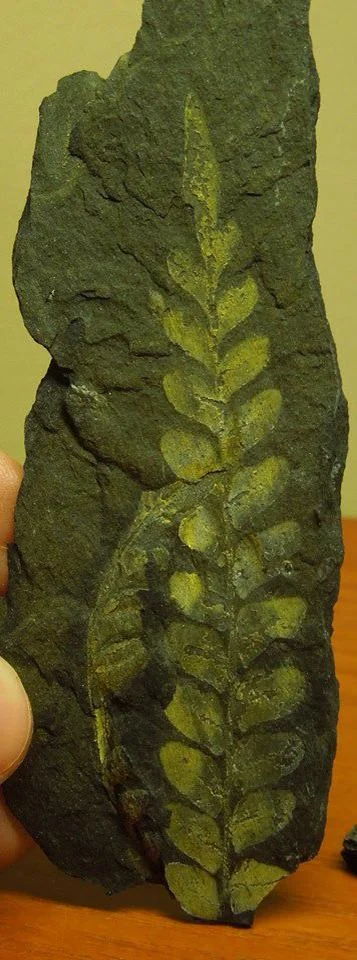
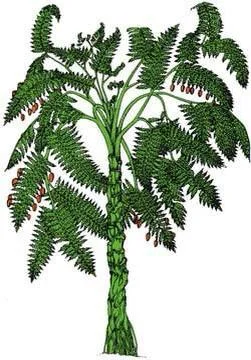
For millions of years the land was dominated first by ferns and their allies and then by gymnosperms like cycads and gingkos. It was not until the Cretaceous that angiosperms began to rise to their current place as the dominant and most diverse group of plants. Their sudden appearance on the scene has been largely shrouded in mystery. There is scant fossil evidence to illustrate the early evolutionary steps in this development of flowers. Many paleobotanists believed that flowers had their origin in shrub-like ancestors of gymnosperms. Others felt that the origin of flowers belonged with the seed ferns (http://bit.ly/1zKfriM).

Around 2001 a fossil discovery from Yixian Formation, Liaoning, China was believed to have changed all of that. A researcher by the name of Ge Sun had stumbled upon a very primitive looking fossil plant. To his surprise, the reproductive structures seemed to show stamens in pairs below carpels and a lack of petals and sepals. The formation in which the fossil was found dated back to the Jurassic period. Could this represent the remains of the earliest flowers?

The fossil has been coined Archaefructus and since its discovery at least two species have been identified. Archaefructus was an aquatic plant, likely living on the edge of freshwater lakes. These fossils (as one would expect) are quite contentious. Some argue that it is more derived than would be expected from the first flower. Recently it has been suggested that Archaefructus is a sister lineage to early flowering plants, not unlike Nymphaeales or Amborella living today. 

What Archaefructus does suggest is that flowers had their origin much earlier than the Cretaceous. Other discoveries from the same formation (ie. Archaeamphora longicervia) suggest that flowering plants were already diversifying at this time. So, if this is the case, when did flowers appear on the scene? Far from the smoking gun that a fossilized flower would represent, researchers are nonetheless finding tantalizing fossil evidence that places the origin of flowering plants all the way back to the Triassic. 

By examining Triassic microfossils, some researchers believe they have found fossilized pollen grains that are distinctly angiosperm in origin. I won't go into it here but extant examples show a major distinction between pollen from gymnosperms and pollen from angiosperms. If this is true, flowers may be way older than ever expected. For now, the jury is still out on this one. 

Flowers evolved for sex. We associate animals like bees, bats, and birds with flowers today but most of these lineages came much later in the game. Exactly what was around pollinating early flowers remains a bit of a mystery as well. Were the earliest flowers wind pollinated or was there some insect or even reptile that served the selection pressure necessary for their evolution? Only time and more fossil discoveries will tell. 

Photo Credit: Shizhao (Wikimedia Commons)

Further Reading:

http://www.sciencemag.org/content/296/5569/899.abstract?ck=nck&siteid=sci&ijkey=8dZ6zTqF606ps&keytype=ref

http://faculty.frostburg.edu/biol/hli/research/Eoflora.pdf

http://www.ohio.edu/people/braselto/readings/angiosperms.html

http://journal.frontiersin.org/Journal/10.3389/fpls.2013.00344/full

http://www.amjbot.org/content/96/1/5.abstract

Cooksonia: A Step Into the Canopy

Photo by Steel Wool licensed under CC BY-NC-ND 2.0

Photo by Steel Wool licensed under CC BY-NC-ND 2.0

For plants, the journey onto land did not happen over night. It began some 485.4–443.4 million years ago during the Ordovician. The best evidence we have for this comes in the form of fossilized spores. These spores resemble those of modern day liverworts. Under high powered microscopes, one can easily see that they were indeed adapted for life on land. These early plants were a lot like the hornworts, liverworts, and mosses we see today in having no vascular tissues for transporting water, an adaptation that would not come along for another few million years. 

Without vascular tissues, plants like liverworts and mosses cannot transport water very far. They instead rely on osmosis and diffusion to get water and nutrients to where they need to be, which severely limits the size of these types of plants to only a few centimeters. This growth pattern carried on well into the Silurian. Until then, the greening of our planet happened in miniature. 

Photo by Sabrina Setaro licensed under CC BY 2.0

Photo by Sabrina Setaro licensed under CC BY 2.0

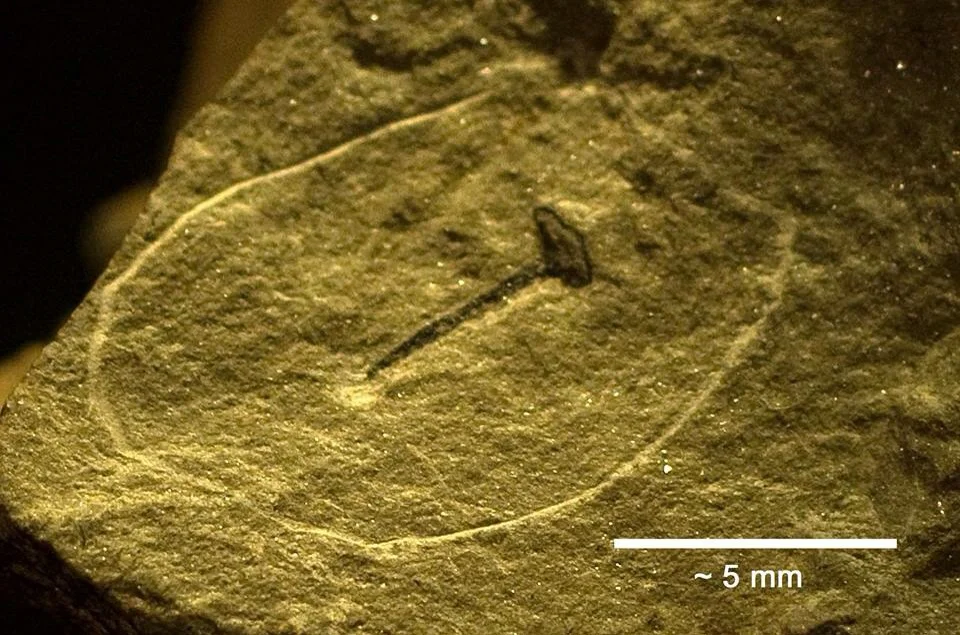
Around 415 million years ago, however, plants became vascularized. This changed everything. It set the stage for the botanical world we know and love today. Paleobotanists place the fossil remains of these newly evolved vascular plants in the genus Cooksonia. Based on what we would call a plant today, Cooksonia probably pushes the limits. However, in some species the branching structure is full of dark stripes, which have been interpreted as vascular tissues. It still wasn't a very tall plant with the tallest specimen standing only a few centimeters but it was a major step towards a much taller green world. 

Cooksonia did not have any leaves that we are aware of but some species certainly had stomata (another major innovation for water regulation in plants). Each branched tip ended in a sporangium or spore-bearing capsule. It has been suggested that Cooksonia may not represent an individual photosynthetic plant but rather a highly adapted sporophyte that may have relied on a gametophyte for photosynthesis. This hypothesis is supported by the diminutive size of many Cooksonia fossils. They simply do not have enough room within their tissues to support photosynthetic machinery. Because of this, some botanists believe that vascularization sprang from a dependent sporophyte that gradually became more and more independent from its gametophyte over time. Until an associated gametophyte fossil is found, we simply don't know. 

Photo Credits: Steel Wool (http://bit.ly/1AjLYh8) and Sabrina Setaro (http://bit.ly/16mdyxw)

Further Reading: [1] [2] [3]

Why Forests?

image.jpg

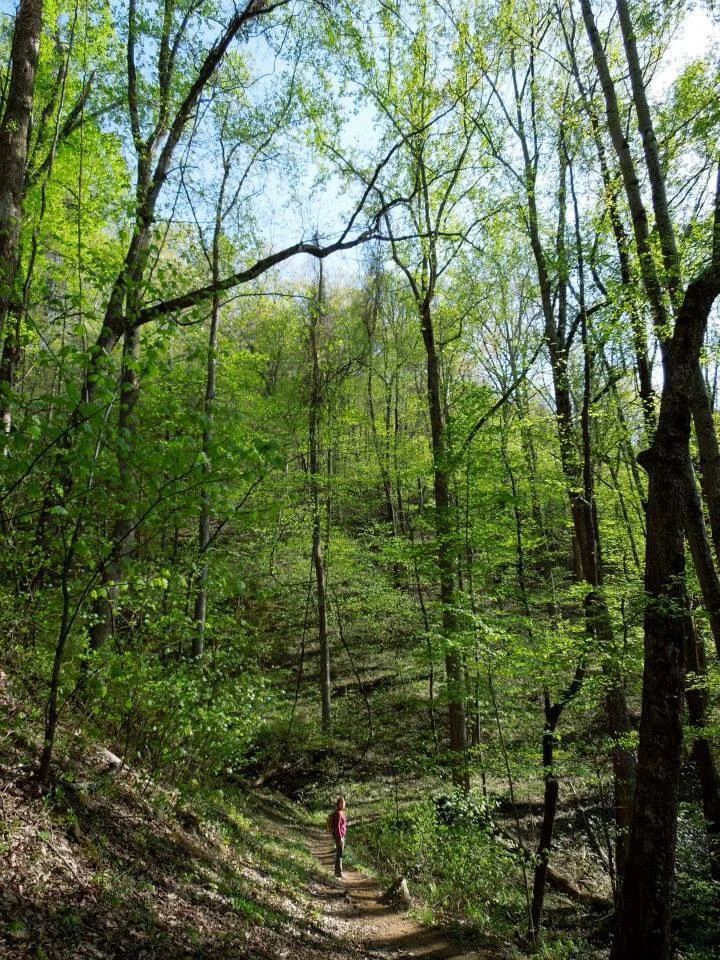
Walking through the forest is my favorite activity in the world. It is where I feel truly myself. There is something about towering trees that calms me. The thought of why forests are even there often jumps to mind during my strolls. Plenty of plants seem to do just fine hanging out closer to the ground. Why have trees (and some forbs) taken to this vertical realm. Why do forests exist?

In essence, forests are a prime example of an evolutionary arms race. It is one that these organisms have been fighting since the Devonian roughly 385 million years ago. As plants left the water and began covering the land, some inevitably grew taller than others. There are pros and cons to growing tall. Competition is likely the prime driver for most tree species. Getting above your neighbors means more sunlight. Not every plant is as content as a fern to live out its life in the understory. Height also means better pollinator visibility and seed dispersal for many tree species. Out in the open, gametes and propagules can be carried great distances by the wind. Eventually colorful blooms would prove to be more exposed and easier for pollinators to locate. Growing tall can also get you out of harms way, removing sensitive growing parts from many different kinds of hungry herbivores and all but the worst forest fires. 

There are many downsides to growing tall as well. For one, trees are exposed to the elements and are often victims of strong winds or lightening strikes. What's more, all of that wood takes a lot of energy to produce and, at least for most species, gives nothing back int he way of photosynthesis. It is a rather hefty investment. However, the cost of getting shaded out by your neighbors is definitely not worth the risk of staying small for sun loving species. Pumping water is another serious issue. The laws of physics suggest that redwoods are pushing the limits for how tall a tree can grow and still be able to lift water to their leaves way up in the canopy. Of course, humidity can assist with such issues but for a majority of the water needs of a tree, water must be able to travel against gravity through weak hydrogen bonds. Water forms an unbroken chain within the vascular tissues of plants. As it evaporates from the leaves, it pulls more water up to fill in the void. It is possible that in today's world, a tree would not physically be able to grow much over 400 feet.

Despite the seemingly lavish waste of limited resources that a forest of trees would suggest, they are nonetheless a common occurrence all over the globe and have been for millions of years. The pros must certainly outweigh the cons or else tallness in trees would never have evolved. The next time you find yourself hiking through a forest, think of how the struggle for survival has lead these towering organisms from lowly green stains on rocks to hulking behemoths racing towards the sky. 

Further Reading:

http://phys.org/news/2014-11-evolution-forest-trees.html

http://www.nature.com/nature/journal/v428/n6985/abs/nature02417.html

http://www.pnas.org/content/101/44/15661.short

Slippery When Wet

Photo by Andrea Schieber licensed under CC BY-NC-ND 2.0

Photo by Andrea Schieber licensed under CC BY-NC-ND 2.0

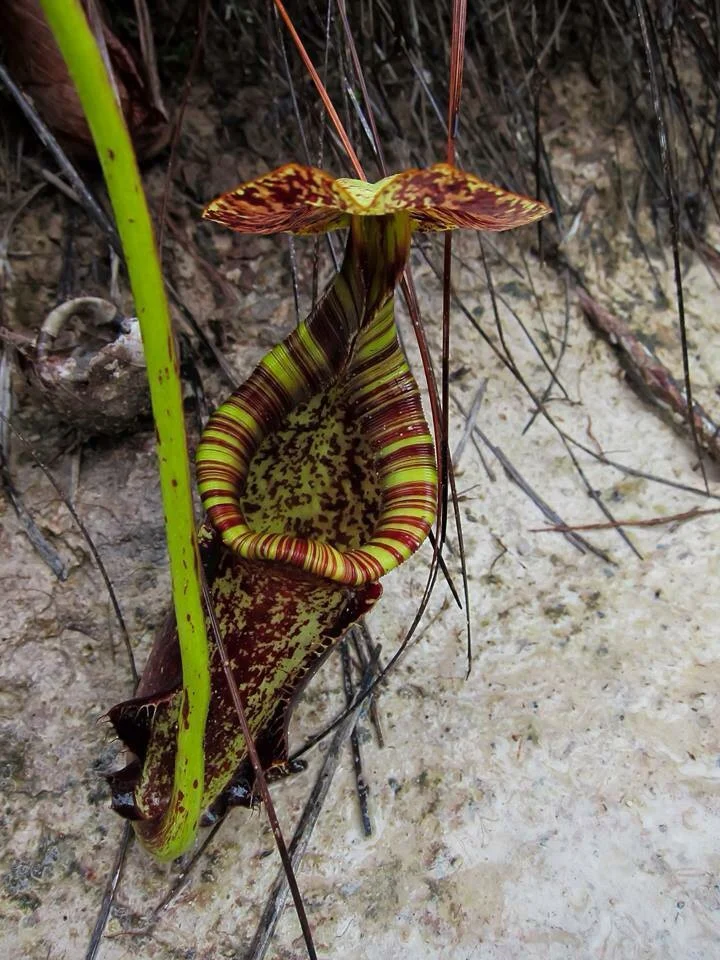
Pitcher plants in the genus Nepenthes have been getting a lot of attention in the literature as of late. Not only have researchers discovered the use of ultraviolet pigments around the rims of their pitchers, it has also been noted that the pitchers of many species aren't as slippery as we think they are. Indeed, scientists have noted that prey capture is at its highest only when the pitchers are wet. This seems counterintuitive. Why would a plant species that relies on the digestion of insects for most of its nitrogen and phosphorus needs produce insect traps that are only effective at certain times? After all, it takes a lot of energy for these plants to produce pitchers, which give little to nothing back in the way of photosynthesis. 

The answer to this peculiar conundrum may lie in the types of insects these plants are capturing. Ants are ubiquitous throughout the world. Their gregarious and exploratory nature has provided ample selection pressures for much of the plant kingdom. They are particularly well known for their military-esque raiding parties. It is this behavior that researchers have looked at in order to explain the intermittent effectiveness of Nepenthes pitchers. 

A recent study that looked at Nepenthes rafflesiana found that ants made up 65% of the prey captured, especially on pitchers produced up in the canopy. What's more, younger pitchers produced closer to the ground were found to be much more slippery (containing more waxy cells) than those produced farther up on the plant. When the pitchers of this species were kept wet, prey capture consisted mostly of individual insects such as flies. However, when allowed to dry between wettings, the researchers found that prey capture, specifically ants, increased dramatically. How is this possible?

It all goes back to the way in which ants forage. A colony sends out scouts in all directions. Once a scout finds food, it lays down a pheromone trail that other ants will follow. It is believed that this is the very behavior that Nepenthes are relying on. The traps produce nectar as a lure for their insect prey. As the traps dry up, the nectar becomes concentrated. Ants find this sugary treat irresistible. However, if the pitcher were to be slippery at all times, it is likely that most ant scouts would be killed before they could ever report back to the colony. By reducing the slippery waxes, especially around the rim of the trap, the Nepenthes are giving the ants a chance to "spread the news" about this new food source. Because these plants grow in tropical regions, humidity and precipitation can fluctuate wildly throughout a 24 hour period. If the scouting party returns at a time in which the pitchers are wet then the plant stands to capture far more ants than it did if it had only caught the scout. 

This is what is referred to as batch capture. The plants may be hedging their bets towards occasional higher nutrient input than constant low input. This is bolstered by the differences between pitchers produced at different points on the plant. Lower pitchers, especially on younger plants are far more waxy and thus are constantly slippery. This allows constant prey capture to fuel rapid growth into the canopy. Upper pitchers on older individuals want to maximize their yields via this batch capture method and therefore produce fewer waxy cells, relying on a humid climate to do the work for them. It is likely that this is a form of tradeoff which benefits different life cycle stages for the plant. 

Photo Credit: Andrea Schieber (http://bit.ly/1xUsGJk)

Further Reading:

http://rspb.royalsocietypublishing.org/content/282/1801/20142675

Why All the Lace?

Aponogeton_madagascariensis.jpg

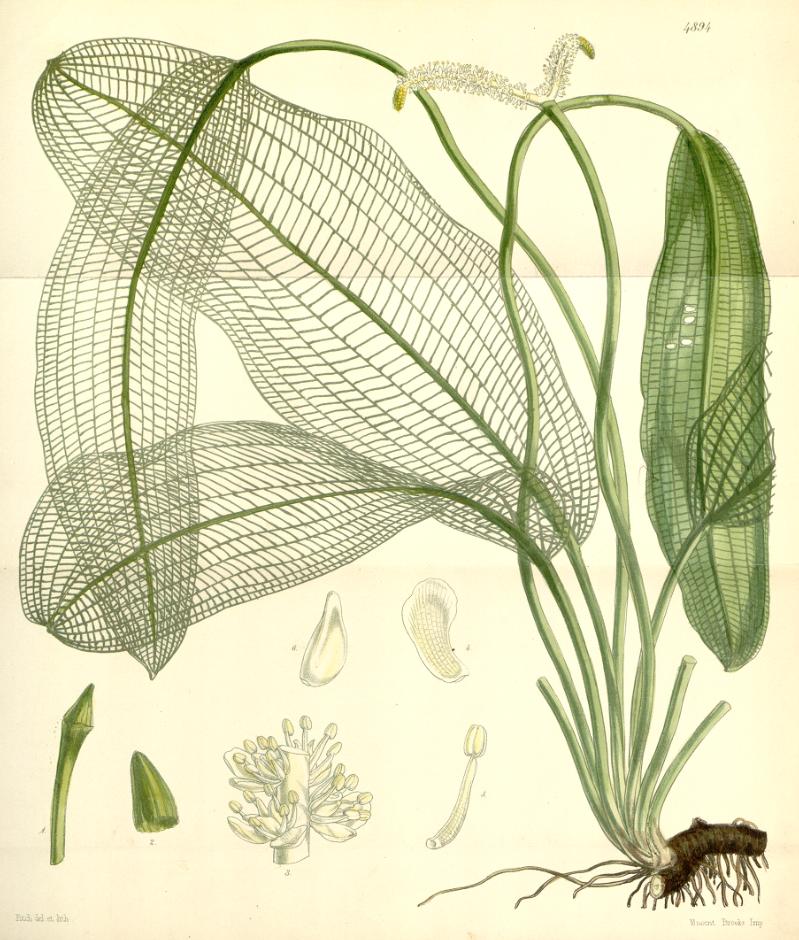
All too often, botanizing is restricted to the land. Sure, there is the occasional foray to a marsh or bog but, for the most part, relatively few plant folk like to get wet in their quests to meet new and exciting plant species. There is an entire world of aquatic plants that don't get enough credit. One such plant is Aponogeton madagascariensis, the lace plant.

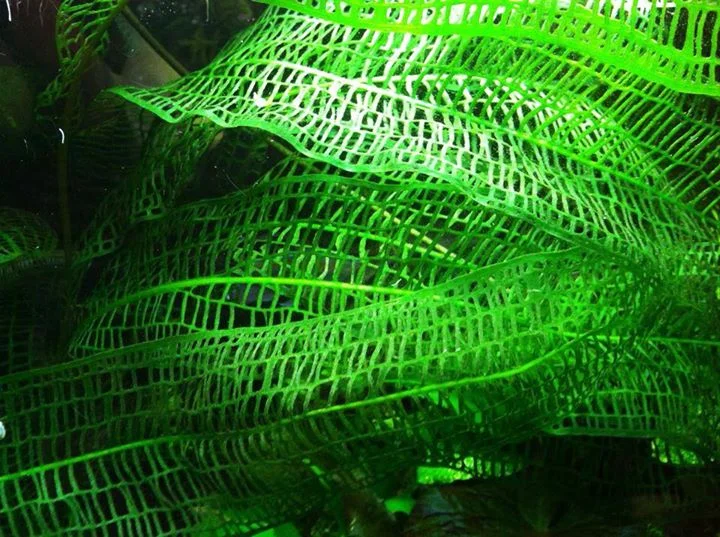
Anyone into planted aquariums has undoubtedly come across this species at least once. It is kind of a holy grail of aquarium gardening. Hailing from Madagascar, this is one of the truly aquatic Aponogeton species. Though there are a few different geographic variations, they are all easily recognized by the lacy appearance of their leaves. Known as "fenestration," the lacy structure is the result of programmed cell death during the development of the leaves. As interesting as that fact is in and of itself, the question remains, what is the function of fenestration?

There have been many hypotheses put forward to explain this phenomenon. Some believe it helps to reduce damage from turbulence wheras others believe it helps to increase movement around the leaves and helps avoid stagnation. The truth is, no one is entirely certain. However, a clue to the benefits of fenestration has come out of work done on an entirely unrelated terrestrial plant species.

The epiphytic arum commonly referred to as a Swiss cheese plant (Monstera deliciosa) also exhibits fenestrated leaves. Researchers at Indiana University in Bloomington have found that the holes in the leaves may actually help gather more light in a shaded environment. The understory of a rainforest and the underwater habitat in which the lace plant grows may be more similar in light availability than you would think. How would holes in the leaves allow the plant to gather more light?

As it turns out, a fenestrated leaf can grow much larger while still maintaining the same amount of surface area. By spreading out its surface area over a larger region, a fenestrated leaf is actually more efficient at gathering what limited light is available. More work needs to be done to see if this is truly the case for the lace plant but the idea is tantalizing to say the least. Sadly, like too much of Madagascar's wildlife, the lace plant is becoming quite rare in the wild due to habitat destruction. So, the next time you come across one of these in an aquarium store, make sure to give this plant the attention it deserves. 

Further Reading: [1] [2] [3]

Growing Ferns

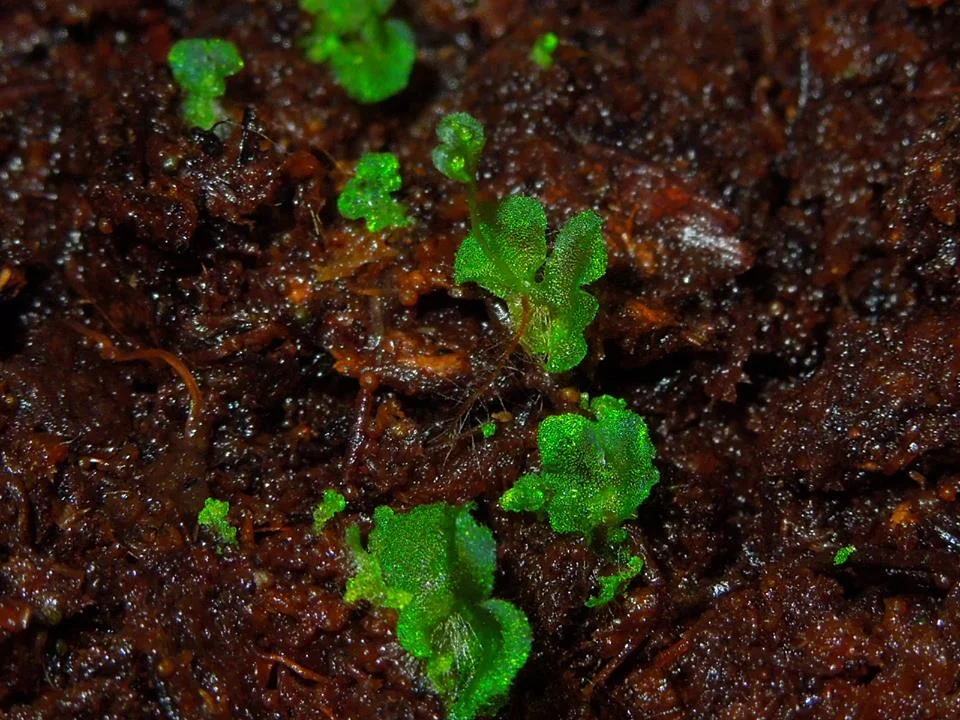
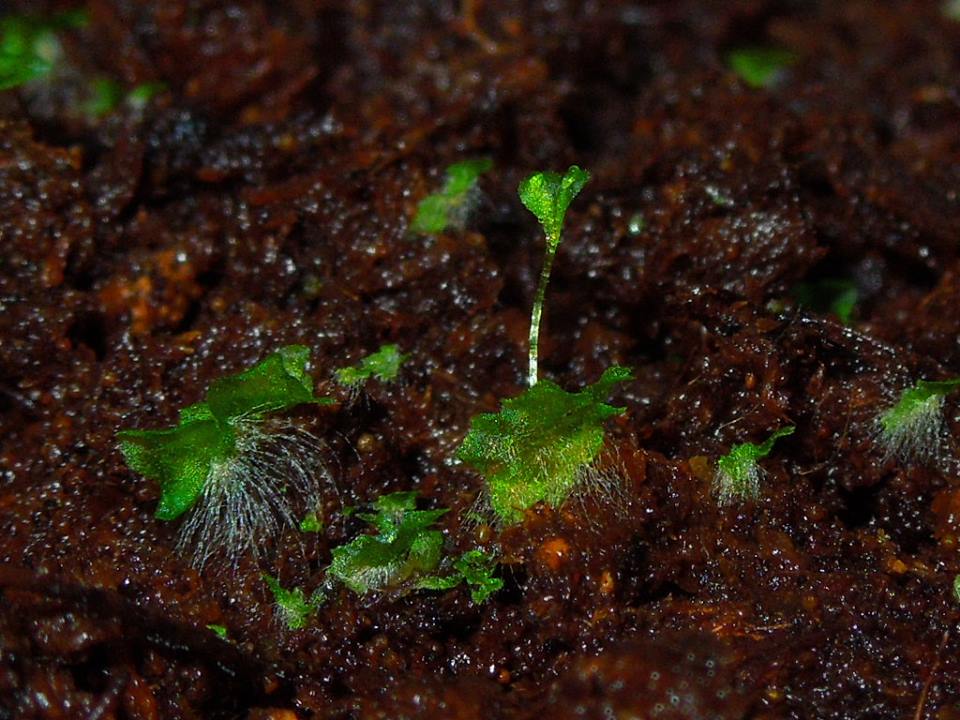
I am finally having some success intentionally growing ferns from spores. I collected and sowed spores from some interrupted ferns (Osmunda claytoniana) over the summer. They have been hanging out as gametophytes for months now and some are finally starting to grow sporophytes. Here is how it worked for me:

I kept my eye on a batch of adult plants this summer. Once their fertile fronds developed I would flick them every now and then to see if they were releasing spores. Once I saw that they were I shook the fronds over some paper to collect the spores. I then took some old potting soil and sterilized it with boiling distilled water. I use old takeout containers because they are small and have clear lids that form a seal which keeps the humidity high.

Once the soil was cool I sprinkled the spores over it and then placed it on a shelf where it gets a small amount of ambient light every day. The rest they did themselves. You just have to remember to check on them and keep the humidity quite high because they can dry out really fast. They seemed stuck as gametophytes for months. I just noticed the start of these sporophytes the other day.

Sandfood

Photo by USFWS Pacific Southwest Region licensed under CC BY 2.0
Photo by Don Davis licensed under CC BY-NC-ND 2.0

Photo by Don Davis licensed under CC BY-NC-ND 2.0

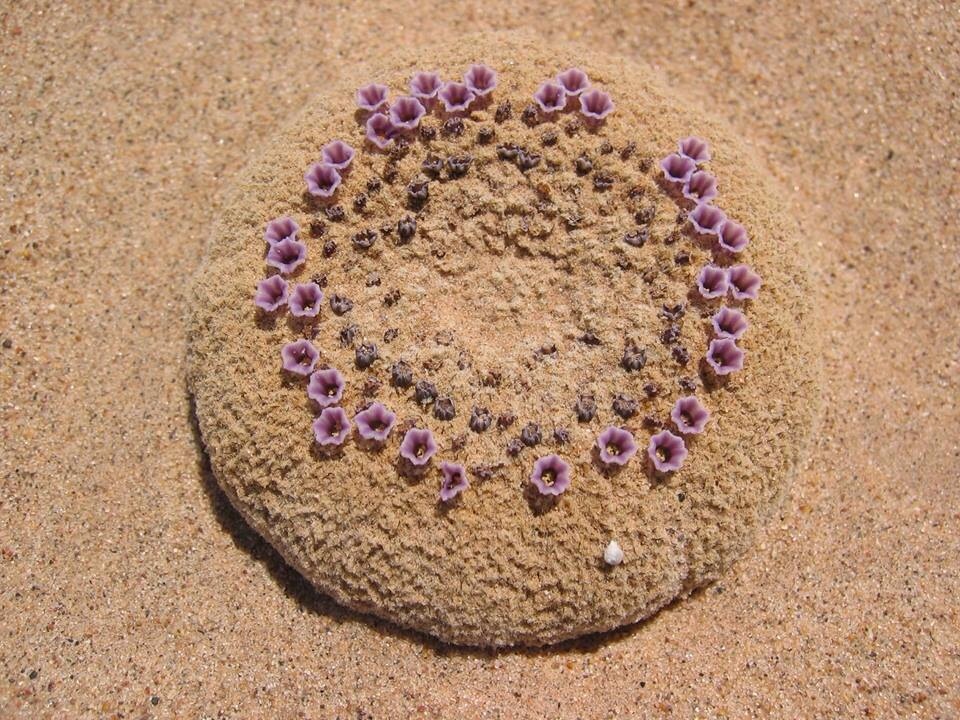
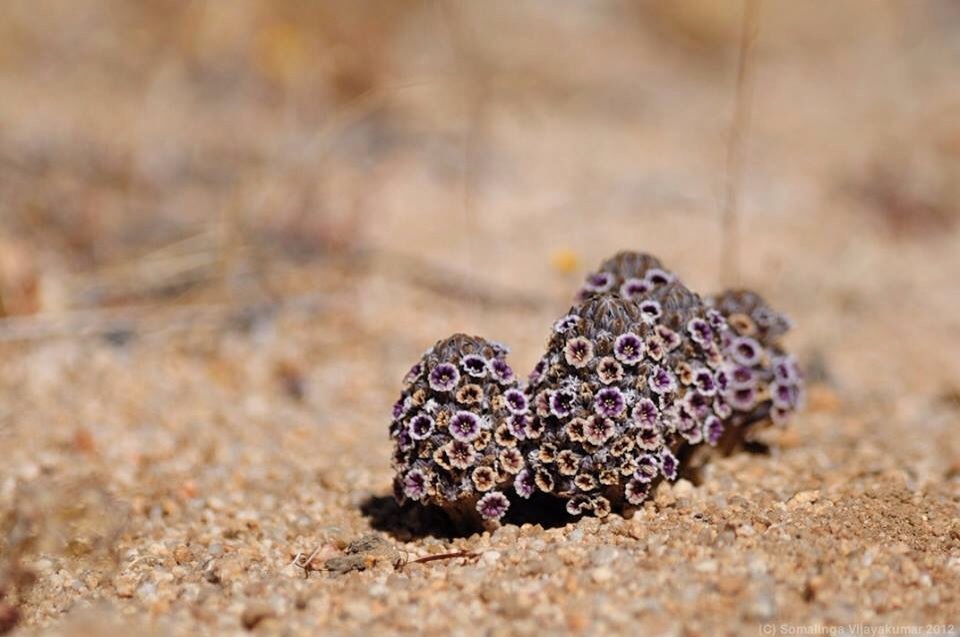
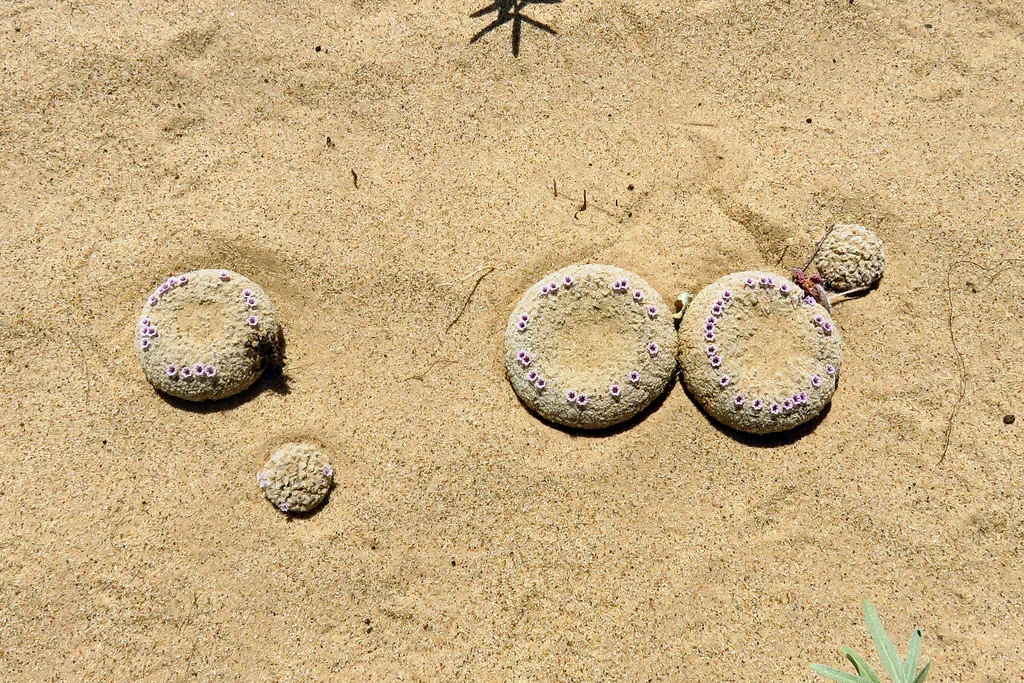
Pholisma is yet another amazing genus of parasitic plants. Endemic to the southwestern United States and Mexico, these peculiar members of the borage family tap into the roots of a variety of plant species. They do not photosynthesize and therefore obtain all the nutrients they need from their hosts. Oddly enough, researchers have found that most of their water needs are met by absorbing dew through the stomata on their highly reduced, scale-like leaves. Water is then stored in their highly succulent stems. Throughout their limited range, Pholisma are critically imperiled. Development and agriculture have already eliminated many populations. To add insult to injury, the dunes in which most extant populations are found are owned by the BLM and are open to heavy off-road ATV traffic, which will likely push them to the brink of extinction if nothing is done to limit such recreational use. Unless people speak up about protecting these plants and their habitats, they could disappear for good.

Photo by Vijay Somalinga licensed under CC BY-NC-ND 2.0

Photo by Vijay Somalinga licensed under CC BY-NC-ND 2.0

Photo by Vahe Martirosyan licensed under CC BY-SA 2.0

Photo by Vahe Martirosyan licensed under CC BY-SA 2.0

Photo Credits: [1] [2] [3]

Further Reading: [1] [2]

Mysterious Marimo

image.jpg

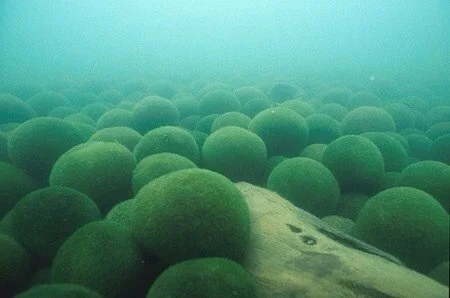
I was recently approached by a lady who was quite curious as to what mystical energies could have created the increasingly popular marimo balls that are often seen for sale in aquarium shops. Surely no natural force could create such spherical wonders in nature, right? She seemed quite disappointed by my answer and left feeling cheated of the super natural mechanism she was looking for. However, before we discuss the source of these fury green balls, let's start at the beginning. 

Marimo balls or lake balls are a specific growth form of a macroalga known scientifically as Aegagropila linnaei. It belongs to the Cladophoraceae family and can be found in lakes throughout the northern hemisphere. They are most popularly known from lakes in Japan where they hold serious cultural significance. The word "marimo" is Japanese for "ball seaweed."

So, how does this species of alga form itself into a ball? The answer is not mystical, though it is quite specific. To start with, the ball form of this alga is not the only way it grows. Populations will also form as mats on the lake bed, carpeting rocks and other debris. When pieces break off and become free floating, tidal action gently rolls them around. As they grow and move, they become tangled up and gradually form themselves into this spherical shape. The overall shape and survival of the alga in this form is reliant on this tidal motion. All parts of the ball actively photosynthesize and if it is not exposed to light all over, the shaded parts die and the ball will be no longer. Luckily, the alga reproduces vegetatively so the broken parts can still go on living.

Sadly, marimo balls are not doing too well in the wild. As we have seen with so many other species, human impacts are taking their toll on Aegagropila linnaei. Eutrophication, logging, and development within the watersheds that feed these lakes are causing the once clear waters to become quite murky. As this issue increases, the alga can no longer photosynthesize on a level that can sustain its populations. Acid rain is another big issue. Marimo balls tend to grow in calcareous lakes. As the water acidifies, they are unable to cope. Finally, one of the other issues facing the marimo balls is their popularity. In some areas, they are being harvested for the aquarium trade at unsustainable levels. One source claims that a majority of marimo balls for sale in aquarium shops are sourced from the Ukraine, which means that those populations are under serious pressure. 

Luckily, their popularity may also lead to more protective measures. For instance, they are so important to Japanese culture that they are now a protected species there. The Netherlands is also waking up to the decline of this species. Until more can be done, it is best to only buy from nursery grown sources. Formation of the balls has been done in an artificial setting. Truly, no species is safe from the irresponsible nature of modern man.

Photo Credit: mossball.com

Further Reading:

https://lirias.kuleuven.be/bitstream/123456789/266287/1/BioScience

http://link.springer.com/article/10.1007%2Fs10452-009-9231-1#page-1

http://onlinelibrary.wiley.com/doi/10.1111/j.1365-2699.2010.02309.x/abstract

http://www.algaebase.org/search/species/detail/?species_id=59094

http://www.bioone.org/doi/abs/10.1525/bio.2010.60.3.5

Cannonball!

Photo by Joel Abroad licensed under CC BY-NC-SA 2.0

Photo by Joel Abroad licensed under CC BY-NC-SA 2.0

There are some trees out there that you probably shouldn't hug. Couroupita guianensis is one such example. You certainly wouldn't want to risk standing at the base of one for any length of time. What looks like a vine covering the trunk of each tree is actually the reproductive structures of this species. Beautiful flowers give way to hefty seed pods, earning this tree its common name, the cannonball tree. 

A native to Central and South America as well as parts of the Caribbean, the distinctive flowers of this tree are born on long stalks that emerge right out of the trunk. This is known as "cauliflory." Trees like this can cause you to do a double take. Indeed, it is strange seeing flowers on a trunk instead of at the tips of branches. It is likely that this type of flowering has evolved as a form of resource partitioning. Instead of vying for pollinators or seed dispersers way up in the canopy, trees like C. guianensis may opt for them at lower levels in the forest where competition may be lower. 

In the case of C. guianensis, the main pollinators are carpenter bees. The peculiar flowers don't produce any nectar, however, they make up for this by offering copious amounts of pollen. The strangest aspect of this is that two different type of pollen are produced. Each flower has two sets of anthers, one set forms a ring around the center of the flower and the other set is located at the tip of the petal that is bent inward forming a hood. What's more, the pollen grains produced by each set differs in appearance with the ring pollen being white and smaller and the hood pollen being yellow and larger. As it turns out, the hood pollen is mostly sterile whereas the ring pollen is fertile. When a bee lands on the hood of the flower looking for pollen, it is attracted to the larger grains. As it harvests pollen from the hood its body is pushed up against the ring pollen, which is carried to the next flower, where the process is repeated and the flower fertilized.

Photo by Mauricio Mercadante licensed under CC BY-NC-SA 2.0

Photo by Mauricio Mercadante licensed under CC BY-NC-SA 2.0

After fertilization, large capsules are produced that sort of resemble coconuts or canon balls. Being a member of the Brazil nut family, these capsules can measure upwards of 8 inches in diameter and are chock full of pulp and seeds. Each capsule eventually falls from the tree, cracking open as it smashes into the ground. The capsules can be so large and heavy that anyone unfortunate enough to be standing under one when it fell is likely to be killed by the impact. The pulp inside is said to smell quite awful, which is a attractive to various seed dispersers around the forest.  Peccaries as well as large rodents like the paca eat the seeds, which germinate quite well after passing through their gut. 

Couroupita guianensis has been planted far outside of its natural range for a variety of reasons. It is likely that anyone visiting a botanical garden in the tropics will come across one of these odd trees. Any gardener worth their weight would do well to keep this tree away from footpaths. This is a species best admired from a distance. Aside from avoiding a head crushing blow from one of those seed capsules, this is a tree that must be seen in its entirety to truly appreciate. 

Photo Credits: [1] [2]

Further Reading: [1] [2]

Noble Rhubarb

The Himalayas. If there was ever a natural wonder worthy of the title "epic" it would certainly be these towering peaks. Home to some of the tallest points on our planet, these ragged peaks are best known for the near insurmountable challenges faced by adventurers from all around the world. Considering their elevation, it would seem that permanent life simply isn't possible on these mountains. However, this could not be further from the truth. Among sprawling shrubs and diminutive herbs towers one of the most peculiar plants known to the world. To make things more interesting, it is a relative of rhubarb, a denizen of gardens and pies throughout much more hospitable climates. 

Rheum_nobile.jpg

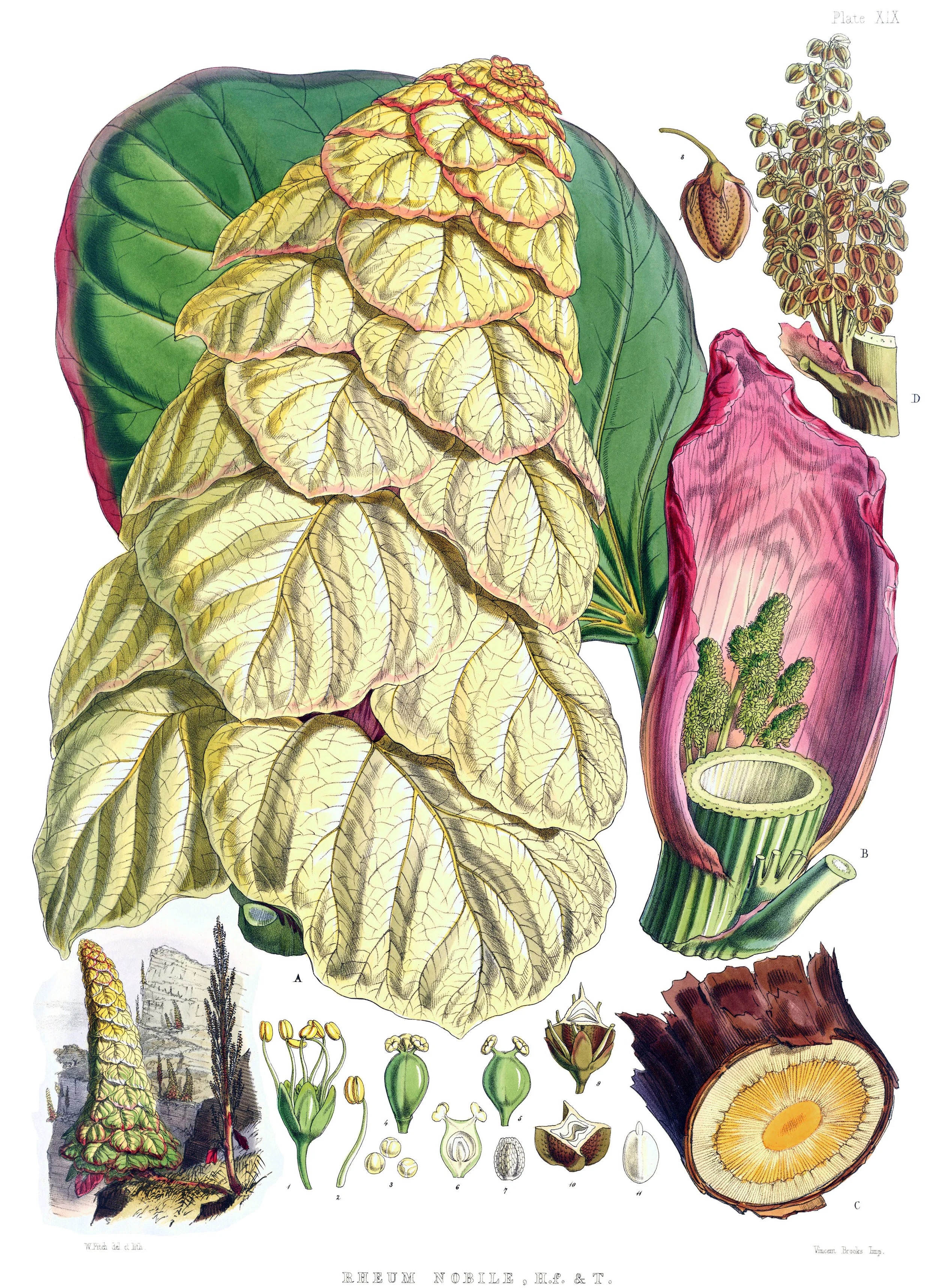
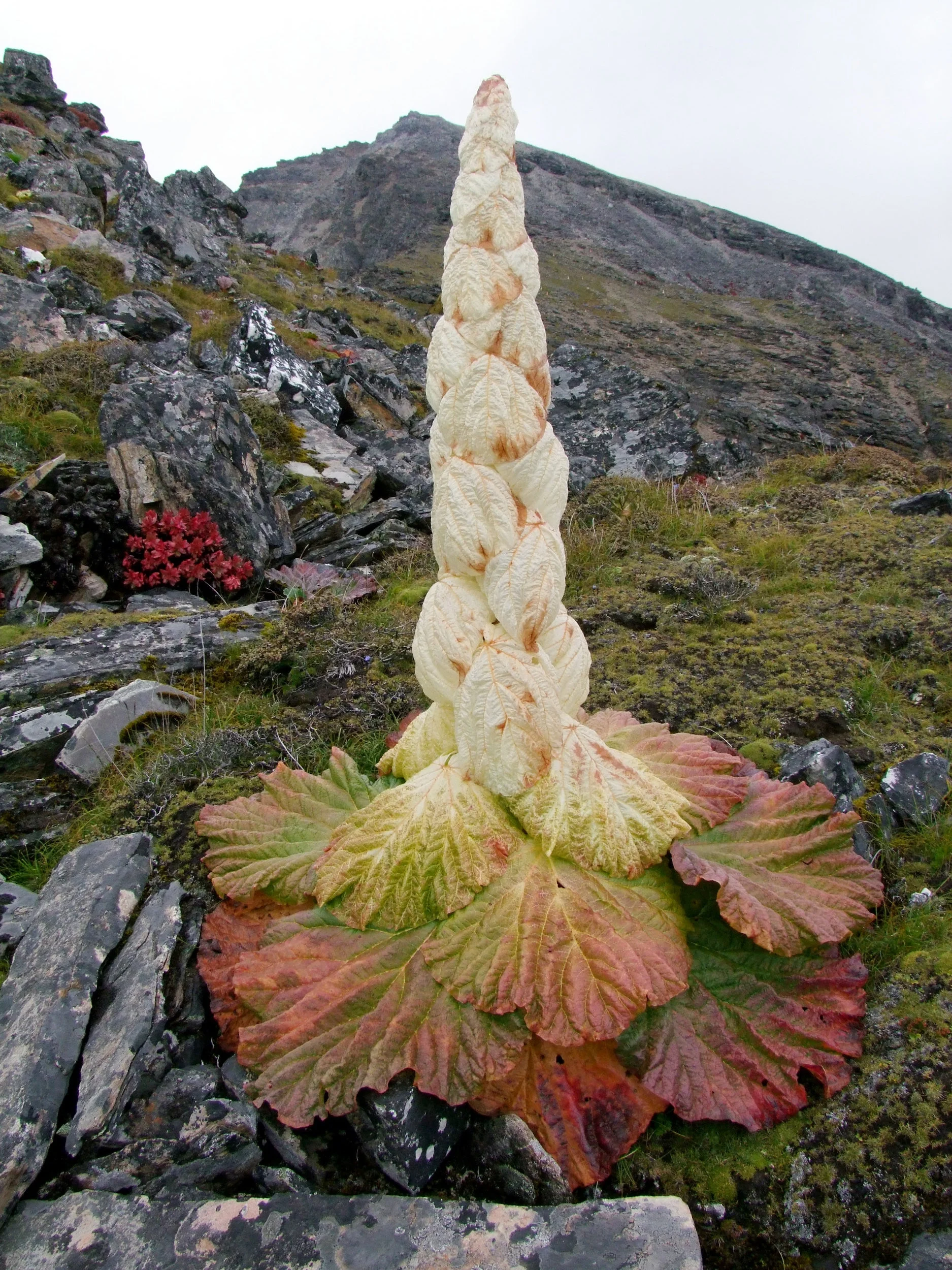
Meet the noble rhubarb, Rheum nobile. Growing at elevations between 13,000 and 15,000 feet (4000–4800 m), this species is quite deserving of its noble status. Plants growing at such elevations face some serious challenges. Temperatures regularly drop well below freezing and there is no shortage of damaging UV radiation. As with most alpine zones, a majority of plants cope with these conditions by growing prostrate over the ground and taking what little refuge they can find behind rocks. Not Rheum nobile. This member of the buckwheat family can grow to heights of 6 feet, making it easily the tallest plant around for miles. 

The most striking feature of this plant is the large spire of translucent bracts. These modified leaves contain no chlorophyll and thus do not serve as centers for photosynthesis. Instead, these structures are there to protect and warm the plant. Tucked behind the bracts are the flowers. If they were to be exposed to the elements, they would either freeze or be fried by UV radiation. Instead, these ghostly bracts contain specialized pigments that filter out damaging UV wavelengths while at the same time creating a favorable microclimate for the flowers and seeds to develop. In essence, the plant grows its own greenhouse.

Photo by Mark Horrell licensed under CC BY-NC-SA 2.0

Photo by Mark Horrell licensed under CC BY-NC-SA 2.0

As a result, temperatures within the plant can be as much as 10 degrees warmer than the ambient temperatures outside. At such elevations, this is a real boost to its reproductive efforts. Even more of a challenge is the fact that at this elevation, pollinators are often in short supply. Plants have to do what they can to get their attention. Not only does Rheum nobile offer a visual cue that is in stark contrast to its bleak surroundings, it also goes about attracting pollinators chemically as well.

Rheum nobile has struck up a mutualistic relationship with fungus gnats living at these altitudes. The plant produces a single chemical compound that attracts the female fungus gnats. The females lay their eggs in the developing seeds of the plant but, in return, pollinate far more flowers than they can parasitize. These organisms have managed to strike a balance in these mountains. In return for pollination, the fungus gnats have a warm place to raise their young that is sheltered from the damaging UV radiation outside. 

Photo Credits: [1] [2] [3]

Further Reading: [1] [2] [3] [4] [5]

Sun Selection

Matthew H. Koski & Tia-Lynn Ashman [SOURCE]

Matthew H. Koski & Tia-Lynn Ashman [SOURCE]

When we think about the evolution of flower morphology, we instantly jump to conversations about pollinators. This is for good reason. If it were not for these third party players, much of the sexual reproduction in the plant world would grind to a halt. However, one aspect of floral evolution that I almost never consider is light availability. Plants live in a wide variety of different habitats and thus experience vastly different levels of light. 

The way in which organisms respond to light can vary but a major driver of this is latitude. Latitudinal variation in pigmentation, for example, was first documented in birds by a man named Constantin Wilhelm Lambert Gloger. In 1833 he noted that birds from more humid environments around the equator tend to be darker in color than birds living in more northern, arid environments. Without getting too far off topic, this observation led others to notice this trend in mammals as well. Mammals from higher latitudes tend to be less pigmented than those from equatorial regions.

The simple answer to this has to do with UV radiation. There is more UV radiation making its way to the surface at the equator than at higher latitudes. Simple physics really. Over time, this manifests in selective pressures on the organisms that live there. This phenomenon has been coined "Gloger's Rule." Whereas this has been documented in a wide variety of animal life, explanations for geographic variations in floral pigment are lacking. 

A recent paper published in Nature Plants changes this. Using a widespread species in the rose family, Argentina anserina, researchers documented changes in the floral pigmentation patterns in the UV spectrum as a function of latitude. As many of you know, many pollinators see well beyond what we humans can see, deep into the UV spectrum. Flowers utilize a wide array of patterns only visible as UV wavelengths to attract them. What the researchers found was that in Argentina anserina, the size of the UV patterning on the flowers increases in plants growing closer to the equator. This enhances plant-pollinator interactions where pollinators are more prevalent. In higher latitudes, there simply isn't as much UV radiation to utilize. 

image.jpg

Photo Credit: Matthew H. Koski & Tia-Lynn Ashman [SOURCE]

Further Reading:

http://www.nature.com/articles/nplants20147

Cast In Iron

Photo by Phillip Merritt licensed under CC BY-NC-SA 2.0

Photo by Phillip Merritt licensed under CC BY-NC-SA 2.0

When it comes to hardy houseplants, few species can hold a candle to the Aspidistra. With their ability to tolerate dismal lighting conditions and less than stellar air quality, it is no wonder the this genus was a favorite among the middle class during the Victorian era. They were so common during that time period that George Orwell himself used them as a metaphor in his 1936 novel "Keep the Aspidistra Flying." Today they are nothing more than space fillers. Commonly known as "cast iron plants," they are a natural step up from silken foliage in waiting rooms and cubicles. They can virtually be ignored and still maintain their composure. For a houseplant, this is pretty incredible. However, this genus did not originate in the home. It is just as wild as any other plant out there. What are the Aspidistra and where do they come from?

Photo by justinleif licensed under CC BY-NC-SA 2.0

Photo by justinleif licensed under CC BY-NC-SA 2.0

With their long, strap-like leaves that seem to pop out of the dirt at random, it is not readily apparent that these plants belong to the same family as asparagus - Asparagaceae. Since the 1980's, botanists have described upwards of 93 different species within the genus. They are native to eastern Asia and hit their peak diversity in China and Vietnam. Many species within this genus are endemic to these areas. 

Photo by Scott Zona licensed under CC BY-NC 2.0

Photo by Scott Zona licensed under CC BY-NC 2.0

Aspidistra as a whole are understory species, growing on the ground underneath dense canopies of trees and shrubs. This is why they can adapt so well to the low light conditions of homes and offices. Though they are mostly tropical in nature, Aspidistra have been known to cope with temperatures as low as −5 °C (23 °F). Despite their leafy appearance, Aspidistra have surprisingly beautiful flowers. You just have to know where to look. 

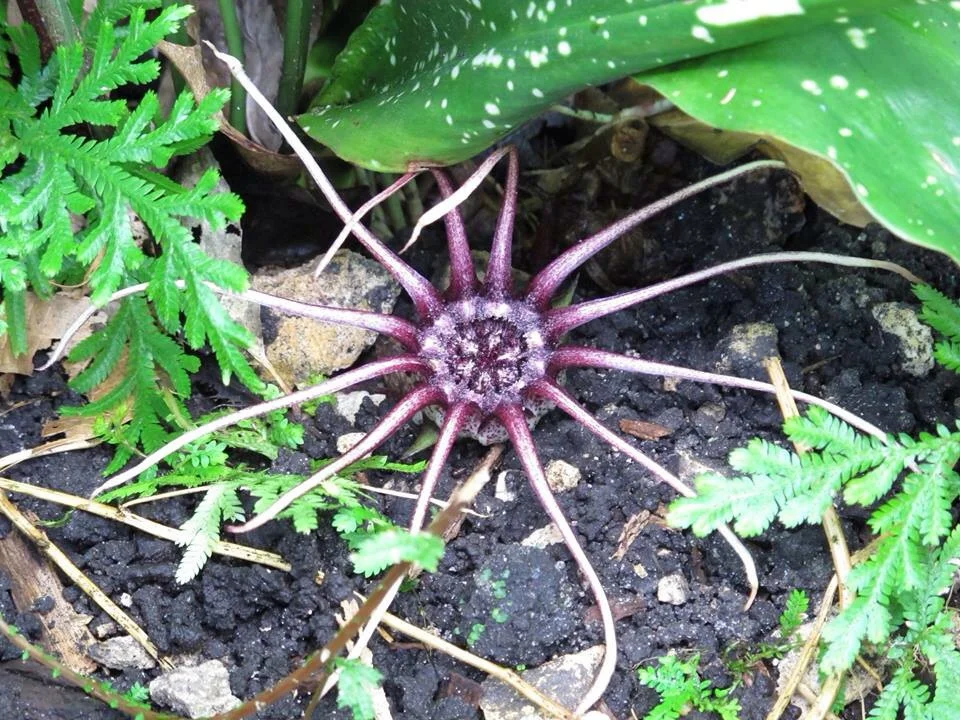
Flowers are produced at the base of the plant. They are often covered by litter and soil. Despite their cryptic nature, they are nonetheless incredibly beautiful and complex. The flowers are spider-like with a large flattened stigma. They are also the key to identifying different species. Their pollinators are thought to consist mostly of flies, beetles, and the occasional fungus gnat. There is some evidence that some species of Aspidistra are even pollinated by amphipods in the soil. If this is true, it is surely one of the most unique pollinator syndromes ever discovered. 

So, there you have it. One of the most commonly kept and ignored houseplants just happens to be quite interesting. Every plant has an evolutionary and ecological history that has shaped its kind over millennia. It just goes to show you that even the most common houseplants have a story to tell. Think about that next time you come across these growing in a stuffy waiting room. 

Photo Credit: justinleif (http://bit.ly/1srlbwk), scott.zona (http://bit.ly/1wQMdcZ), Phillip Merritt (http://bit.ly/14Rcbph)

Further Reading: [1] [2] [3] [4] [5] [6]