Ruta-Muraria

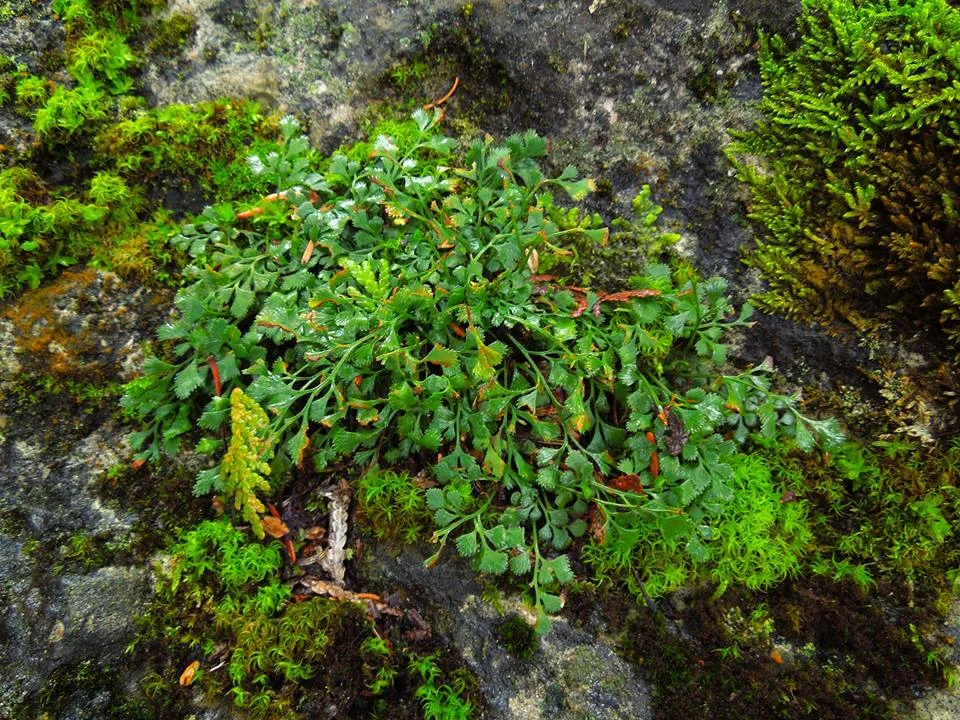
In my opinion, the smaller a plant is, the more character it has. Wall rue (Asplenium ruta-muraria) is a wonderful demonstration of this. The genus of ferns to which it belongs, Asplenium, is rather large, containing somewhere along the lines of 700 species worldwide. 

Wall rue can be found growing both in North America and Europe. Its distribution is a reminder of the great land bridges that once connected the continents back when ocean levels were much lower than they are today. The specific epithet "ruta-muraria" roughly translates to "bitter herb of walls." Along with its common name, these seem to hint at where this tiny fern likes to grow. Indeed, at least in Europe, this is a fern of stone walls, growing among the myriad cracks and crevices where microclimates are favorable for its spores to germinate. 
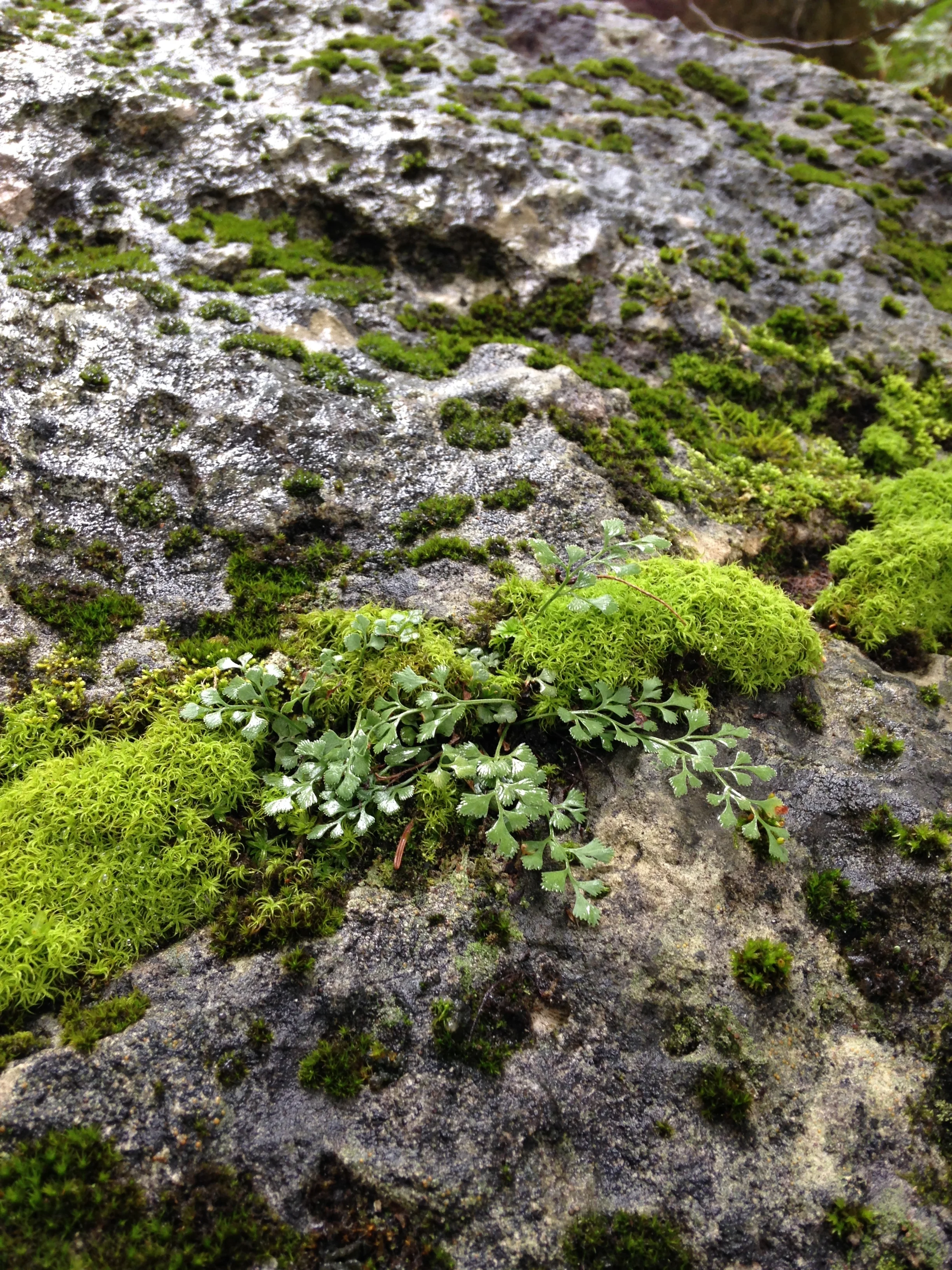
In North America, however, wall rue seems to be a bit more picky. Wall rue is a calciphile meaning it can really only be found in abundance on natural limestone outcroppings. As a result, it is considered a threatened or endangered species throughout most of the continent. The aspect of its habitat I find most interesting is that the limestone it relies upon is the result of an ancient sea that covered parts of North America during the Silurian Period some 443.8–419.2 million years ago. If it were not for the solidified remains of ancient marine organisms, wall rue and many other plant lineages would not be here, at least not in the way in which we know them. 

Another interesting aspect of wall rue biology is that this little fern is helping paleontologists in Europe discover potential glacial refugia - ice free areas where plants and animals were able to survive during the height of glaciation. Refugia were likely epicenters of biodiversity, which expanded to recolonize the continents once the ice sheets receded. 

Wall rue, as well as other rock ferns in the genus Asplenium occur in two forms in nature - a diploid form with two sets of chromosomes and a polyploid form containing multiple sets of chromosomes. Polyploids arise from mutated diploids and can be found growing over a wider range than their more restricted diploid parents. By studying the relatedness of different diploid populations, researchers are able to deduce where some glacial refugia may have been located. In this way, these tiny little ferns are offering a rare but clear window into the Earth's long gone past. 

Further Reading: [1] [2] [3]
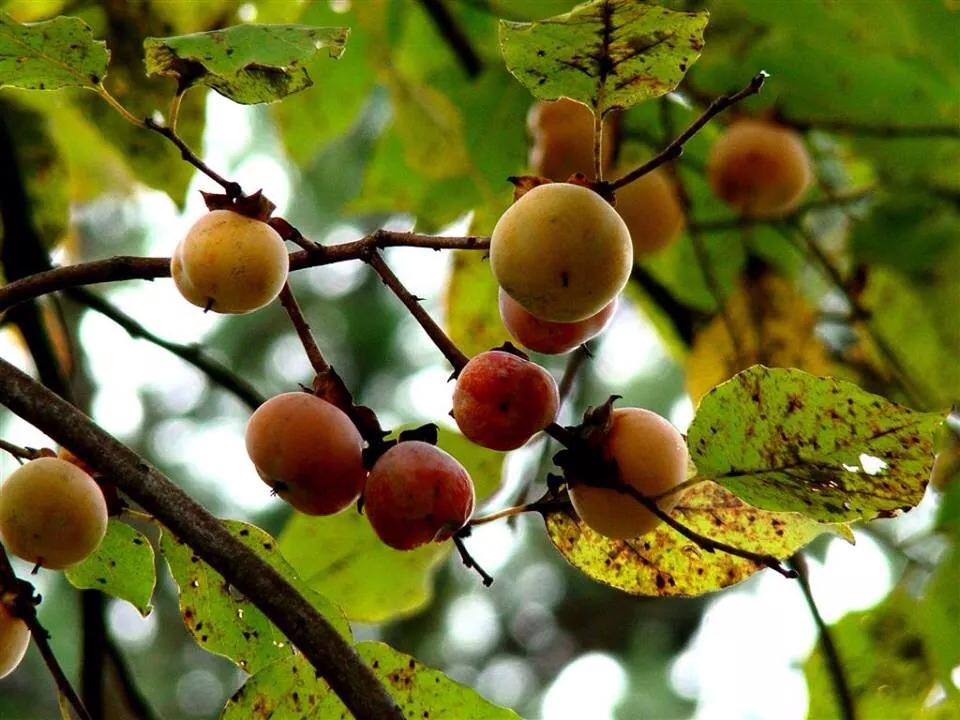
American Persimmon

Photo by Doug McAbee licensed under CC BY-NC 2.0

Photo by Doug McAbee licensed under CC BY-NC 2.0

I will never forget the time I went to the grocery store and bought what I thought were strange tomato varieties. I got home and dug into them only to discover they were not tomatoes at all. I quickly realized the error in my judgment. Instead of the unmistakable flavor of a tomato, what I experienced was something slightly sweet and kind of astringent. I had inadvertently purchased a couple persimmon fruits. I was young and naive so I will cut myself some slack, however, like any good mistake, I was rewarded by the inadvertent introduction to a fascinating fruit I had never experienced before. 

Thinking this to be some strange tropical species, I was surprised to learn that North America does indeed have its own species of persimmon. Known scientifically as Diospyros virginiana, the American persimmon is native to much of the eastern U.S. but is absent north of Pennsylvania. We are lucky, biogeographically speaking, to have this species as the family to which it belongs, Ebenaceae, is predominantly tropical. It is an early successional tree species, often growing on recently abandoned farmland. In the spring this shrubby tree produces small yet attractive white and yellow flowers. American persimmon are dioecious meaning individual trees are either male or female. Their main pollinators are bees.  

As is often seen with many fruiting tree species,  there is a lot of variety between the fruits of different persimmons. They can range in size from small crabapples to the tomato-like fruits we find in the grocery store. There are those who suspect the fruits of the American persimmon to be a throwback to a time when animals like woolly mammoths and ground sloths roamed this continent, dispersing persimmon seeds as they roamed across the terrain. Indeed, fossils of American persimmon have been found in Miocene deposits in areas of Greenland and Alaska which suggests that this species has undergone range contraction, potentially due to the loss of these large seed dispersers. However, modern day evidence would seem to suggest otherwise. Today, much smaller animals like raccoons and opossum seem to do just as good of a job as a larger animal would. It is likely that the constricted range of the American persimmon has more to do with climate than seed dispersal. 

If you have never tried a persimmon before then seek one out and give it a go. If you find them in a grocery store, there is a good chance the fruit belongs to the Asian species (Diospyros kaki). The key to enjoying an American persimmon is making sure its ripe. If you are too early you are going experience some of the worst tannin dry mouth (I honestly don't think I will ever convince my mother to eat another strange fruit again). Either way, this neat species often goes overlooked until it is in fruit. Keep your eye out for fruiting persimmon in your area and report back if you decide to sample some. 

Photo Credit: Doug McAbee (http://bit.ly/1xznvPx)

Further Reading:
http://www.na.fs.fed.us/pubs/silvics_manual/volume_2/diospyros/virginiana.htm

Is it a Fungus? Is it a Forb? No, it's a Tree!

Botanical gardens are winter sanctuaries for a northerner like myself. Winter tree ID can only do so much for me during these times. As such, I try my best to make regular trips to tropical houses wherever and whenever I can. On a recent excursion to the Missouri Botanical Garden, I came across something completely unexpected.

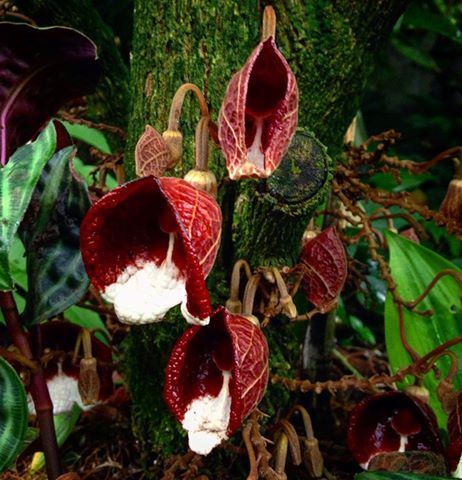
I was perusing their tropical house aptly named "The Climatron." As I rounded a corner I happened to look down and saw what looked like something only a member of the birthwort family (Aristolochiaceae) could produce. There, lying near the ground were a cluster of some of the coolest flowers I have personally laid eyes on.

Photo by Cymothoa exigua licensed under CC BY-SA 3.0

Photo by Cymothoa exigua licensed under CC BY-SA 3.0

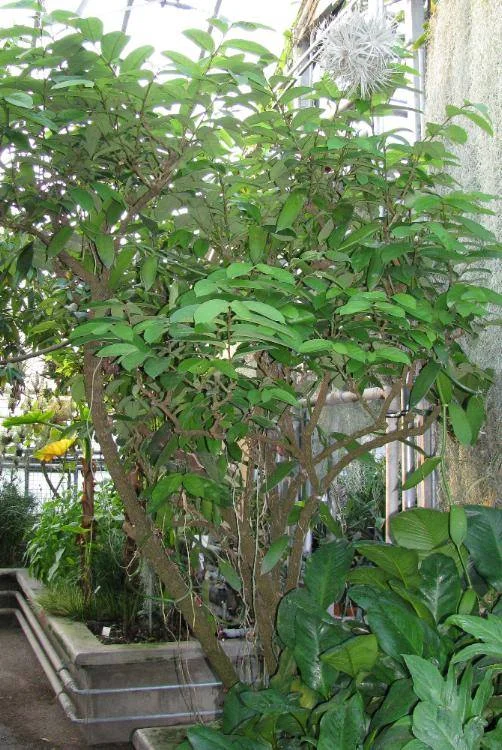
I began searching for the plant that produced them. Up until this point, I have only encountered members of this family in the form of low-lying understory herbs and scrambling vines dangling from the canopy. There were no apparent leaves associated with these flowers and the part of my brain responsible for search images became confused. I traced the flower stems to their place of origin and realized they were attached to the nearest trunk. I followed the trunk upwards and realized that what I had found was in fact a small tree!

The species I was looking at was none other than Aristolochia arborea, a small tree native to the tropical forests of Central America. Needless to say I was floored. There is something to be said about any plant family than can vary this much in size and habit. The coolest aspect about this tree is that, similar to the more herbaceous members of this family, the flowers are produced close to or directly on the forest floor.

A closer inspection of these strange blooms reveals an interesting morphology. It would appear that they are mimicking fungi in the genus Marasimus. Now this could simply be a manifestation of apophenia. Was I seeing patterns where there are none? Of course, this was a job for scientific literature.

It seems I may have been on to something. Botanists agree that in the wild this plant is pollinated by fungus gnats and flies. However, no direct observations of this have ever been made. That being said, the flowers do emit a rather musty smell that could very well be described as "fungal." Regardless, this is an excellent choice of tree to showcase in a botanical garden because stumbling into it like I did led me down an curious path of discovery.

Tree photo credit: Cymothoa exigua (Wikimedia Commons)

Further Reading: [1] [2]

Osage Orange

As a kid I used to get a kick out of a couple trees without ever giving any thought towards what it was. My friend's neighbor had a some Osage orange trees (Maclura pomifera) growing at the end of his driveway. Their houses were situated atop a large hill and the road was pretty much a straight drop down into a small river valley. After school on fall afternoons, we would hang out in my friends front yard and watch as the large "hedge apples" would fall from the tree, bounce off the hood of his neighbor's car (why he insisted on parking there is beyond me) and go rolling down the hill. I never would have guessed that almost two decades later the Osage orange would bring intrigue into my life yet again. This time, however, it would be because of the evolutionary conundrum it presents to those interested in a paleontological mystery...

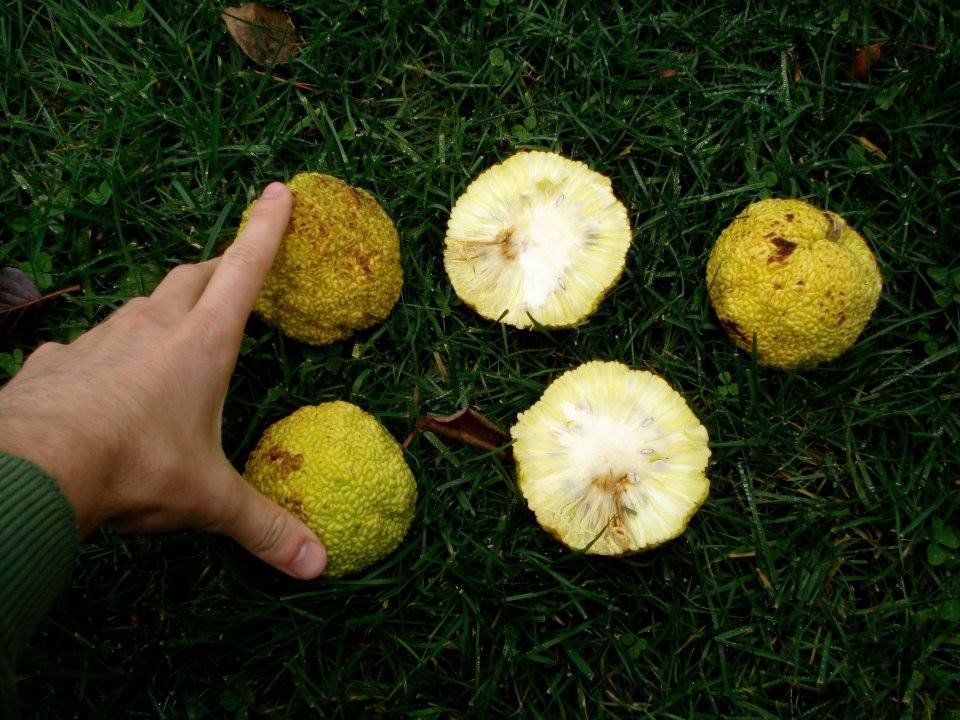
The fruit of this tree are strange. They are about the size of a softball, they are green and wrinkly, and their insides are filled with small seeds encased in a rather fibrous pulp that oozes with slightly toxic white sap. No wild animal alive today regularly nibbles on these fruits besides the occasional squirrel and certainly none can swallow one whole. Why then would the tree go through so much energy to produce them when all they do anymore is fall off and rot on the ground? The answer lies in the recently extinct Pleistocene megafauna. 

The tree is named after the Osage tribe who used to travel great distances to the only known natural range of this tree in order to gather wood from it for making arrows. It only grew in a small range within the Red River region of Texas. When settlers made it to this continent, they too utilized this tree for things like hedgerows and natural fences. 

What is even stranger is that recent fossil evidence shows that Maclura once had a much greater distribution. Fossils have been found all the way up into Ontario, Canada. In fact, it is believed that there were once 7 different species of Maclura. It was quickly realized that this tree did quite well far outside of its current natural range. Why then was it so limited in distribution? Without the Pleistocene megafauna to distribute seeds, the tree had to rely on flood events to carry the large fruit any great distance. With a little luck, a few seeds would be able to germinate out of the rotting pulp. Botanists agree that the Red River region was a the last stronghold for this once wide ranging species until modern man came on the scene. 

Another clue comes from the toxicity of the fruits. Small animals cannot eat much of it without being poisoned. This makes sense if you are a Maclura relying on large animals as dispersers. You would want to arm your fruit just enough to discourage little, inefficient fruit thieves from making a wasteful meal out of your reproductive effort. However, by limiting the amount of toxins produced in the fruit, Maclura was still able to rely on large bodied animals that can eat a lot more fruit without getting poisoned. Today, with the introduction of domesticated megafauna such as horses and cows, we can once again observe how well these fruits perform in the presence of large mammals. 

Finally, for anyone familiar with Maclura, you will notice that the tree is armed with large spines. Why the heck does a large tree need to arm itself so extravagantly all the way to the top? Again, if you need things like mammoths or giant ground sloths to disperse your seeds, you may want to take some extra precautions to make sure they aren't snacking on you as well. It takes energy to produce spines so it is reasonable to assume that the tree would not go through so much trouble to protect even its crown if there once wasn't animals large enough to reach that high. The Pleistocene megafauna went extinct in what is evolutionarily speaking only the blink of an eye. Trees like the Osage orange have not had time to adapt accordingly. As such, without the helping hand of humans, this tree would still be hanging on to a mere fraction of its former range down in the Red River region of Texas.

Further Reading:
http://plants.usda.gov/core/profile?symbol=MAPO

http://www.americanforests.org/magazine/article/trees-that-miss-the-mammoths/

http://www.plosone.org/article/info:doi%2F10.1371%2Fjournal.pone.0001745

Kin Selection in Plants

Apparently some plants can recognize their relatives...

The plant world is highly competitive. Since they can't move around, plant have gotten quite creative in terms of defense and competition. From brute force to chemical warfare, plants are not the static entities that most write them off as. And, while most of what we see is going on above ground, underground, things get even more crazy.

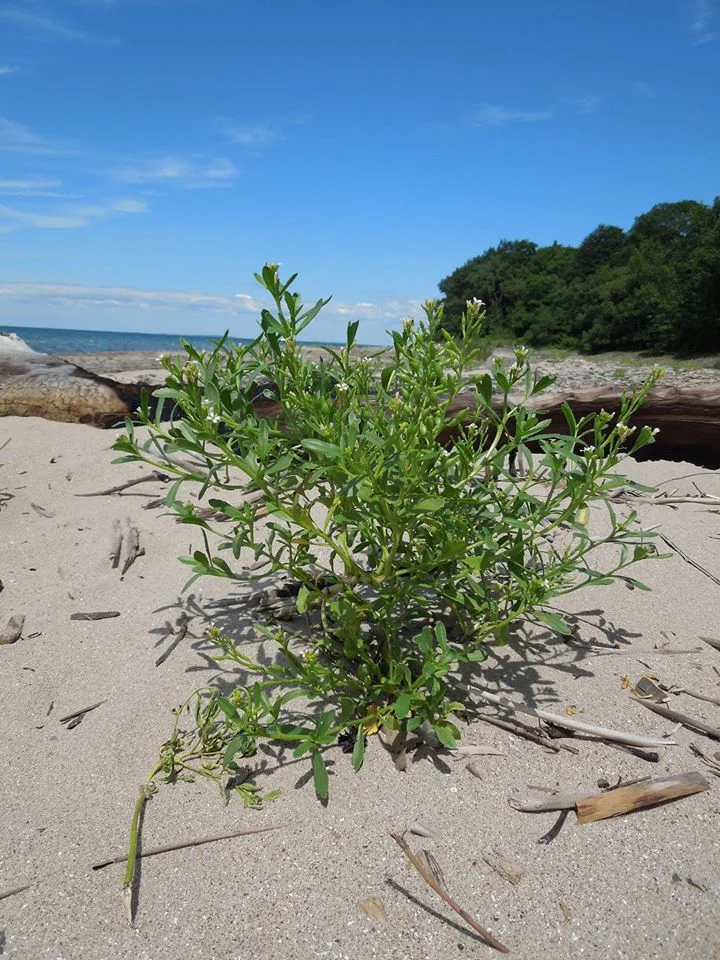
Recent evidence shows that the sea rocket (Cakile edentula) seems to be able to distinguish between plants that it shares DNA with and plants that it doesn't. According to a study done by researchers at McMaster University in Hamilton, Canada, plants that grow around genetic relatives allocated less to root growth than those around non-relatives. Basically, when planted near a non-relative, the sea rocket will expand its root system to try and get the most out of its surroundings. When planted near a relative, the plant limits this expansion. So what does this mean? Well, they believe that the plants are recognizing their relation to other plants and attempting to limit the amount of competition for nutrients and water to genetically related individuals.

So, is this altruism? Not exactly. According to evolutionary geneticist John Kelly, its more along the lines of reduced antagonism. Sea rockets tend to grow in high disturbance beach habitats and because of their short lifespan they frequently self-pollinate. Their seed capsules also tend to stay on the mother plant and because of this, groups of clones tend to be found within close proximity to each other.

If they were to be as aggressive to their relatives as they would be with non-relatives, then they would be essentially competing with copies of their own DNA. From an evolutionary standpoint, preserving copies of your DNA, even in individuals other than yourself, is a boost to overall fitness. The researchers make it a point to note that, in this study, they were not looking at overall lifetime fitness of the plants in question. They do not know if reduced root mass, in this situation, incurs any positive or negative fitness to individuals overall. It should be noted that studies have shown that, at least in some plant species, reduced root mass seems to incur greater reproductive efforts. It is possible that sea rocket, in the presence of related individuals, can produce more seed.

How do the plants recognize their relation to their neighbors? The mechanism is not known at this point. My guess is that there is some form of chemical signature that the plants can recognize. How this information is processed is another story entirely. More and more we are discovering how complex the botanical world really is. According to the researchers, they feel that this type of relationship is not unique to this species alone. Research like this is opening new doors into uncharted and exciting territory.

Further Reading:
http://plants.usda.gov/java/profile?symbol=caed

http://rsbl.royalsocietypublishing.org/content/3/4/435.full

Fiery Peppers - Evolution of the Burn

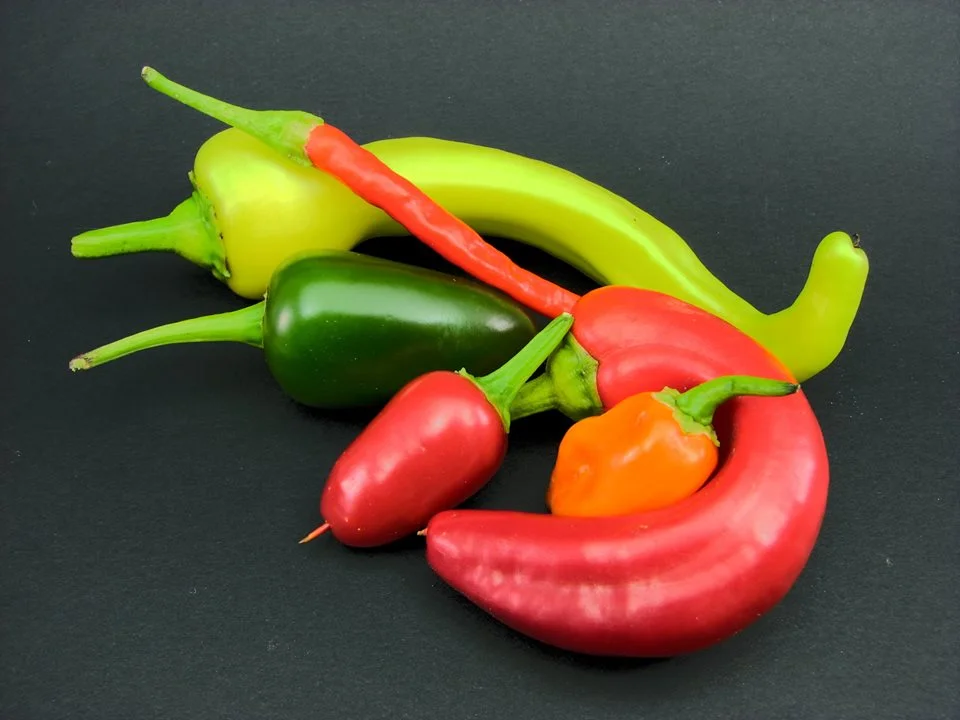
Photo by Ryan Bushby licensed under CC BY 2.5

Photo by Ryan Bushby licensed under CC BY 2.5

Love them or hate them, one must respect the fiery chili pepper. If you're like me then the addition of these spicy fruits can greatly enhance the culinary experience. For others, spice can be a nightmare. Peppers are so commonplace throughout many cultures of the world that it is easy to overlook them. As a plant fanatic, even the simple act of cooking dinner opens the door to so many interesting questions. What is a pepper? Where do they come from? And why are some so spicy?

Peppers evolved in the Americas. The genus to which they belong, Capsicum, is comprised of somewhere around 27 species. Of these, five have been domesticated. They have no relation whatsoever to black pepper (Piper nigrum). Instead, the chili peppers are relatives of tomatoes, potatoes, and eggplants - family Solanaceae.

The fruit that they produce is actually a type of berry. In the wild, Capsicum fruits are much smaller than the ones we buy at the farmers market or grocery store. Centuries of domestication has created such gaudy monsters. The spicy effect one experiences when biting into a pepper is the result of a chemical called capsaicin. It is mainly produced in the placental tissues and the internal membranes. It is in its highest concentrations in the white pith that surrounds the seeds.

As with any fruit, the main goal is seed dispersal. Why then would the plant arm its fruits with fiery capsaicin? The answer to this riddle lies in their wild relatives. As mentioned, the fruits of wild peppers are much smaller in nature. When ripe, they turn bright shades of reds, yellows, and oranges. Their small size and bright coloration are vivid sign posts for their main seed dispersersal agents - birds.

As it turns out, birds are not sensitive to capsaicin. Mammals and insects are, however, and that is a fact not lost on the plants. Capsaicin is there to deter such critters from feeding on the fruits and wasting hard earned reproductive efforts. As such, the well defended fruits can sit on the plant until they are ripe enough for birds to take them away, spreading seeds via their nutrient rich droppings.

It may be obvious at this point that the mammal-deterring properties of Capsicum have been no use on humans. Many of us enjoy a dash of spice in our meals and some people even see it as a challenge. We have bred peppers that are walking a thin line between spicy and dangerous. All of this has been done to the benefit of the five domesticated species, which today enjoy a nearly global distribution. Take this as some food for thought the next time you are prepping a spicy meal.

Photo Credits: Ryan Bushby, André Karwath, and Eric Hunt - Wikimedia Commons

Further Reading:
http://link.springer.com/article/10.1007%2FBF00994601

http://www.jstor.org/stable/4163197…

http://www.press.uchicago.edu/ucp/journals/journal/ijps.html

Mighty Mighty Squash Bees

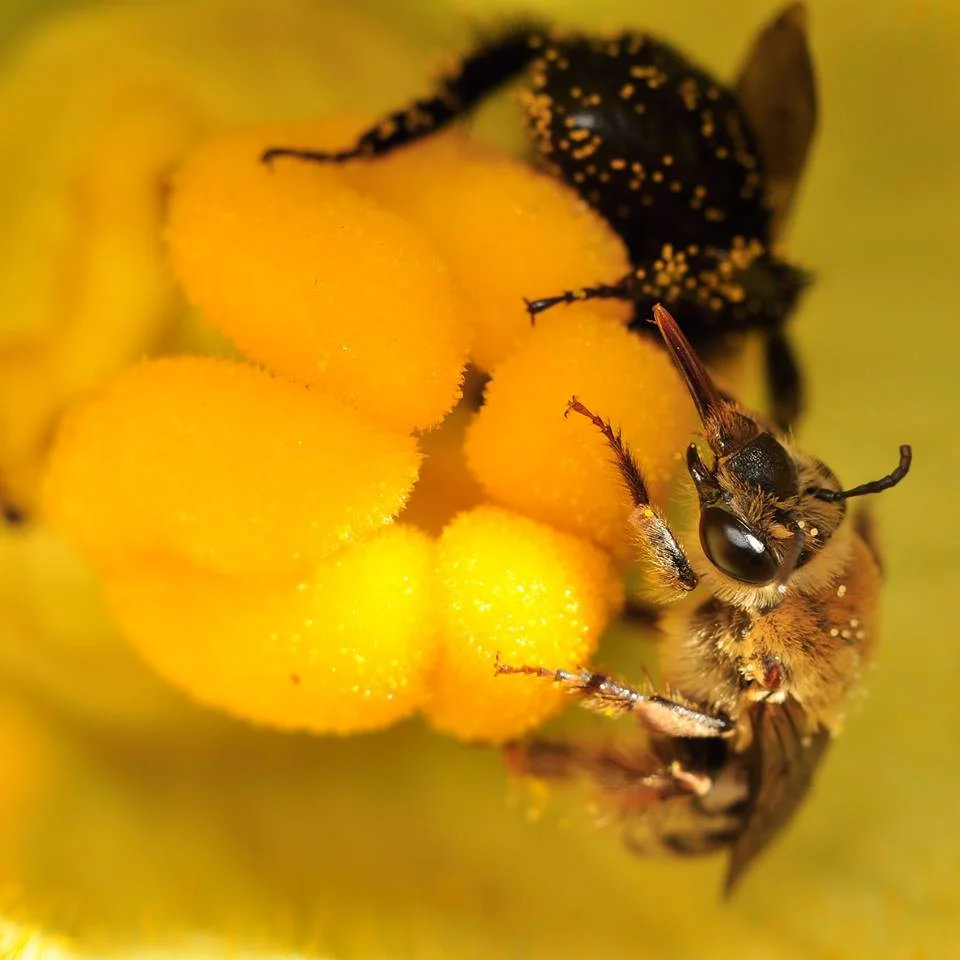
Photo by MJI Photos (Mary J. I.) licensed under CC BY-NC-ND 2.0

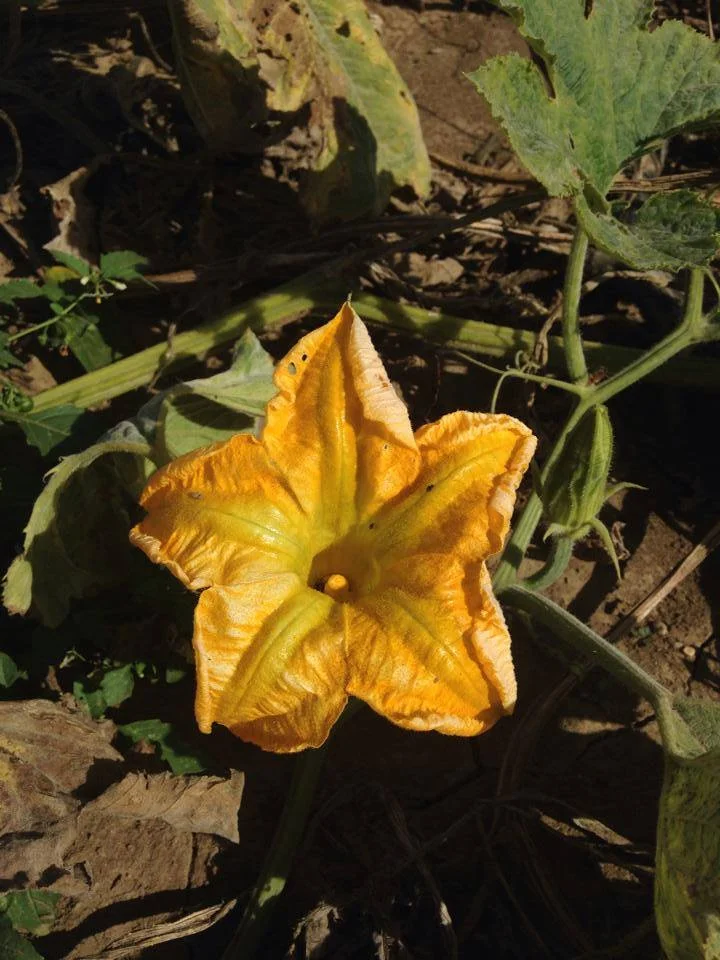
It's decorative gourd season, ladies and gentlemen. If you are anything like me then you should be reveling in the tastes, smells, and overall pleasing aesthetics of the fruit of the family Cucurbitaceae. If so, then you must pay your respects to a hard working bee that is responsible for the sexual efforts of these vining plants. I'm not talking about the honeybee, no no. I am talking about the squash bees. 

If we're being technical, the squash bees are comprised of two genera, Peponapis and Xenoglossa. They are not the hive forming bees we generally think of. Instead, these bees are solitary in nature. After mating (which usually occurs inside squash flowers) the females will dig a tunnel into the ground. Inside that tunnel she places balls of squash pollen upon which she will lay an egg. The larvae consume the protein-rich pollen as they develop. 

The story of squash bees and Cucurbitaceae is a North American story. Long before squash was domesticated, these bees were busy pollinating their wild relatives. As a result, this bee/plant relationship is quite strong. Female squash bees absolutely rely on squash flowers for the pollen and nectar needs of their offspring. In fact, they often dig their brood tunnels directly beneath the plants. 

Because of this long standing evolutionary relationship, squash bees are the best pollinators of this plant family. The flowers open in the morning just as the squash bees are at their most active. Also, because they are so specific to squash, the squash bees ensure that pollen from one squash flower will make it to another squash flower instead of an unrelated plant species. Honeybees can't hold a candle to these native bees. What's more, crowds of eager honeybees may even chase off the solitary squash bees. For these reasons, it is often recommended that squash farmers forgo purchasing honeybee hives for their crops. If left up to nature, the squash bees will do what they are evolutionarily made to do. 

Photo Credit: MJI Photos (https://www.flickr.com/photos/capturingwonder/4962652272/)

Further Reading:
http://www.researchgate.net/profile/Victor_Parra-Tabla2/publication/226134213_Importance_of_Conserving_Alternative_Pollinators_Assessing_the_Pollination_Efficiency_of_the_Squash_Bee_Peponapis_limitaris_in_Cucurbita_moschata_(Cucurbitaceae)/links/549471010cf20f487d2a95b8.pdf

http://www.jstor.org/stable/25084168?seq=1#page_scan_tab_contents

http://extension.psu.edu/plants/sustainable/news/2011/jan-2011/1-squash-bees

On Orchids and Fungi

It is no secret that orchids absolutely need fungi. Fungi not only initiate germination of their nearly microscopic seeds, the mycorrhizal relationships they form supplies the fuel needed for seedling development. These mycorrhizal fungi also continue to keep adult orchids alive throughout their lifetime. In other words, without mycorrhizal fungi there are no orchids. Preserving orchids goes far beyond preserving the plant. Despite the importance of these below-ground partners, the requirements of many mycorrhizal fungi are poorly understood.

Researchers from the Smithsonian Environmental Research Center have recently shone some light on the needs of these fungi. Their findings highlight an important concept in ecology - conservation of the system, not just the organism. Their results clearly indicate that orchid conservation requires old, intact forests.

Their experiment was beautifully designed. They added seeds and host fungi to dozens of plots in both young (50 - 70 years old) and old (120-150 years old) forests. They continued to monitor the progress of the seeds over a period of 4 years. Orchid seeds only germinated in plots where their host fungi were added. This, of course, was not very surprising.

The most interesting data they collected was data on fungal performance. As it turns out, the host fungi displayed a marked preference for older forests. In fact, the fungi were 12 times more abundant in these plots. They were even growing in areas where the researchers had not added them. What's more, fungal species were more diverse in older forests.

The researchers also noted that host fungi grew better and were more diverse in plots where rotting wood was added. This is because many mycorrhizal fungi are primarily wood decomposers. Nutrients from the decomposition of this wood are then channeled to growing orchids (as well as countless other plant species) in return for carbohydrates from photosynthesis. It is a wonderful system that functions at its best in mature forests.

This research highlights the need to protect and preserve old growth forests more than ever. Replanting forests is wonderful but it may be centuries before these forests can ever support such a diversity of life. Also, this stands as a stark reminder of the importance of soil conservation. Less obvious to most is the importance of decomposition. Without dead plant material, such fungal communities would have nothing to eat. Clearing a forest of dead wood can be just as detrimental in the long run as clearing it of living trees.

Research like this is made possible by the support of organizations such as the Native North American Orchid Conservation Center. Head on over to www.indefenseofplants.com/shop and pick up an In Defense of Plants sticker. Part of the proceeds are donated to this wonderful organization, which helps support research such as this! As this research highlights: What is good for orchids is good for the ecosystem.

Further Reading:

http://onlinelibrary.wiley.com/doi/10.1111/j.1365-294X.2012.05468.x/abstract;jsessionid=3385C965FF5BA4CB83290005DFD47FD1.f01t02

Mossive Disjunctions are from the Birds

Photo by barloventomagico licensed under CC BY-NC-ND 2.0

Photo by barloventomagico licensed under CC BY-NC-ND 2.0

Though we may not think about it, plants have migratory capacity. Their migrations are not like those of a wildebeest or neotropical warblers. Instead of moving as individuals, plants migrate via seeds, spores, or pieces of the parent plant that can then grow into a new, albeit genetically identical individual. Either way, long distance dispersal events have long puzzled ecologists. It has been demonstrated time and again that even modest barriers can inhibit propagule movement. Still, it would seem that over the course of time, plants have managed to overcome such boundaries. One way or another, plants have made some impressive migrations.

Some species have really managed to confuse ecologists. Certain mosses and lichens have very curious distributions. There are species that are found only in the Arctic and the very southern tip of South America. Nowhere in between. Why is this? There have been hypotheses regarding wind currents but the genera to which these plants belong originated in the Miocene and Pleistocene, while the Intertropical Convergence Zone (a major barrier between northern and southern wind currents) was already in place.

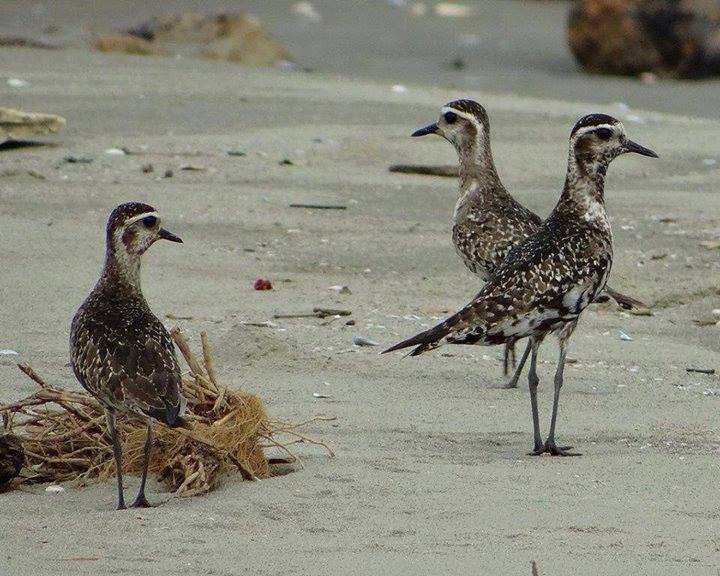
Recently, researchers have looked towards long-distance fliers like plovers to explain these distributions. These birds breed in the Arctic and overwinter in South America. Could these be the vessels by which these plants migrate? It has long been known that seeds passing through the gut of a bird often have high germination rates. Many plant species gear their fruit specifically for this reason. Birds travel great distances in their search for food and breeding territory, much greater than the average plant can. But birds aren't necessarily eating mosses and lichens. However, they do use them in their nests. Spores and bits of vegetative material can then get stuck in their feathers. After breeding, the birds migrate to South America and begin their molt. The feathers containing spores and plant material are now shed into the wild where they can germinate and grow.

Considering the size of these migrations, it is likely that these migratory shore birds, and possibly many other species of migratory birds, play a significant role in the dispersal of these plant species.

Photo Credit: barloventomagico (http://bit.ly/1p1X2WC)

Further Reading:
https://peerj.com/articles/424/

The Deciduous Conifer Conundrum

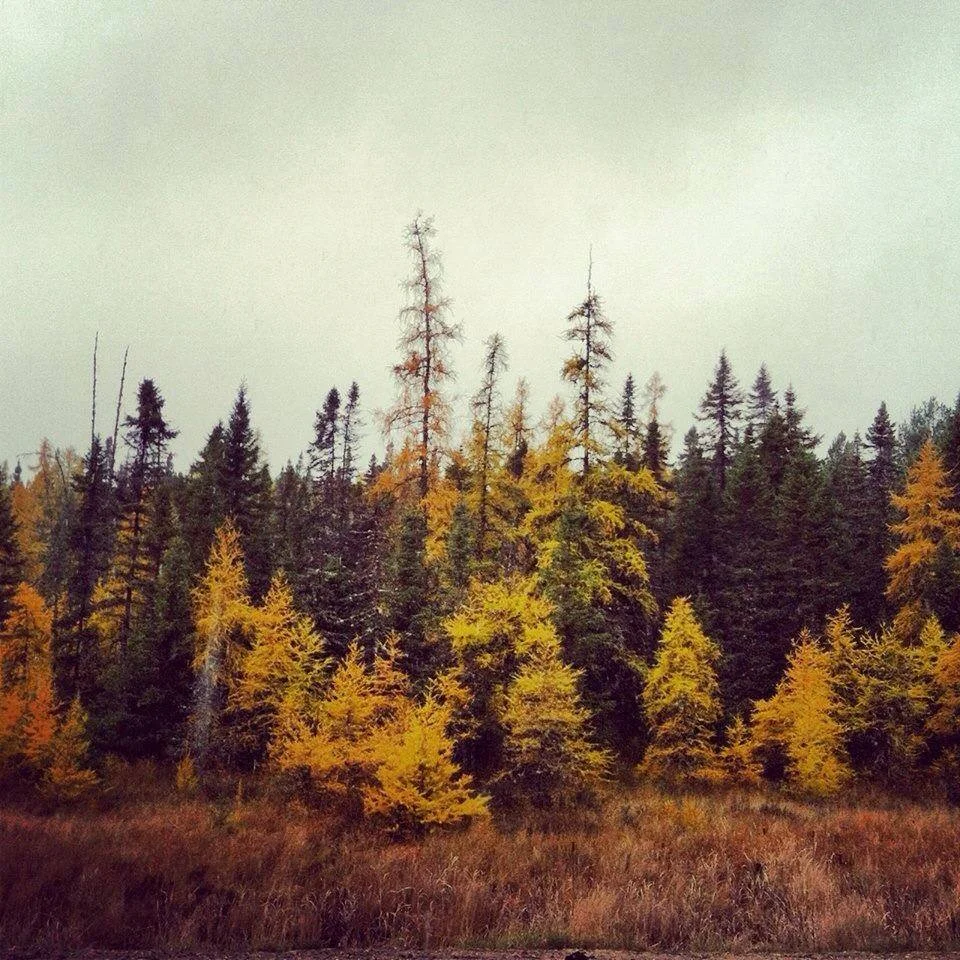
Broad leaf trees get all the glory come fall. Their dazzling colors put on a display for a few weeks every year that is unrivaled. However, it isn't just broad leaf trees that are preparing for winter in this manner. There are some conifers doing the same. The handful that have evolved this deciduous strategy are just as dazzling as their broad leaf neighbors.

The most famous of these are the larches (genus Larix), however, there are others such as baldcypress (genus Taxodium) and the dawn redwoods (genus Metasequoia). So, why have these conifers evolved to be deciduous? There are likely many reasons these genera utilize this strategy but it most likely comes down to cost versus benefit. Needles that last for years are costly to make despite their advantages. They are no guarantee of success either, especially for the larches, which often grow in areas that experience some of the harshest winters on the planet. Heavy snow pack and deep winter chills can take their toll on conifers and many evergreen species show signs of frost damage and broken limbs from snow loads. The habitats in which deciduous conifers are found can be tough places to eek out a living.

By shedding their needles, the larches can get around these issues a bit. They also tend to grow in swampy areas where getting the nutrients needed for survival can be extra difficult. By producing relatively weak needles that are easily replaced from year to year, trees like larches and cypress may get around having to waste resources on more robust needles. Finally, it should be noted that this strategy is by no means less efficient. These genera do quite fine with their deciduous nature. For the most part, these trees are nonetheless successful and can live for centuries. It is mysteries like these that keep the wonderful world of botany interesting.

Further Reading:
http://www.metla.fi/silvafennica/full/sf36/sf363703.pdf

Itty Bitty Bartonia

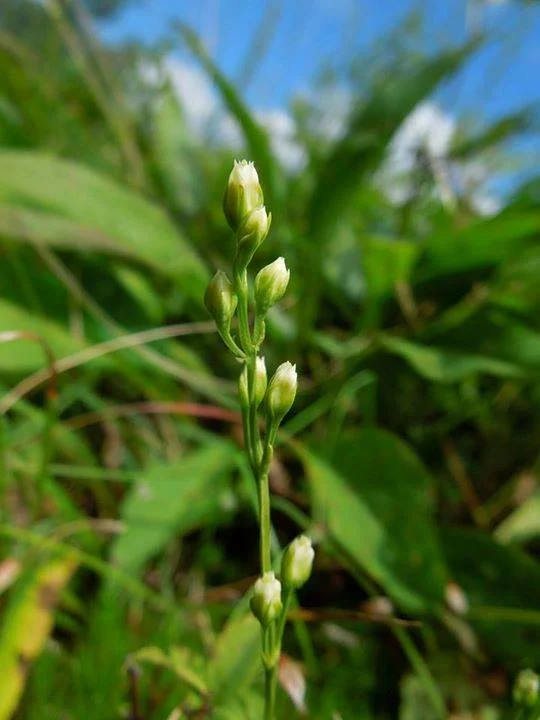
Every plant enthusiast has a handful of species that they search high and low for any time they find themselves out and about. It may be a species you have seen a bunch of times or one your have only read about in the literature. Either way, the search image burns strong in your mind so that when you finally come across the species in question, it is like seeing a celebrity. For me, one of those species is Bartonia virginica.

It may not look like much. Indeed, it is a rather diminutive plant, barely poking its flowers out of the shadows cast by pretty much every other plant near by. However, when conditions are just right, this little gentian seems to flourish. With leaves that have been reduced to small scales that sheath the dainty stem in a couple places, all that really stands out are the tiny, cream colored flowers that cluster near the top. A close inspection of the flowers with a hand lens reveals the unmistakable morphology that runs true throughout the gentian family.

Whereas the stem of the plant does contain chlorophyll, it has long been suspected that this plant must rely on other means of obtaining carbon due to its highly reduced leaves. A paper published in 2009 by Cameron et al., was able to shed some light on this matter. As it turns out, there is strong evidence in support of B. virginica being partially mycoheterotrophic.

This is such a cool little gentian. I was so happy to have come across some. Sometimes it's not always the biggest or the showiest that make our day, but rather the subtle and unique.

Further Reading:
http://plants.usda.gov/core/profile?symbol=bavi3

http://www.amjbot.org/content/97/8/1272.short

Southern Tundra

One would hardly consider the southern half of North America to be a tundra-like environment but even so, some tundra plants exist there today...

Up until about 11,000 years ago, much of North America was covered in massive glaciers that were, in some places, upwards of a mile thick. These colossal ice sheets scoured the land over millennia as they advanced and retreated throughout the Pleistocene. Where they covered the land, nothing except some mosses survived. A vast majority of plants were either wiped out or were forced to survive in what are referred to as glacial refugia.

Refugia are ice free areas either within the range of the ice sheets, such as mountain tops, or areas just outside of the ice sheets. Many of North America's plant species took refuge to the south of the glaciers in what is now the Appalachian Mountains. Echos of these plant communities still exist in the southern US today. Some of which are quite isolated from the current distribution of their species. These plant communities are considered disjunct and coming across them is like seeing back in time.

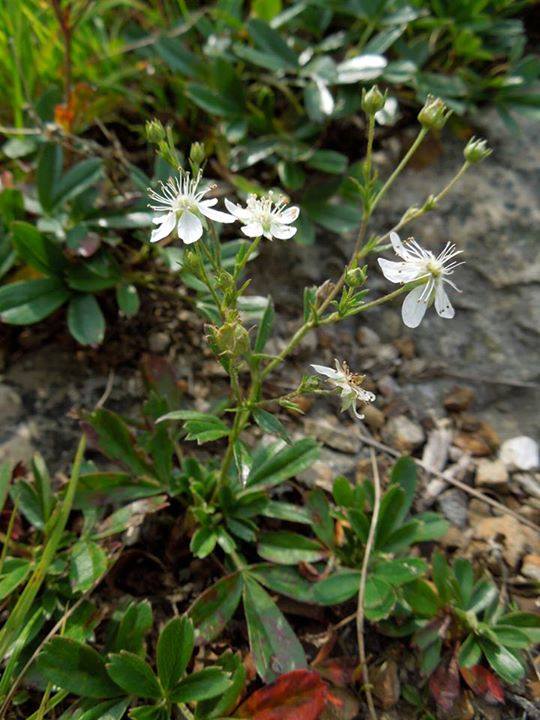
One such plant is the three-toothed cinquefoil (Sibbaldiopsis tridentata). This species is mainly found in northern Canada and Greenland and is considered a tundra species. It needs cold temperatures and is easily out competed in all but the most hostile environments. Why then can you find this lovely cinquefoil growing as far south as Georgia?

The answer are mountains. A combination of high elevation, punishing winds, and lower than average temperatures, means that the peaks of the Appalachian Mountains have more in common with the tundras found much farther north on the continent. As a result of these conditions, plants like S. tridentata have been able to survive into the present while the majority of their tundra associates migrated north with the retreat of the glaciers.

Because of their isolated existence in the Appalachians, S. tridentata is considered endangered in many southern states. Being able to see this plant without having to visit the tundra is quite a unique and humbling experience. It is amazing to consider the series of events that, over thousands of years, have caused this species to end up living on top of these mountains. It is one of those things that one must really stop and mull over for a bit in order to fully appreciate.

Further Reading:
http://plants.usda.gov/core/profile?symbol=sitr3

http://onlinelibrary.wiley.com/…/j.1365-2699.1998.…/abstract

http://www.castaneajournal.org/doi/abs/10.2179/10-039.1

http://instaar.colorado.edu/AW/abstract_details.php?abstract_id=16

Pearly Everlasting

Photo by Pendragon39 licensed under Public Domain

Photo by Pendragon39 licensed under Public Domain

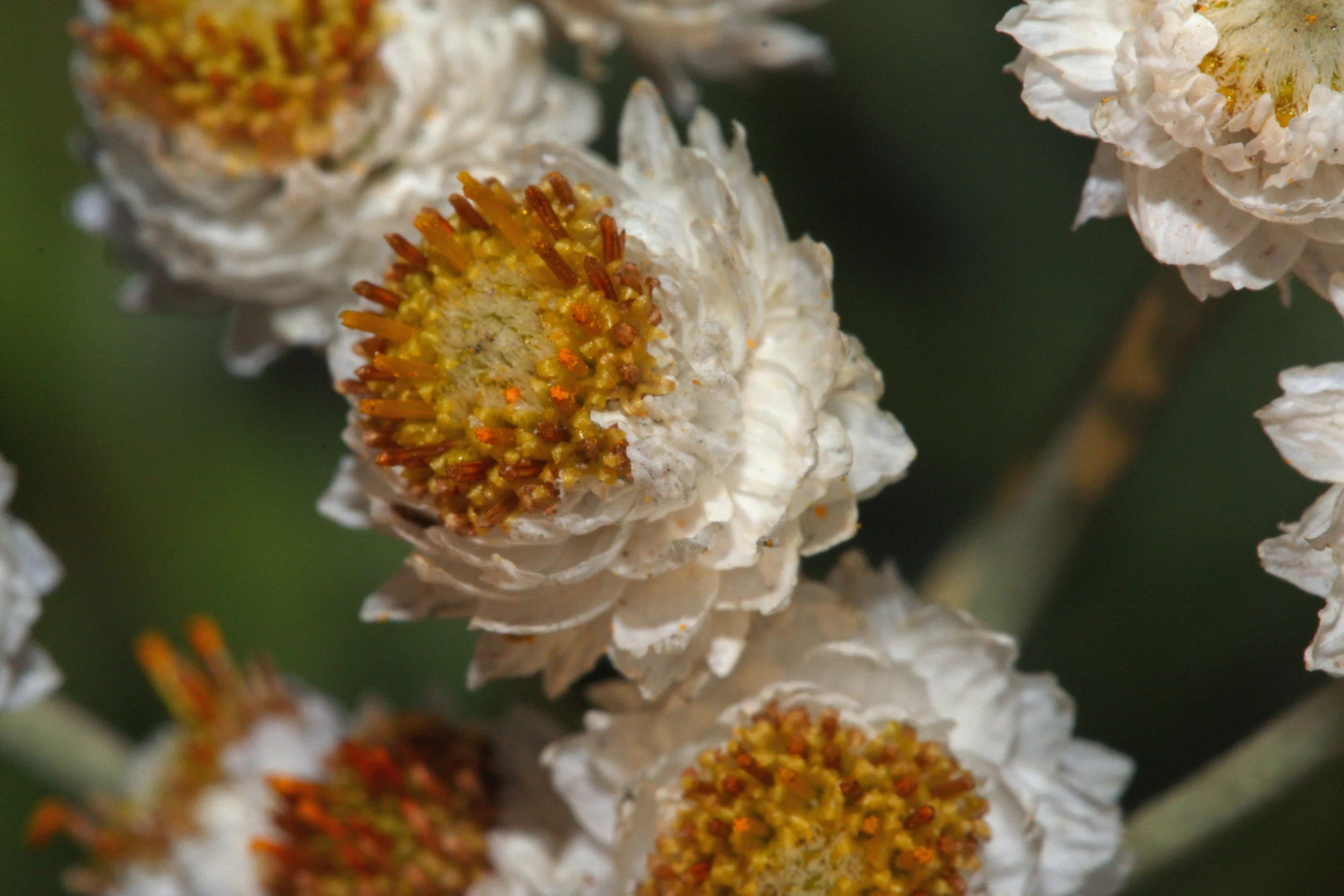
I have gardened with a lot of native plants over the years but pearly everlasting (Anaphalis margaritacea) may be one of my favorites. Not only is it easy to grow, this tough little plant can handle some pretty harsh soil conditions. In the wild, I often find it growing along gravelly roadsides where it puts on quite a show. Let's be honest with each other, who doesn't love a fuzzy plant.

Pearly everlasting is a member of the largest dicot family on the planet, the asters. As such, what appears to be single flowers doing their best imitation of a sunny side up egg is actually a collection of many tiny flowers clustered together to look like one big one. In a sense, this is a form of floral mimicry.

What is most unique about pearly everlasting is that it is dioecious. Individual plants produce disks that are either male or female. I can't really think of other asters that adopt this strategy. And what an awesome strategy it is. Being dioecious means cross-pollination. The reproductive disk flowers are those yellow ones in the center. The pearly white outer ring of each inflorescence is actually made up of a dense cluster of involucre.

© 2009 Walter Siegmund licensed under GNU Free Documentation License, Version 1.2

© 2009 Walter Siegmund licensed under GNU Free Documentation License, Version 1.2

Did I mention this plant is fuzzy? Dense trichomes cover the stem and underside of each leaf. Hairs like this are adaptations to reduce water loss and overheating. However, there is evidence that in pearly everlasting, these hairs can also reduce feeding by spittlebugs. Nymphs looking for a tasty plant to drill into cannot seem to penetrate the dense growth of trichomes, which means each pearly everlasting gets to hold on to its sap.

Again, I can't speak highly enough about this species. It is native to much of North America and, in this writers opinion, should be in the drier portions of every native garden. All you need are a handful of seeds and a small population of pearly everlasting will soon be keeping you company.

Photo Credit: Wikimedia Commons

Further Reading: [1] [2]

Aquarium Banana

image.jpg

One of my first true passions in life was maintaining freshwater aquariums. There is something about being able to observe a world totally foreign to our own that drew me in. It wasn't long before I discovered the splendor of planted aquascapes. I would have to say that my first foray into this realm probably planted the botanical seed that would later explode into the obsession it is today. 

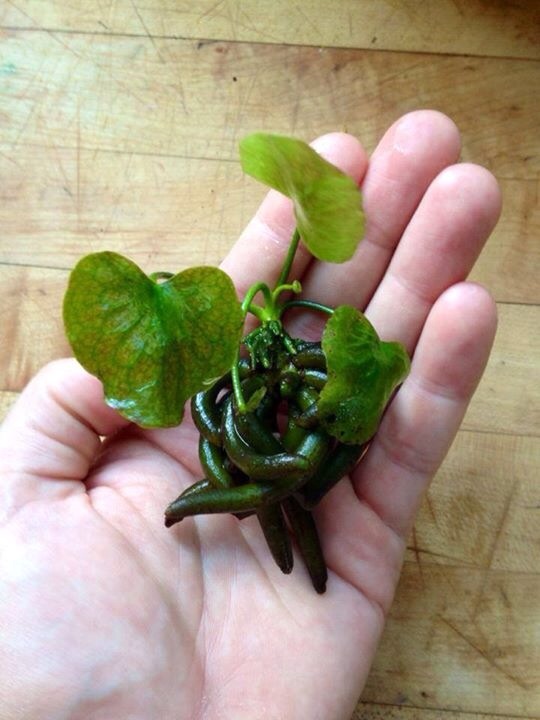
I was always rather perplexed by a plant that I would see for sale at the local aquarium shop. They were labelled as "banana plants" because of their peculiar root structures. They never seemed to fit my aesthetic in those early days so I largely passed them by. Recently I have gotten back into aquariums, only this time it is very plant centric. While perusing the plants offered here in town, I again came across the peculiar banana plant. 

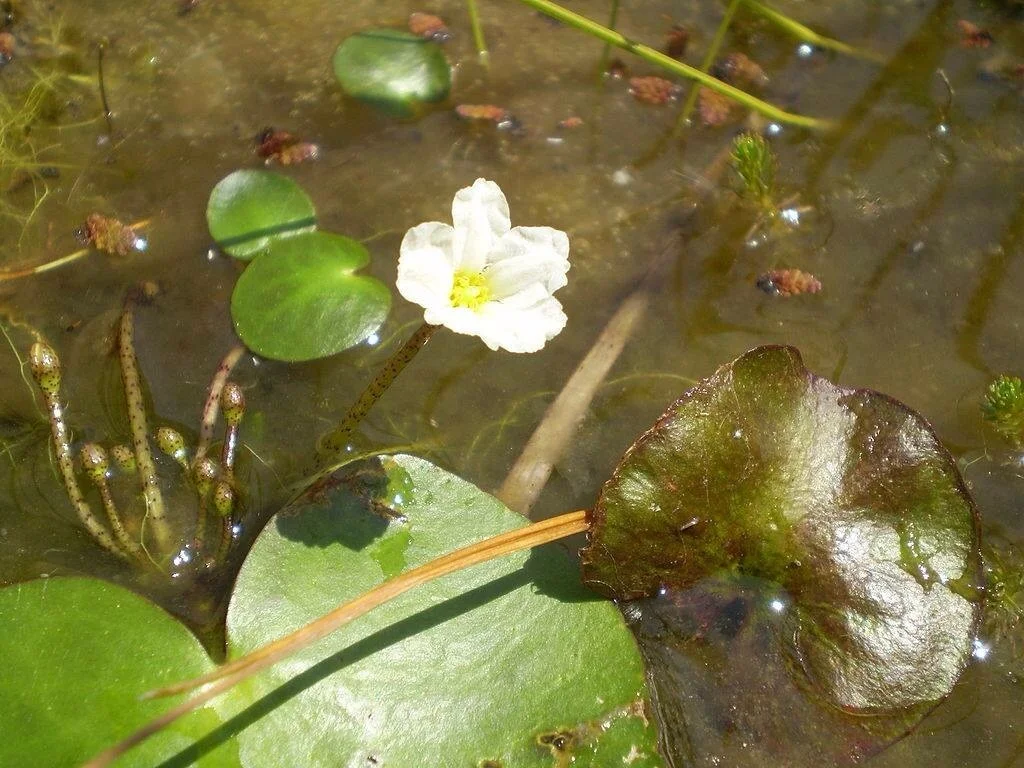
This time around, I am a bit more versed in taxonomy and this plant made more sense. I realized that the banana plants we see for sale for aquariums are small, immature specimens of some sort of "lily pad." A deeper investigation would prove me correct. Though not a true water lily (family Nymphaeaceae), the banana plants nonetheless take on a similar growth form with large, floating leaves emerging from an underwater rootstock. 

Banana plants are known scientifically as Nymphoides aquatica. Their generic name comes from their striking similarity to the afore mentioned water lilies. However, this resemblance is merely superficial. Banana plants belong to the family Menyanthaceae, making it a relative of plants like buckbean (Menyanthes trifoliata). They grow native in calm bodies of water throughout southeastern North America. Whereas the young leaves grow immersed, larger adult leaves eventually make their way to the surface where they float. 

From time to time, small white flowers are produced. This is when its familiar affiliation makes the most sense. This species is dioecious, though seed set is apparently sporadic. Regardless, banana plants readily reproduce vegetatively, either by fragmentation of their roots or by broken leaves settling in a spot and forming roots themselves. 

So far this is an interesting aquarium specimen. It seems to have adjusted to my aquarium rather well and it grows pretty quickly. In time I hope it performs more like it does in the wild than as a sad, stunted specimen doomed to a slow death. Only time will tell. 

Flower Pic: Show_ryu (Wikimedia Commons)

Further Reading: [1] 


Spikenard

image.jpg

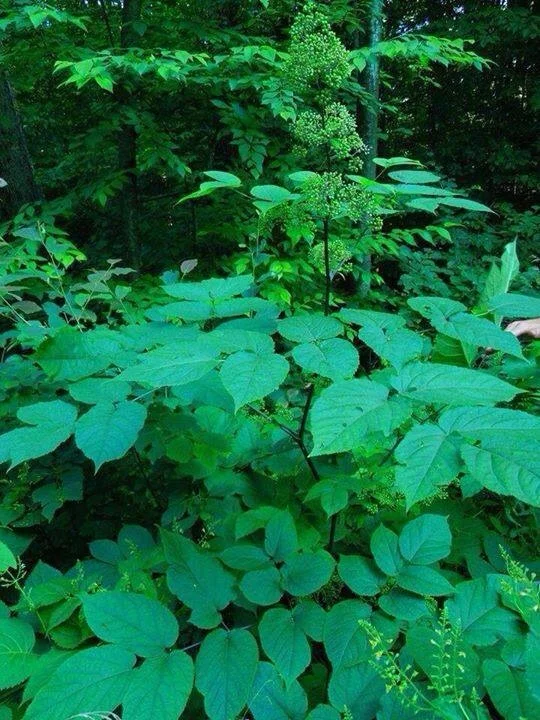
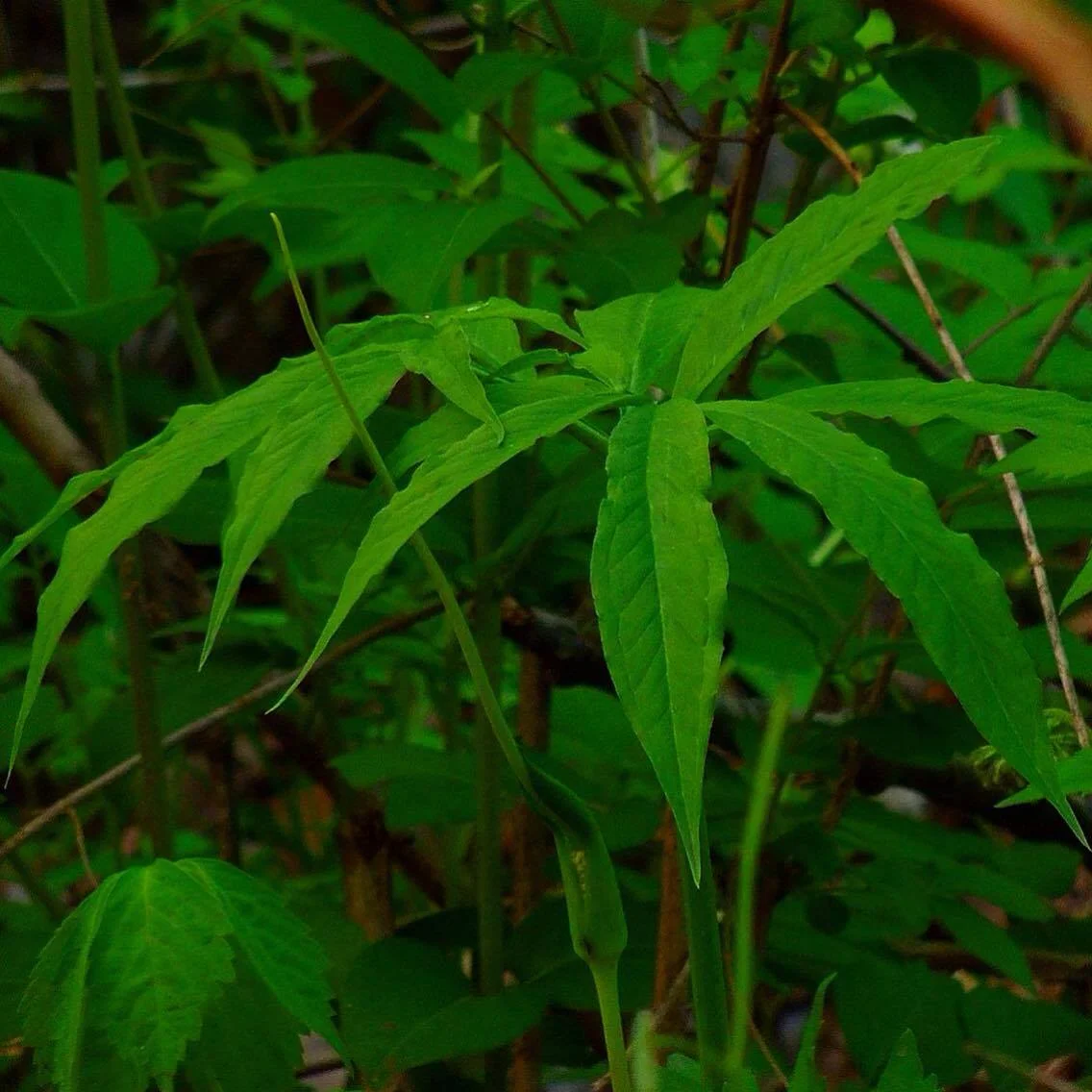
There are times when you go looking for plants without any expectations. I really like those hikes because you never know what you're going to find. Inevitably you end up meeting a lot of old friends but every once in a while you meet a plant that completely throws you for a loop. Aralia racemosa is that plant. 

More commonly referred to as spikenard, Aralia racemosa is both a large and stunningly beautiful member of the same family as ginseng. Growing upwards of 5 feet, its deep purple stem zigzags as it throws out some of the largest compound leaves on any native forb I have ever come across. Each leaf consists of multiple egg-shaped leaflets. Between the stem and each branch grows a long raceme packed full of circular flower bundles. In full bloom, the flowers are crawling with a myriad of insects. 

Standing near this plant, you begin to pick up a rather pleasant odor. Somewhere between sweet and spicy, the entire plant seems to exude a scent that fills the surrounding air. Indeed, this plant is chocked full of different chemical compounds. The flowers eventually give way to dense clusters of green berries that gradually ripen to a deep purple. The contrast between ripe and unripe berries is rather stark and it is believed that the juxtaposition is to better attract birds, which are the main seed dispersers of this plant. 

Genetic analysis has shown that Aralia racemosa is a sister species to Aralia californica in the west. This could be the result of disjunction and consequent speciation brought on by the glaciers. Either way, Aralia racemosa is easily one of the coolest plants I have ever met. I don't know why I don't see it more often. With its staggering beauty and robust growth, it is rather hard to miss. Aralia racemosa would be a great addition to a native shade garden as well. 

Further Reading:

http://www.amjbot.org/content/85/6/866.short

http://www.nrcresearchpress.com/doi/abs/10.1139/b82-092#.U-eAc4BdW2s

http://plants.usda.gov/core/profile?symbol=ARRA

There's Water In Them There Rocks!


Photo by José María Escolano licensed under CC BY-NC-SA 2.0

Photo by José María Escolano licensed under CC BY-NC-SA 2.0

Plants go to great lengths to obtain the necessities of survival. Nowhere is this more apparent than in the desert regions around the world. Amazingly, myriads of plants have adapted to the harsh conditions that deserts offer up. Needless to say, water is a major limiting resource in these climates and many of the adaptations we see in desert plant species have to do with obtaining and holding on to as much water as possible. Some species get around the issue by going dormant whereas others stick it out using deep taproots that plug into the groundwater. A select few others hit the rocks.

Rocks? Well, gypsum to be precise. This interesting mineral is quite common in arid regions throughout the world. What is more interesting is that 20.8% of a gypsum crystal is water. Because of this, it has been suspected that gypsum in the soil could be a potential source of water for plants growing in these regions and a team of researchers out of Spain may have found just that.

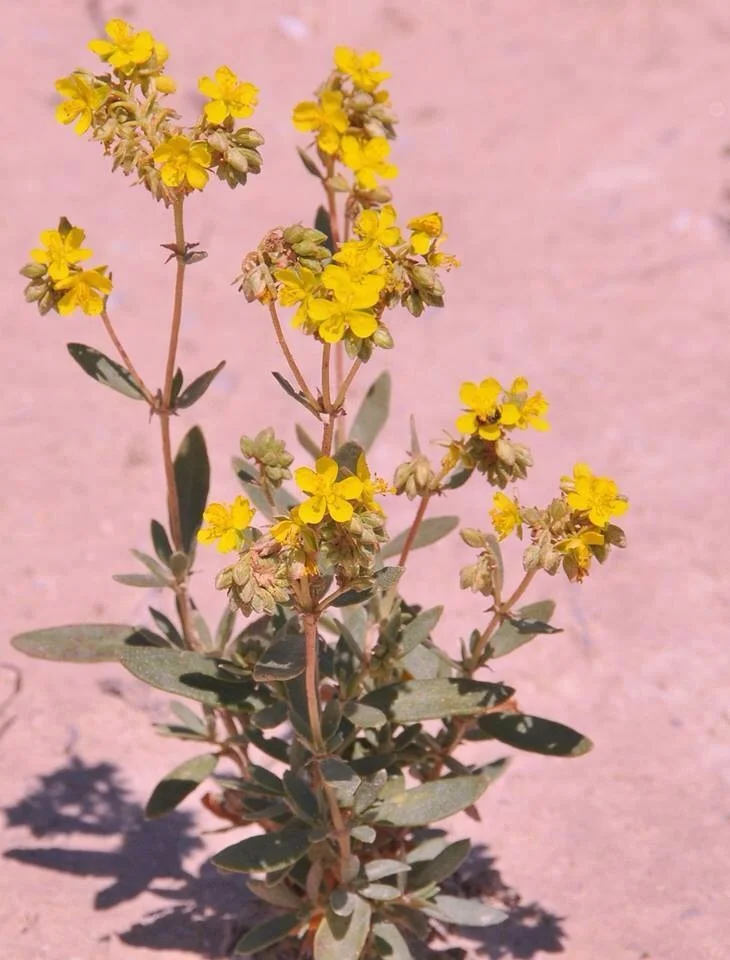
Meet Helianthemum squamatum. This distant relative of hibiscus grows throughout the gypsum hills of the Mediterranean region. Unlike other desert plants, it is shallowly rooted. Unlike other shallowly rooted species, H. squamatum doesn't go dormant during the dry summer months. The physiology of this species in the context of the dry environments that it grows offers up quite a conundrum. How does this plant get the water it needs to grow through the hottest, driest months of the year?

By analyzing the isotopic composition of the water within the plant and comparing it to background sources, the team found that 90% of the plants water intake during the dry summer months comes from the crystallization water in gypsum! How is this possible? How does a plant get water from a mineral?

The actual physiological processes involved are not yet understood but there are some running hypotheses. The first has to do with temperature. When gypsum is exposed to temperatures above 40 degrees C, water can be released from the crystalline matrix. It would then be available to the plants via passive uptake. 40 degrees C is not unheard of in these environments. Any water that isn't taken up by the plants could be reincorporated back into gypsum when things cool down at night. Another possibility is that H. squamatum grows its roots into and around the gypsum. Using root exudates, it is possible that the plant is able to dissolve gypsum to some degree, thus unleashing the water within. This may rely on the microbial community associated with the roots. Until further research can be done on this, the jury is still out.

The most exciting aspect of this research is the doors it has now opened in our search for extraterrestrial life. Life as we know it depends on water. Our search for this molecule has us looking for planets in a sweet spot where water can be found in a liquid state. Knowing now that at least some life on our planet is able to obtain water from gypsum broadens the kinds of places we can look. Mars is chock full of gypsum. Just sayin'.

Photo Credit: José María Escolano (http://bit.ly/ZeSVzB)

Further Reading:

http://www.nature.com/ncomms/2014/140818/ncomms5660/full/ncomms5660.html

On Parasites and Diversity

Photo by Sannse licensed under CC BY-SA 3.0

Photo by Sannse licensed under CC BY-SA 3.0

We all too readily demonize parasites. It is kind of understandable though. The thought of something living in or on you at your expense is enough to make our skin crawl. There are a lot of evolutionary pressures that make us look unfavorably about organisms with such lifestyles. However, to completely write parasites off as a bane to life as we know it may be a huge mistake on our part. More and more we are realizing that parasites play an important role in ecosystem functioning and may even serve as indicators of environmental health. 

Plants are no stranger to such parasitic dynamics. Many species have forgone some if not all photosynthetic ability in exchange for a parasitic lifestyle. There is no question that plant parasites can and do have net negative effects on their hosts, however, its never that simple. Research is showing that parasitic plants can have profound effects on the structure and productivity of surrounding plant communities. 

For starters, parasitic plants can increase the competitive ability of non-host species. By knocking back the performance of their host, other plant species can pick up the slack so-to-speak. This can often lead to an increase in overall plant diversity in a given habitat. A common thread throughout studies that have looked at parasitic plants is that proportion of grasses declined when parasitic plants were present. This made room for less competitive forbs to increase in number. In effect, parasitic plants can level the playing field for other, less competitive plant species. 

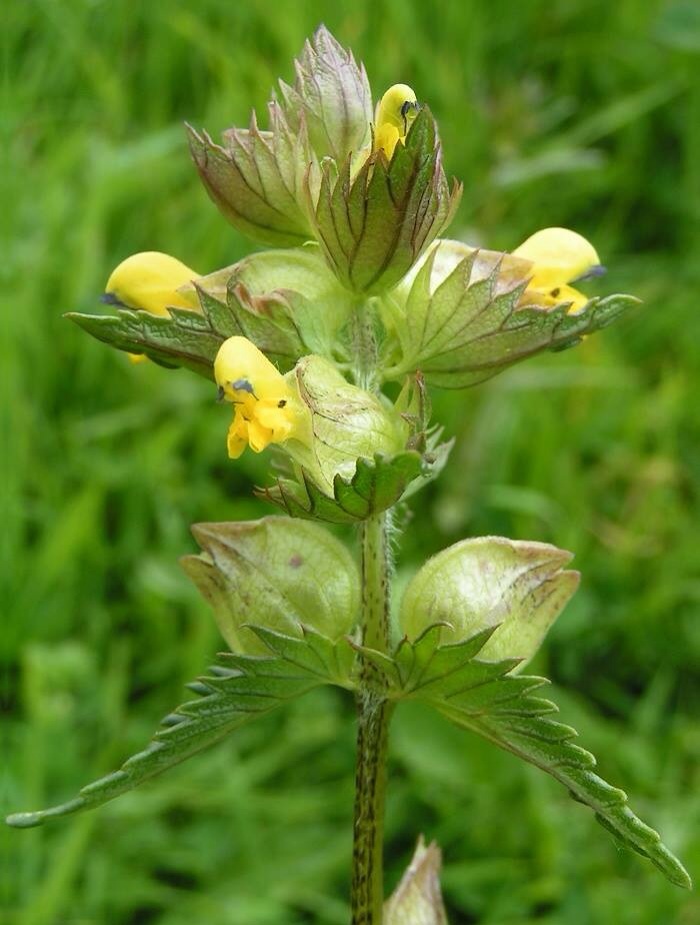
By altering ecosystem structure, parasitic plants can also alter the way nutrients flow through the system. This can have some seriously profound ramifications. For instance, the presence of the hemiparasitic Rhinanthus minor in grasslands has been shown to  increasing rates of nitrogen cycling. Though the ramifications of this are dynamic, it is nonetheless proof that parasites should not simply be maligned and that, despite our perspective, nature is far more complex than we realize. 

Photo Credit: Sannse (Wikimedia Commons)

Further Reading:

http://www.nature.com/nature/journal/v439/n7079/full/nature04197.html#B10

http://link.springer.com/article/10.1007%2FBF00319016

http://www.sciencedirect.com/science/article/pii/S0006320797000104

http://www.jstor.org/stable/10.1086/303294

Groundnut

image.jpg

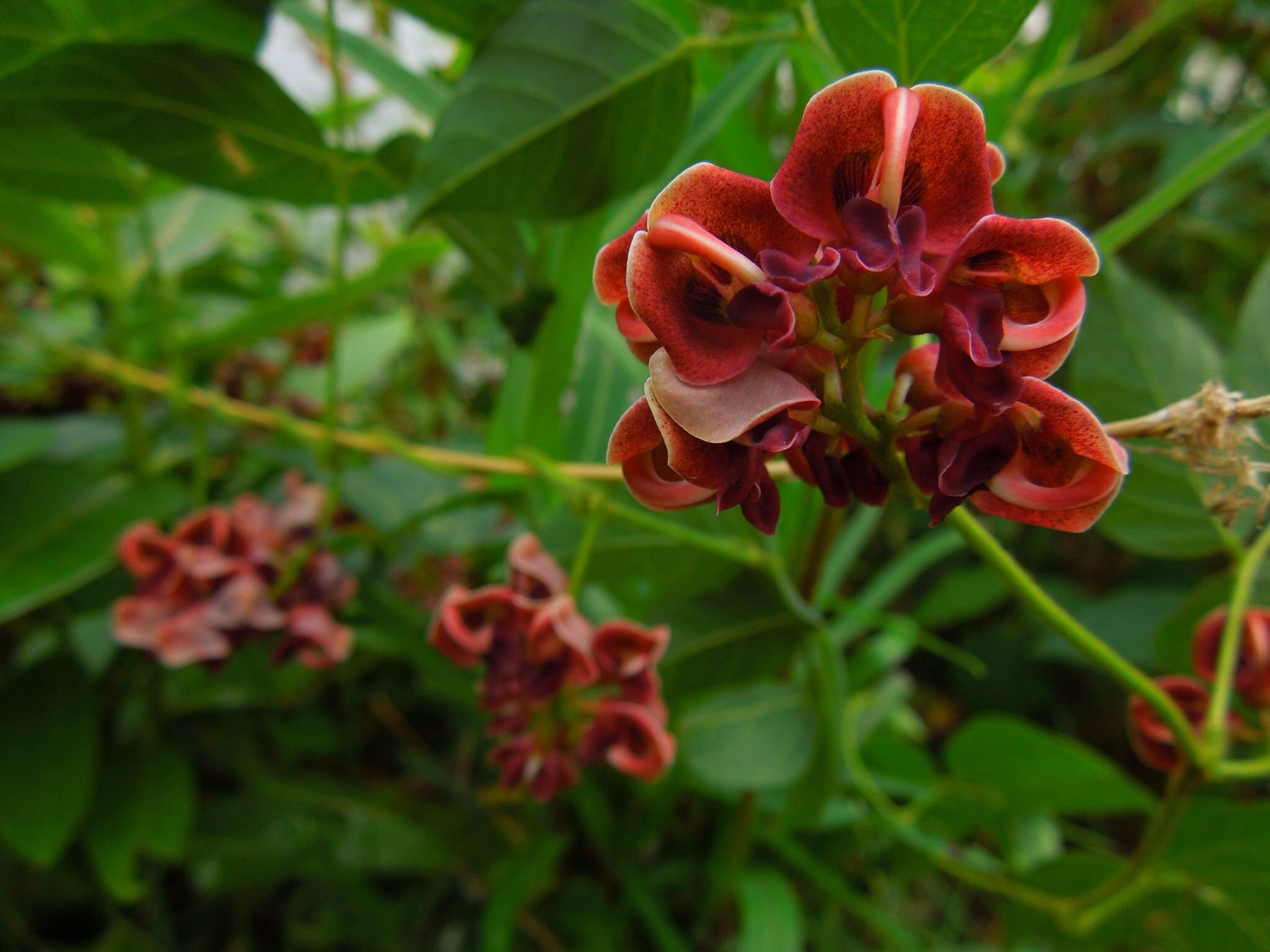
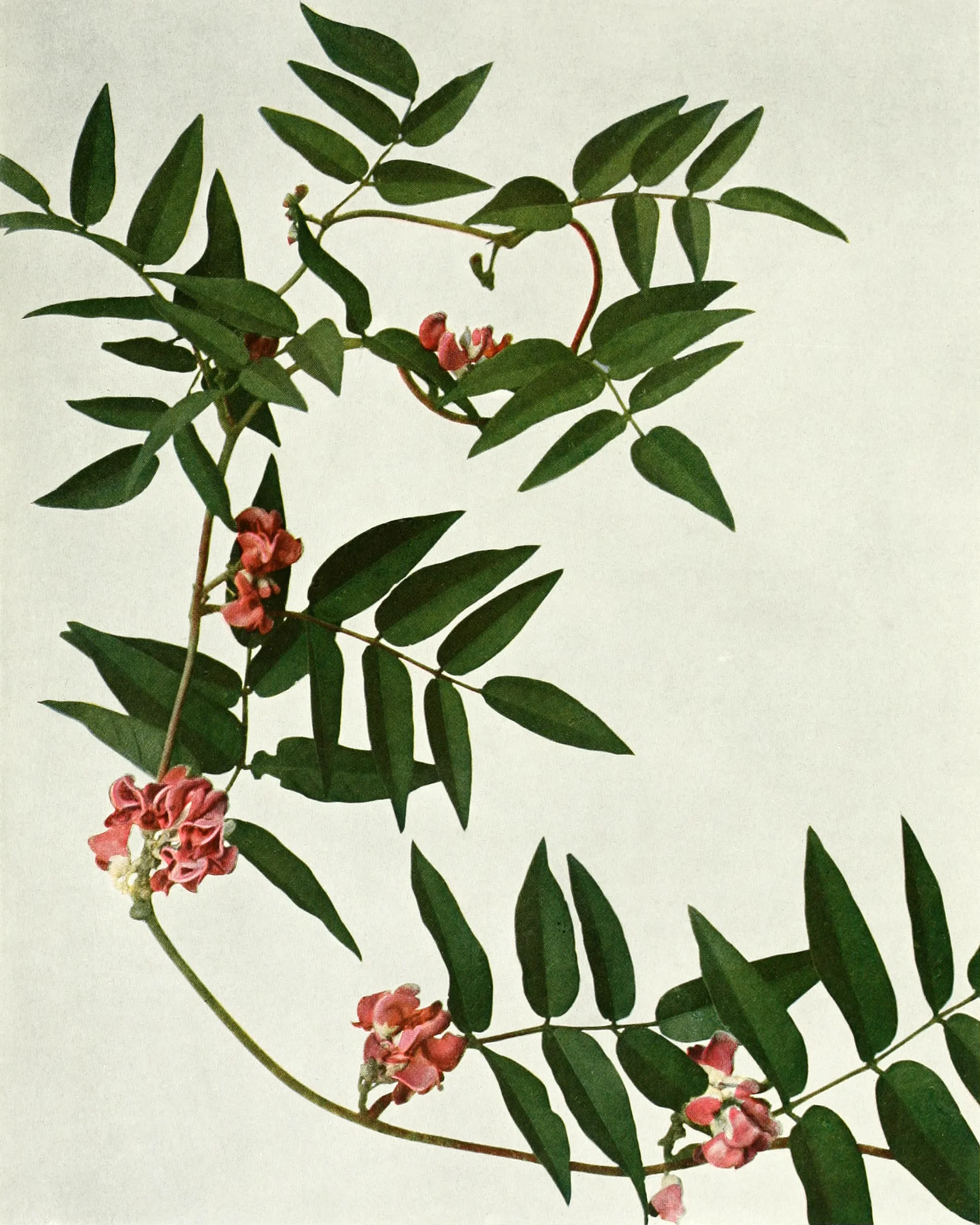
As common names go, groundnut doesn't quite seem fitting for such a distinctive plant. Known scientifically as Apios americana, this leguminous vine can be found growing along a variety of edge habitats throughout much of eastern North America. It becomes most obvious to passers by from July through September when it is flowering. 

Okay, to be fair, groundnut is a fairly accurate description. Not only are the seeds of this vine edible, so too are the starchy tubers it grows from. However, I think this all detracts from a rather intriguing ecology. Populations of groundnut occur in one of two forms - diploid (2 sets of chromosomes) or triploid (three sets of chromosomes). It would seem that entire populations can sometimes consist of the triploid variety. 

This is a bit odd because triploid plants are sterile. Though they produce seemingly functional flowers, they never produce seed. Instead, these populations reproduce vegetatively via their underground tubers. Other than their lack of reproductive ability, there doesn't seem to be any other noticeable differences between diploids and triploids. Whatever the reason, it is obviously working for the groundnut.

Speaking of reproduction, there seems to be a bit of mystery concerning the types of pollinators targeted by this vine. Groundnut flowers, with their carrion-like appearance and strange odor, may be attracting carrion flies. Some authors are rather set on this hypothesis despite very little evidence. A more thorough investigation into the pollination ecology of groundnut revealed that bees were the only visitors, however, nothing conclusive could be said about their effectiveness.

What can be said is that the flowers require insects of a certain size for pollination to occur. The flowers themselves are essentially miniature spring traps. When insects of a certain size land on the flowers they trigger the release of the anthers, which slam into the insect, dusting it with pollen. This is a very similar strategy to a close relative of groundnut, alfalfa (Medicago sativa), which is definitely bee pollinated. 

Despite all of the confusion surrounding groundnut, it is nonetheless a great species. It fixes nitrogen, provides food for wildlife and humans alike, and looks really cool to boot. This would be a great addition to a native plant garden throughout its range. 

Further Reading: [1] [2] [3] [4]
A Case of Sexual Fluidity in the Plant World

image.jpg

In humans, sex is determined at fertilization. The embryo receives either an X or a Y chromosome. Many other organisms have their sex determined in a manner similar to this as well. The case with plants is not so rigid. Many plants produce both male and female parts on the same flower, others have flowers that are either male or female, while some can change their sex throughout their lifetime. The latter is quite interesting and offers an insight into the differences in maleness and femaleness. 

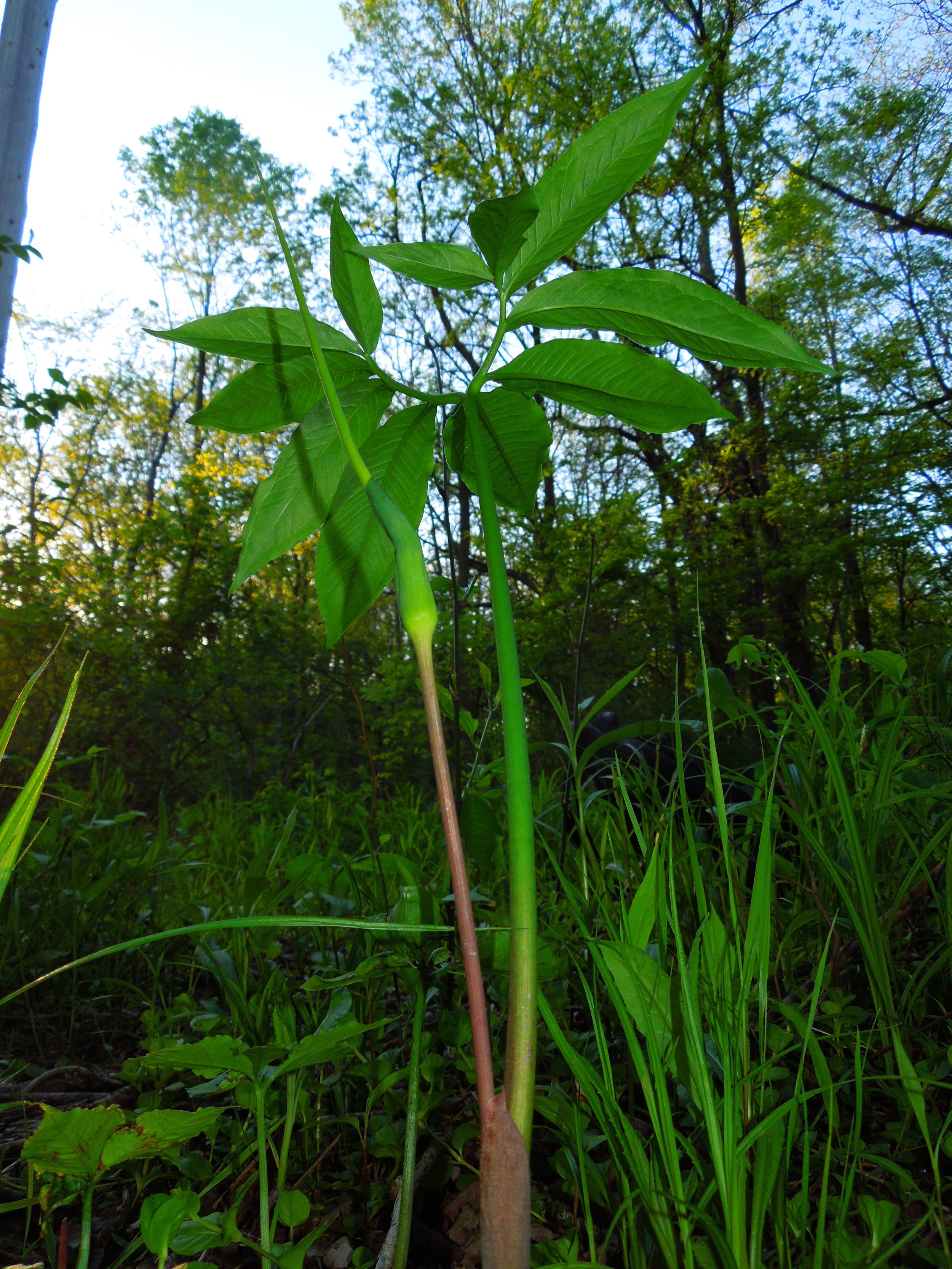
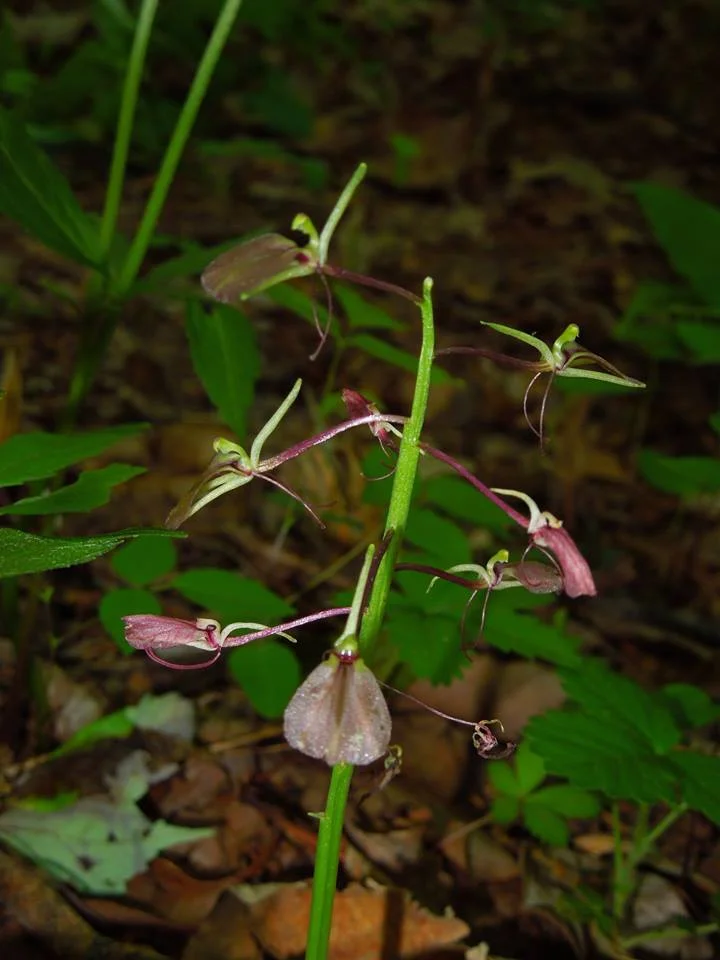
The green dragon (Arisaema dracontium) is an arum related to jack-in-the-pulpit. It is wide spread throughout the east but declining in much of its northern range. This species produces a single inflorescence that can be purely male, both male and female, or, in some rare cases, entirely female. The mechanism for this has been a subject of interest for many botanists as it does not seem to be dictated solely by genetics. It has been discovered that any given plant may switch up its flowering strategy from year to year.

What researchers have found is that male flowers are most often produced in younger plants as well as plants that are stressed. In years where environmental conditions are not as conducive to survival or if the plants have not had enough time to build up energy reserves, it is not uncommon to find only male plants. This is advantageous since male flowers and pollen are a lot less costly to produce than ovaries. Also, the plant does not have to allocate resources into developing seeds. In good years and also in older, larger plants, inflorescence are produced that are both male and female. If the plants are less stressed and large enough, more energy can be allocated to seed production. In some rare cases, very large plants have been known to produce only female flowers. This seems to be a strategy that is adopted only under the best of conditions. 

It should be noted that whereas there seems to be a threshold for environmental conditions as well as plant size in determining what kinds of flowers will be produced, each green dragon population seems to vary. In essence there is some genetic determination for how the plant will respond in any given year but this is where teasing the gene environment out of the actual environment gets tricky. Studying these plants is giving us more insight into the advantages and disadvantages of each sex as well as helping to inform how sensitive species like the green dragon will respond in a changing climate. 


Further Reading:

http://plants.usda.gov/core/profile?symbol=ardr3

http://www.jstor.org/stable/2656980

http://www.jstor.org/stable/2445597?seq=1

Invasive Ants Destroy Plant Sex Lives

Photo by Lalithamba licensed under CC BY 2.0

Photo by Lalithamba licensed under CC BY 2.0

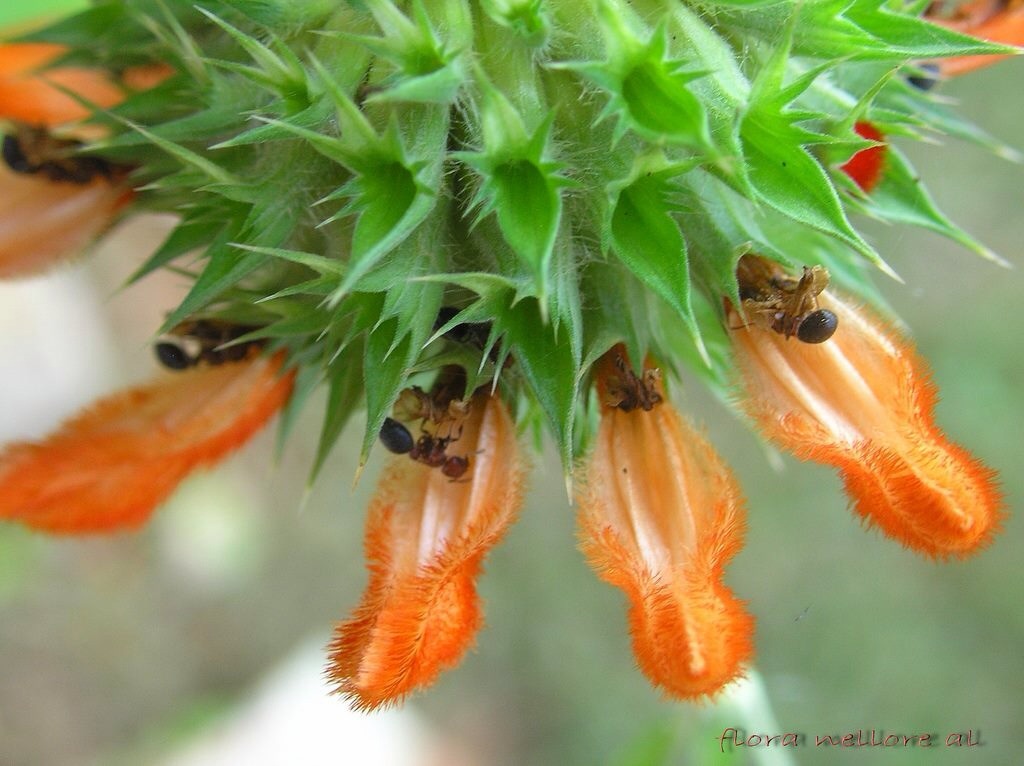
For all of the amazing symbioses ants and plants share, there is one thing ants seem to get in the way of... plant sex. That's right, plants have found a use for ants in pretty much every way except for when it comes to reproduction (with some exceptions of course). Ants being what they are, they can easily become a force to be reckoned with. For this reason, many plant species have co-opted ants as defense agents, luring them in with nectar-releasing glands, a resource that ants guard quite heavily. 

When it comes to flowering, however, ants can become a bit overbearing. Research done at the University of Toronto shows that the invasive European fire ant has a tendency to guard floral nectar so heavily that they chase away pollinators. By observing fire ants and bumblebees, they found that ants change bumblebee foraging behaviors. The fire ants often harassed and attacked bumblebees as they visited flowers, causing them to spend significantly less time at each flower, a fact that could very well result in reduced pollination for the plant in question. 

This reduction in pollination is made even more apparent for dioecious plants. Since ants are after nectar and not pollen, male flowers received more bumblebee visits than nectar-producing female flowers. This could become quite damaging in regions with heavy fire ant infestations. 

As it turns out, the ants don't even need to be present to ward off bumblebees. The mere scent of ants was enough to cause bumblebees to avoid flowers. They apparently associated the ant smell with being harassed and are more likely to not chance a visit. Of course, this study was performed on using an invasive ant species. Because so many plant species recruit ants for things like protection and seed dispersal, it is likely that under natural conditions, the benefit of associating with ants far outweighs any costs to reproductive fitness. More work is needed to see if other ant specie exhibit such aggressive behavior towards pollinators. 

Photo Credit: Lalithamba (https://www.flickr.com/people/45835639@N04)

Further Reading:

 http://www.researchgate.net/profile/James_Thomson13/publication/259319739_Ants_and_Ant_Scent_Reduce_Bumblebee_Pollination_of_Artificial_Flowers/links/554b8fd90cf21ed213595eff.pdf