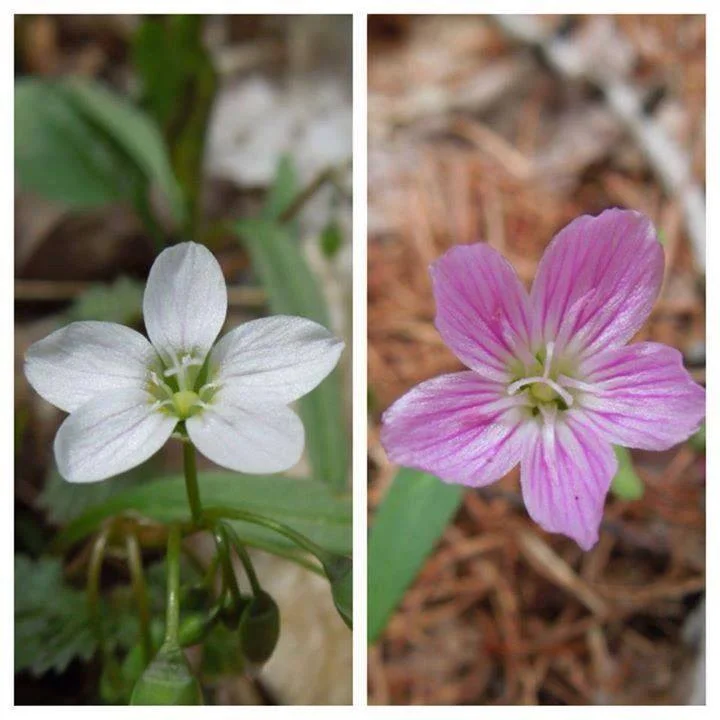
Colorful Claytonia

If you live where spring beauty, specifically Claytonia virginica, is native, then you may have noticed great variations in flower color. We all know the influence pollinators can have on flower shape and color but how do we explain populations with such a spectrum?

Like me you might be thinking that it is related to its growing conditions. Well, researched based out of Indiana University would suggest otherwise. It turns out, the variety of flower color in Claytonia has to do with opposing natural selection from herbivores and pathogens.

In a 2 year study, researchers made some amazing discoveries about how herbivores, pollinators, and pathogens can interact to produce the variety of flower colors one can find in any given Claytonia population. First, they made sure that Claytonia flower color is not a result of soil pH or anything like that by growing a ton of them in different conditions. They were able to demonstrate that flower color is indeed genetic and is controlled by a couple different compounds. Crimson coloring comes from a compound called "cyanidin" and white colors comes from two flavonols, "guercetin" and "kaempferol". Researchers then used spectrometry to analyze flower colors throughout the population and found 4 distinct color morphs ranging from all white to mostly crimson.

As it turns out, the flavonol compounds have pleiotropic effects in Claytonia. While they do produce white pigments, they also help defend the plants against herbivory and pathogens. Researchers then used a multitude of different analytical methods to assess overall fitness of each color morph and the results are jaw-droppingly cool to say the least.

Fitness of Claytonia was measured as total fruit production and total seed set. Because Claytonia needs a pollinator to visit the plant in order to produce fruit and set seed, reproduction is directly linked to pollinator preference. This research showed that pollinators, which for Claytonia are solitary bees, do, in fact, prefer crimson color morphs. This helps to explain the greater number of crimson colored flowers in in many populations because the more pollinators that visit a flower, the higher overall fitness for that plant. What it does not explain though, is why white morphs exist in the population at all.

As stated above, the flavonols that produce white pigmentation also beef up the plants defenses. It was found that white colored flowers experienced significantly less predation than crimson flowers. This is big news because herbivory has serious consequences for Claytonia. Plants that receive high levels of herbivore damage are far more likely to die. Because of this, white morphs, even with significantly less reproductive fitness, are able to maintain themselves in any given population.

If you're at all like me then you may need to pick you jaw up off the ground at this point. But wait! It gets cooler.... In areas where other white flowering plants like Stellaria pubera abound, white Claytonia morphs are even more rare. Why is this exactly? Well, this is due to a push towards a more pollinator-mediated selective pressure. In areas where many plants share the same flower color, it pays to be different. This causes a selective pressure in these Claytonia populations to favor even more crimson color morphs.

Isn't evolution amazing?

Further Reading:
http://bit.ly/1QxVy5Q

http://plants.usda.gov/java/profile?symbol=clvi3

Echoes of a Glacial Past

Climate change is often talked about in the context of direct effects on species. However, as John Muir so eloquently put it, "When we try to pick out anything by itself, we find it hitched to everything else in the Universe." In essence, nothing is ever black and white and the research I am writing about today illustrates this fact quite well.

Ants and plants have some very intricate interactions. A multitude of plant species rely on ants as their seed dispersers. Many of these plant species are spring ephemerals that take advantage of the fact that there is little else for ants to eat in the early spring by attaching fatty capsules to their seeds that are very attractive to foraging ant species. We refer to seed dispersal by ants as “myrmecochory.”

There are two big players in the foraging ant communities of eastern North America, the warm adapted Aphaenogaster rudis and the cold adapted Aphaenogaster picea. The cold adapted A. picea emerges from winter dormancy early in the spring while the warm adapted species emerges from dormancy much later in the spring. In the southern portions of their range, A. rudis outcompetes A. picea.

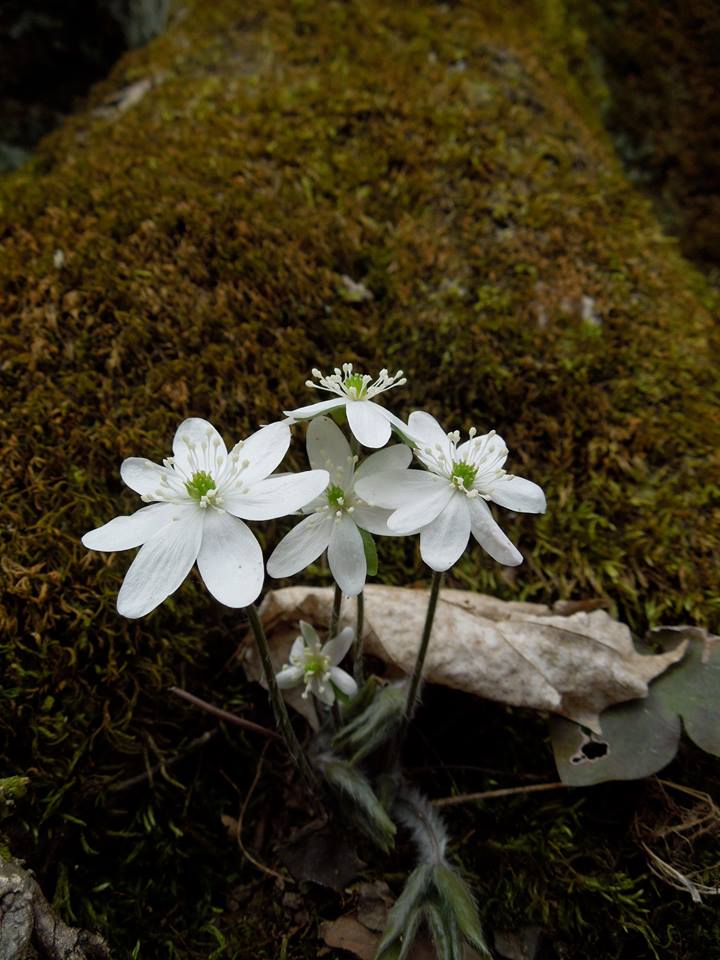
What is the big deal? Well, the researchers looked at two plant species that rely on these ants for seed dispersal, Hepatica nobilis and Hexastylis arifolia. Hepatica nobilis sets seed early in the spring, relying on ant species like A. picea to disperse its seed whereas Hexastylis arifolia sets seed late in spring, which is prime time for A. rudis. Researchers noticed that, in the southern portions of their range where A. picea had been displaced, Hepatica has a very clumped and patchy growth habit where farther north it did not. Hexastylis on the other hand seemed to have a more normal growth pattern in the south.

By performing some transplanting experiments and examining foraging and seed dispersal, they found that the absence of A. picea in the south spelled ecological disaster for Hepatica. It continues to set seed but because A. rudis emerges long after seed set, it is not filling the gap left by the missing A. picea. Hexastylis, which only grows in the south and sets seed much later, does just fine with the warm adapted A. rudis. Farther north where A. picea still rules, Hepatica has no trouble with seed dispersal but Hexastylis drops out of the ecosystem entirely. In essence, because of warming climate trends since the end of the Pleistocene, Hepatica is falling out of sync with its mutualistic ant partner in the southern portions of its range and, in time, may become extirpated.

Further Reading: [1]
When One Becomes Two

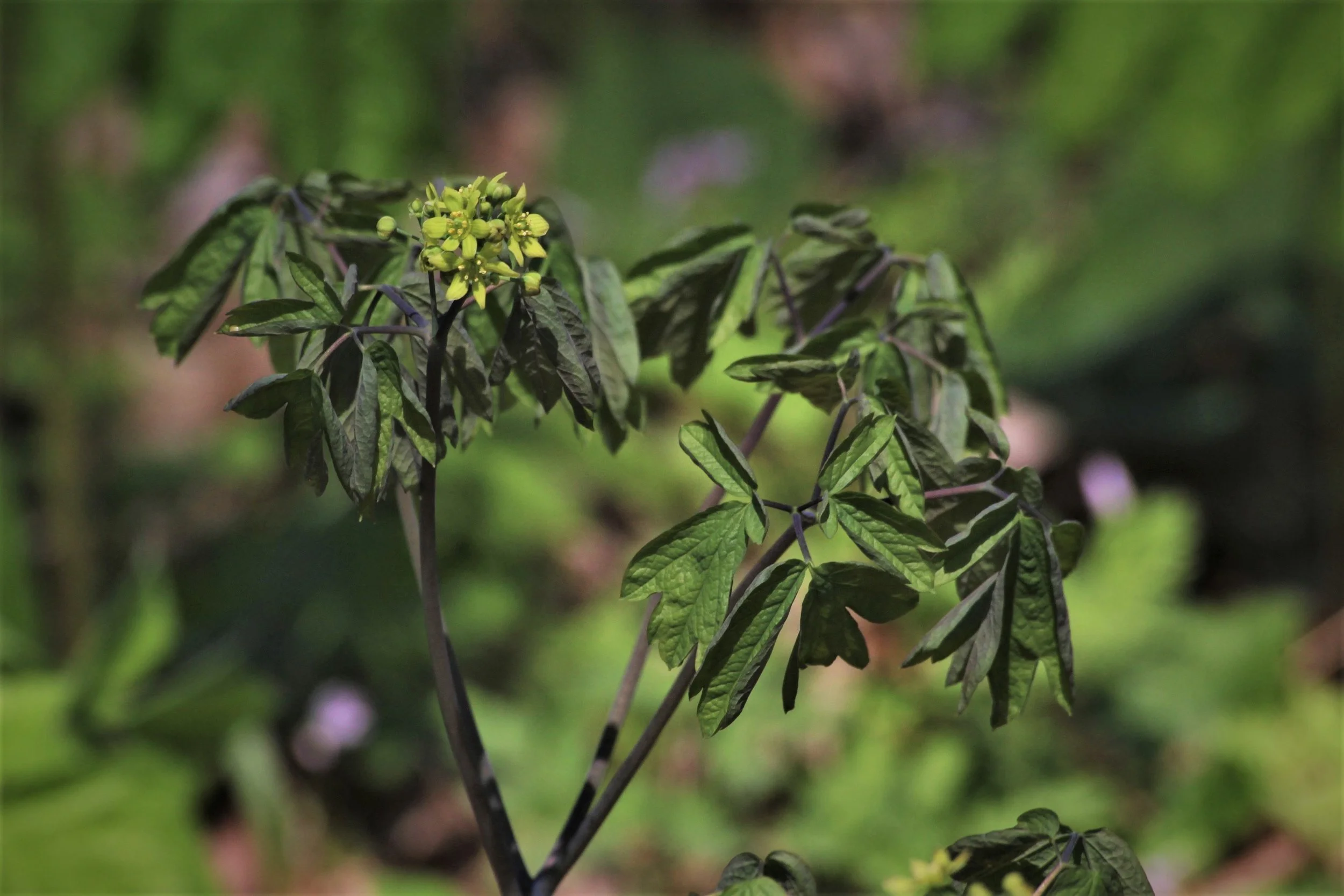
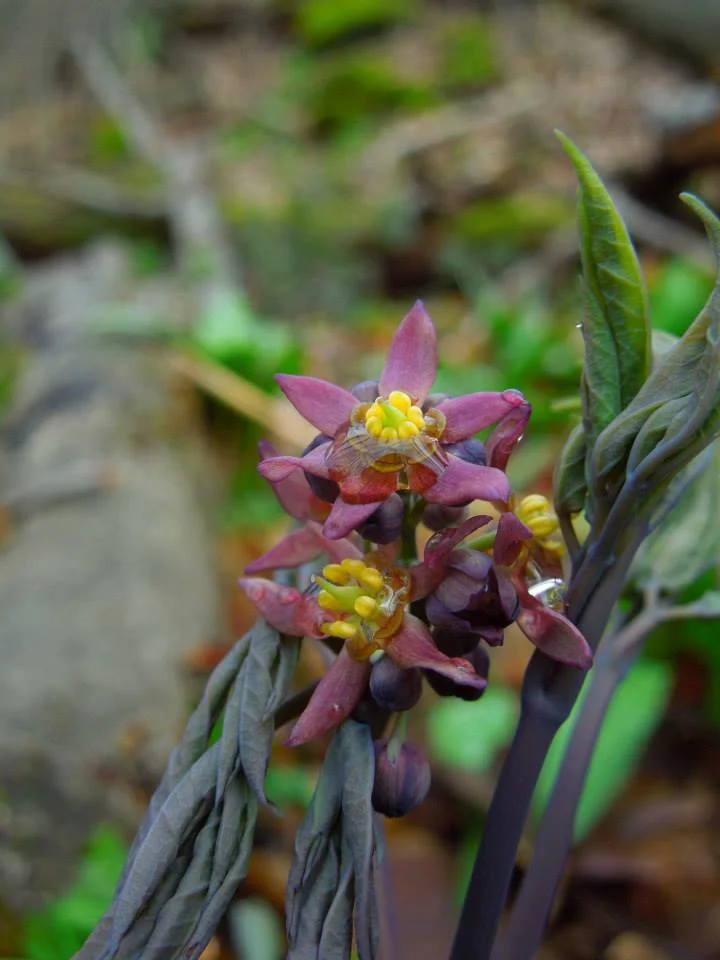
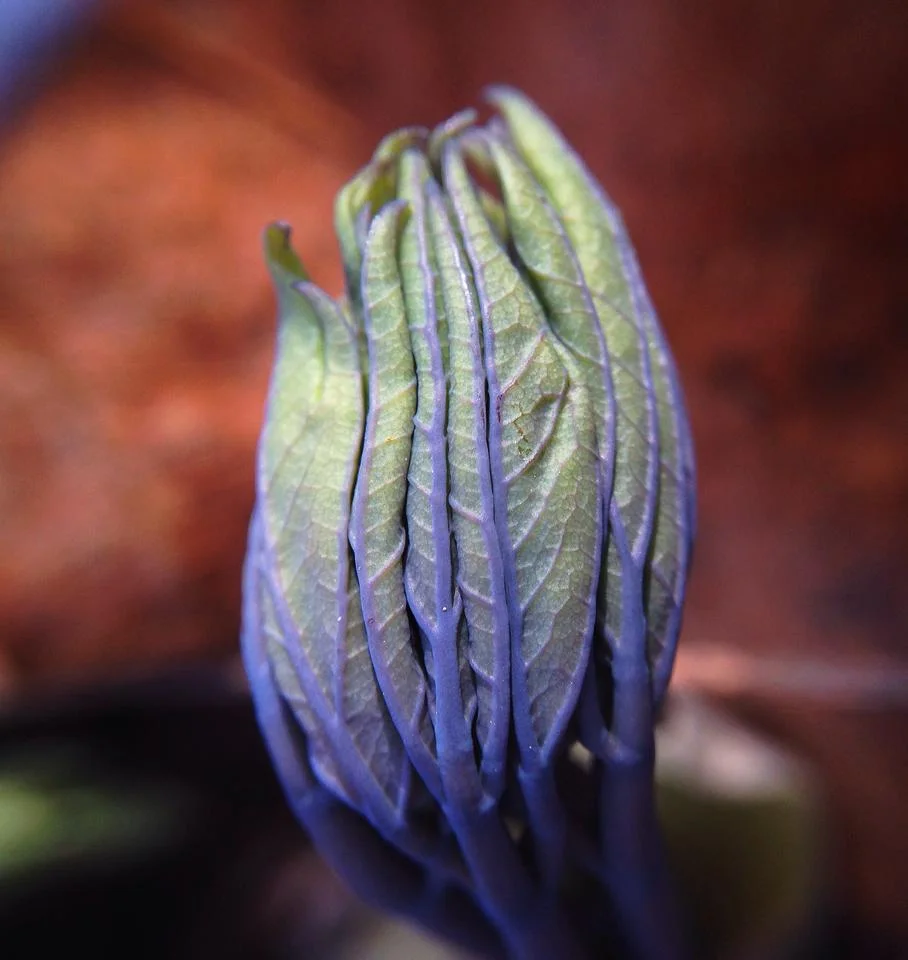
One of the most stunning spring flowering plants in the eastern forests has to be blue cohosh (Caulophyllum spp.). Around this time of year they begin poking up through the leaf litter, their deep purple stems gradually giving way to shades of blue and green as the leaves and flowers expand into the springtime sun. They seem almost otherworldly and finding them among the speckled leaves of trout lily is a sight I will never tire of.

IMG_7025.JPG

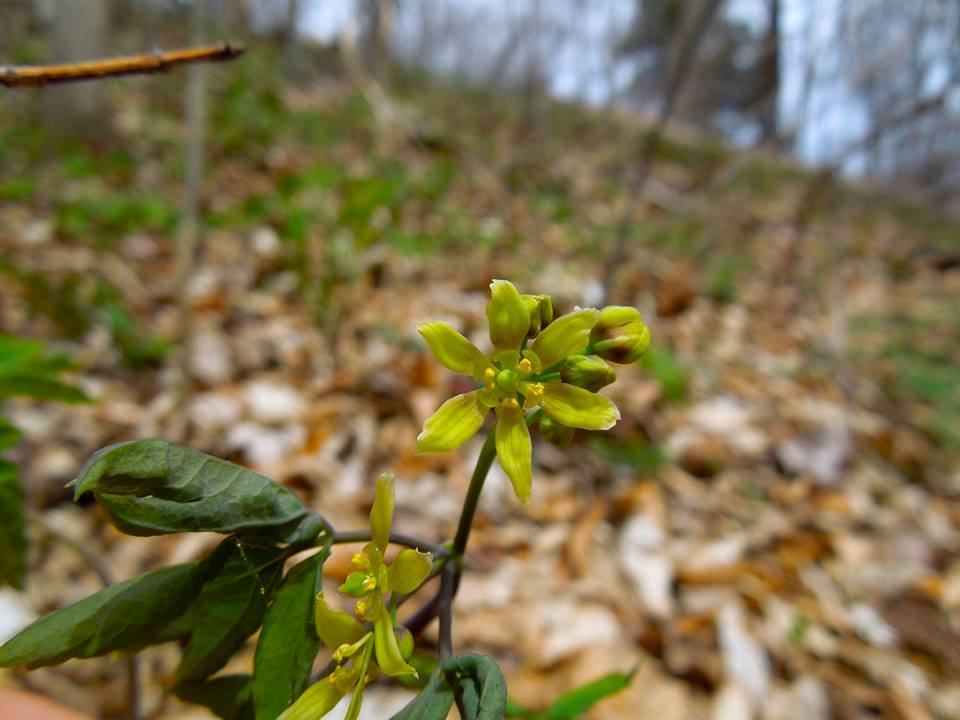
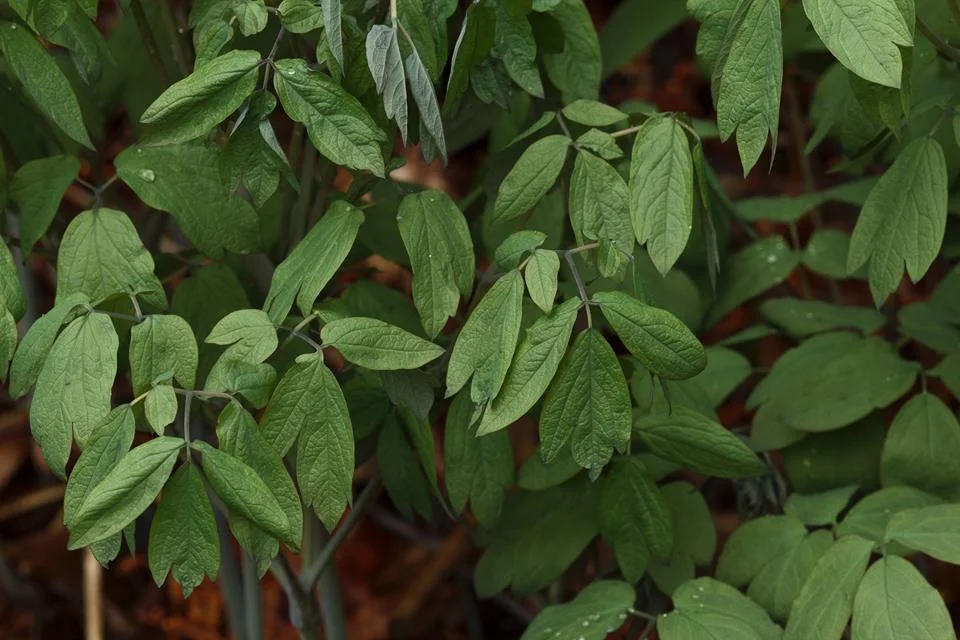
For as long as it has been known, North America's Caulophyllum has been considered a single species, Caulophyllum thalictroides. The specific epithet hints at how similar this species can look to the meadow rues (Thalictrum spp.). However, a keen observer could tell you that there are apparent differences between some blue cohosh populations, especially in the northeast. Some cohosh flower much earlier than others. Also, there are differences in flower color as well. Some plants sport flowers decked in deep maroon whereas others are pale green. These differences have led some authors to list the purple flowering variety as a subspecies, Caulophyllum thalictroides giganteum.

Caulophyllum thalictroides

Caulophyllum thalictroides

Photo by Tom Potterfield licensed under

Photo by Tom Potterfield licensed under CC BY-NC-SA 2.0

More recently, however, it has become apparent that these two varieties may actually be separate species. Though their ranges overlap, what is now being called Caulophyllum giganteum is distributed much farther north than C. thalictroides. The key differences between these two has to do with flowering time. If these two species become reproductively active at different times, then they are in fact reproductively isolated from one another. Though they can hybridize, the resulting seeds experience reduced viability and do not perform as well as either parent.

Photo Credit: Tom Potterfield (http://bit.ly/1E0JcQ5)

Further Reading: [1] [2]
 

The Tallest of Palms

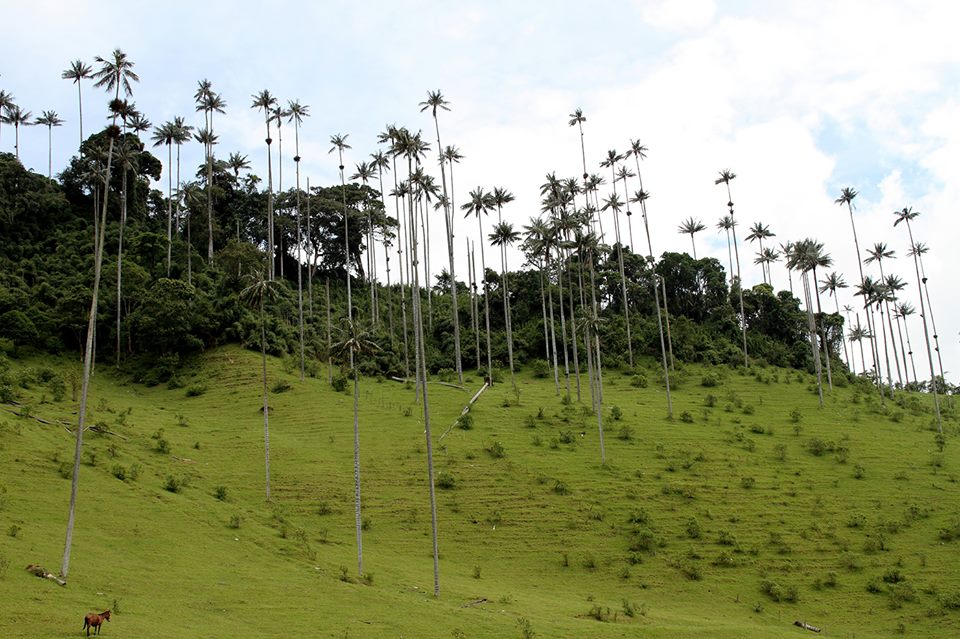
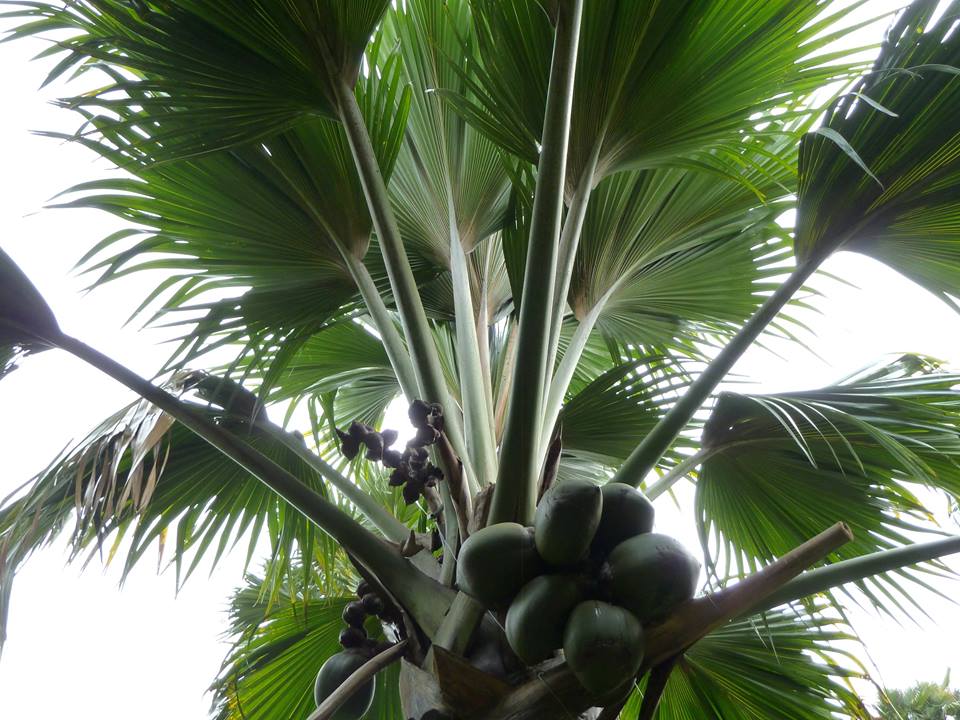
High up in a mountain valley in Colombia grows one of the most remarkable palms in the world. Known scientifically as Ceroxylon quindiuense, the Quindío wax palm towers like a lanky monolith above the surrounding vegetation. Not only is this the tallest species of palm in the world, it is, by extension, the tallest monocot as well.

Standing at heights of over 160 feet, the Quindío wax palm looks all the stranger with its narrow trunk and tuft of fronds all the way at the top. It is called a wax palm because members of this genus produce a waxy substance from their trunk. In the past, this wax was harvested for its use in making torches. Until electricity became widely available, these palms were felled en masse for this purpose.

Quindío wax palms are slow to mature. For at least 15 years they focus much of their energy on radial or outward growth of the trunk. For 15 years, all the tree puts out are three pinnate leaves. Things change once the tree hits 15. It will begin its climb into the sky. Every year it sheds leaves, which creates a dark ring around the trunk. Because of this, it is easy to estimate the approximate age of any given wax palm. Count the rings and add 15 years for stem development plus another 5 for a full crown. It is believed that these palms can take upwards of 80 years to reach sexual maturity!

Because of its limited geographic range, Quindío wax palms are at risk of extinction. The young fronds are favorites among Catholics of the region for their use in Palm Sunday ceremonies. Stands that exhibit heavy harvesting have a hard time of recovering. At the same time, their native range is quickly being converted to pasture land as well as other forms of agriculture. Even if trees are left standing, their seeds find it difficult to germinate and survive under the altered microclimates of these human environments.

Luckily for Ceroxylon quindiuense, the government of Colombia recognizes how special this species is. Not only is it now the national tree and emblem of Colombia, its is now a protected species. All logging of Quindío wax palms is illegal. Still, major portions of their remaining populations are located within pasture lands.

Photo Credit: nuria mpascual (http://bit.ly/1CImC7T)

Further Reading:
http://bit.ly/1CImCEP

http://www.iucnredlist.org/details/38467/0

Snowdrops

Photo by Gideon Chilton licensed under CC BY-NC 2.0

Photo by Gideon Chilton licensed under CC BY-NC 2.0

Few plants in temperate horticulture signal the end of winter better than snowdrops. Come February in the northern hemisphere, these herbaceous bulbs begin popping up, often through a layer of snow. They refuse to be beaten back by freak snow storms and deep frosts. 

Snowdrops are native to a wide swath of the European continent. Like many spring ephemerals, they love moist, rich forests and will often escape into the surrounding environment. Taxonomically speaking, there are something like 20 species currently recognized. From what I can tell, this number has and continues to fluctuate each time someone takes a fresh crack at the group. What is certain is that the original distributions of many species have been clouded by a long history of associating with humans. For instance, whereas Galanthus nivalis is frequently thought of as being native to the UK, records show that it was only first introduced in 1770. 

Map by Nalagtus licensed under CC BY-SA 4.0

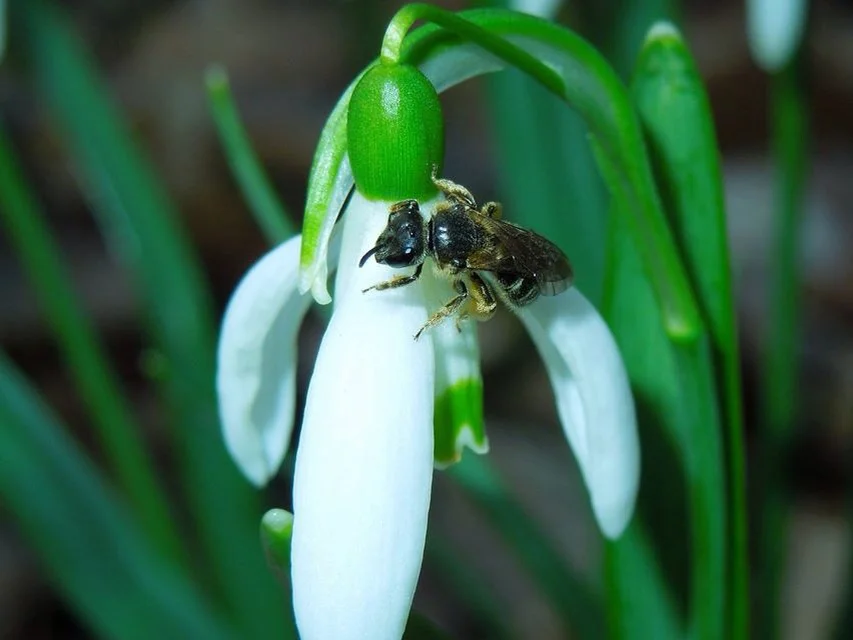
Because we find them so endearing, snowdrops have become commonplace in temperate areas around the world. Reproduction for most of the garden escapees occurs mainly by division of their bulbs. As such, most plants you see in gardens and parks are clones. Pollination in snowdrops is frequently quite poor. This has been attributed to the lack of pollinating insects out and about during the cold months in which snowdrops flower. Bumblebees are some of the few insects up early enough to take advantage of their white blooms and, when seed set does occur, the plants rely on ants as their main seed dispersers. 

image.jpg

Contrary to their ubiquitous presence around the globe, the IUCN lists some snowdrop species as near threatened in their home range. The genus Galanthus contains some of the most heavily collected and traded wild bulbs in the world. Pressure from the horticultural trade coupled with habitat destruction and climate change may push some species to the brink of extirpation throughout Europe in the not-so-distance future. 

Photo Credit: [1] [2]

Further Reading: [1] [2] [3] [4]
http://www.arkive.org/snowdrop/galanthus-nivalis/

The Vernal Dam Hypothesis

image.jpg

I have already established that spring ephemerals are badasses (http://bit.ly/1CsEtj1) but what I am about to tell you is really going to kick it up a notch...

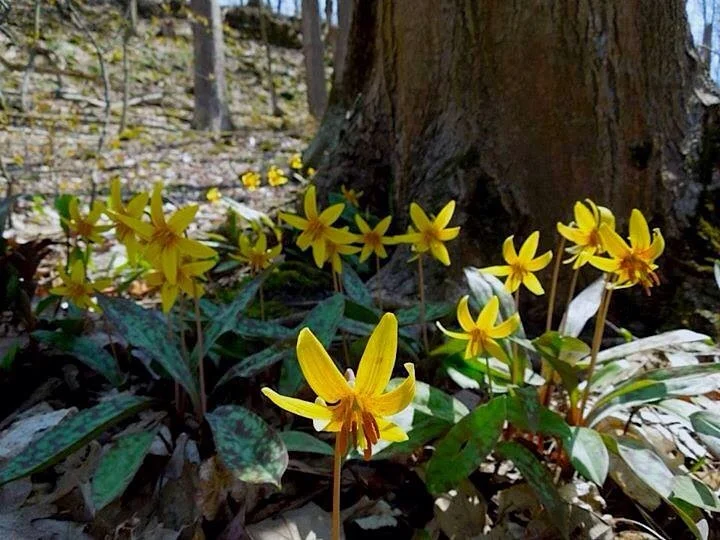
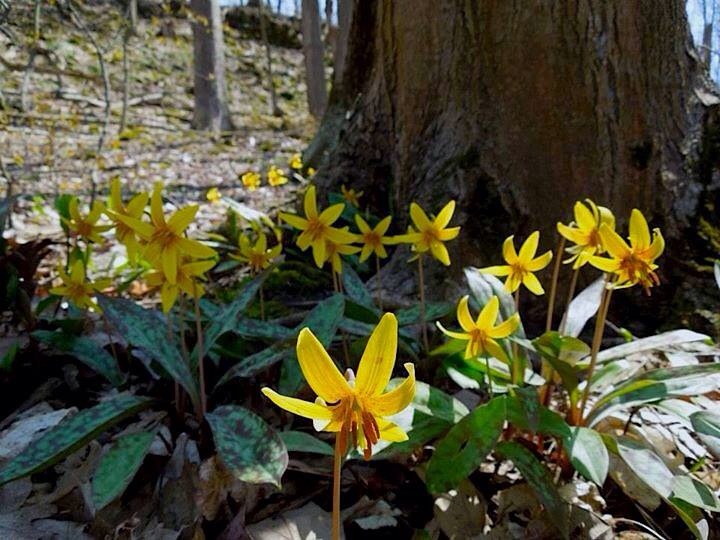
While offering our native pollinators some much needed food resources along with giving us humans a much needed jolt of life after a long and dreary winter, spring ephemerals like these trout lilies (Erythronium americanum), are important nutrient sinks for forests.

Back in 1978, a guy by the name of Robert Muller put forth a very intriguing idea known as the vernal-dam hypothesis. Basically, he proposed the idea that soil nutrients are heavily leached into waterways during the spring melt and subsequent rains. Where spring ephemerals are present, they act as nutrient sinks, taking up much of the nutrients that would otherwise be lost. The idea was well liked but unfortunately, the important assumptions of this hypothesis were not tested until the last decade or so. Recently, more attention is being paid to this concept and some research is being published that do indeed support his claims!

Though the research does not address whether or not the nutrients really would be lost from the system in the absence of spring ephemerals, it is showing that some species really do serve as nutrient sinks. Trout lily, for instance, is a massive sink for nitrogen and potassium. As they grow they take in more and more. When the warmer summer weather hits and the leaves die back, they then release a lot of nutrients back into soil where vigorously growing plants are ready to take it up. It should be noted that trees will still take in nutrients even before leafing out for the summer. One study even showed that net uptake of nitrogen and potassium by a variety of spring ephemeral species is nearly equal to the net annual losses. I must admit that I did not quite understand what the "losses" are in this particular study but the evidence is tantalizing nonetheless. In one example, nitrogen uptake by ephemerals was 12% of the nitrogen in annual tree litter!

Whether or not it is shown that nutrients taken up by ephemerals would otherwise be loss is, in my opinion, beyond the point. What has been demonstrated in the ability of spring ephemeral species to uptake and store vital forest nutrients suggests major ecosystem benefit! Furthermore, when you consider the fact that mycorrhizal fungi are non-specific in most cases and will bond with many different plant species and then go as far as sharing nutrients among the forest flora, you really start to see a big picture story that has been playing out all over the world for millennia. 

Further Reading:
http://www.jstor.org/discover/10.2307/2937357?uid=3739256&sid=21102213017237

http://iub.edu/~preserve/docs/library/BlankJL_1980.pdf

http://www.jstor.org/discover/10.2307/2425383?uid=3739256&sid=21102213017237

http://link.springer.com/article/10.1007/s00442-002-0958-9#page-1

The Badass Spring Ephemerals

image.jpg

Spring ephemerals and the word "badass" are probably not frequent associates but I am here to argue that they should be.

Spring ephemeral season is here for some and just around the corner for the rest of us. It's my favorite wildflower season and I often go missing in the woods for those first few weeks of spring. It is easy to look at their diminutive size and their ephemeral nature as signs of delicacy but these plants are anything but. In fact, when one examines the intricacies of their lifestyle, they can see that spring ephemerals make most other plants look like total softies.

Spring ephemerals, the designation of which gets blurred depending on who you ask, have to complete most of their life cycle in the early spring before the trees and understory shrubs leaf out and completely take over most of the available light. This is an incredibly tough time to be a plant. Soil temperatures are low, which makes nutrient and water uptake a difficult task, all but the most robust pollinators are still sound asleep, and there is the ever present danger of a hard frost or freak snow storm. These factors have led to some incredible adaptations in all of the species that emerge around this time. Whereas each species has its own methods, there are some generalities that are common throughout.

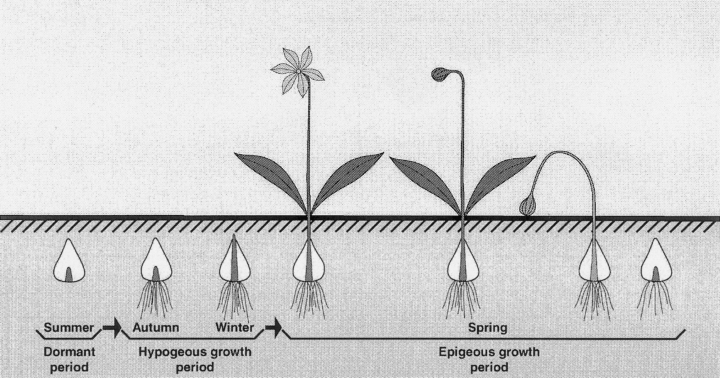
For the most part, spring ephemerals have two distinct growth phases; epigeous (above ground) and hypogeous (below ground). The hypogeous phase of growth takes place throughout fall and winter. Yes, winter. This is the phase in which the plants put out more roots and develop next season’s buds. This goes on at the expense of nutrients that were stored the previous spring. Once spring arrives and soils begin to warm, the plants enter the epigeous phase of growth where leaves and flowers are produced and reproduction occurs. This is an incredibly short period of time and spring ephemerals are well suited for the task.

Typical growth cycle of many spring ephemerals [Source}

Typical growth cycle of many spring ephemerals [Source}

For starters, photosynthetic activity for these species is at its best around 20 °C. Photosynthetic proteins activate very early on so that by the time the leaf is fully expanded, the plant is a powerhouse of carbohydrate production. Photosynthesizing in cool temperatures comes at a cost. Water stress in at this time of year is high. Low soil temperatures make uptake of water difficult and it is strange to note that many species of spring ephemeral have very little root surface area in the form of root hairs. These species, however, have extensive mycorrhizal associations which help assuage this issue.

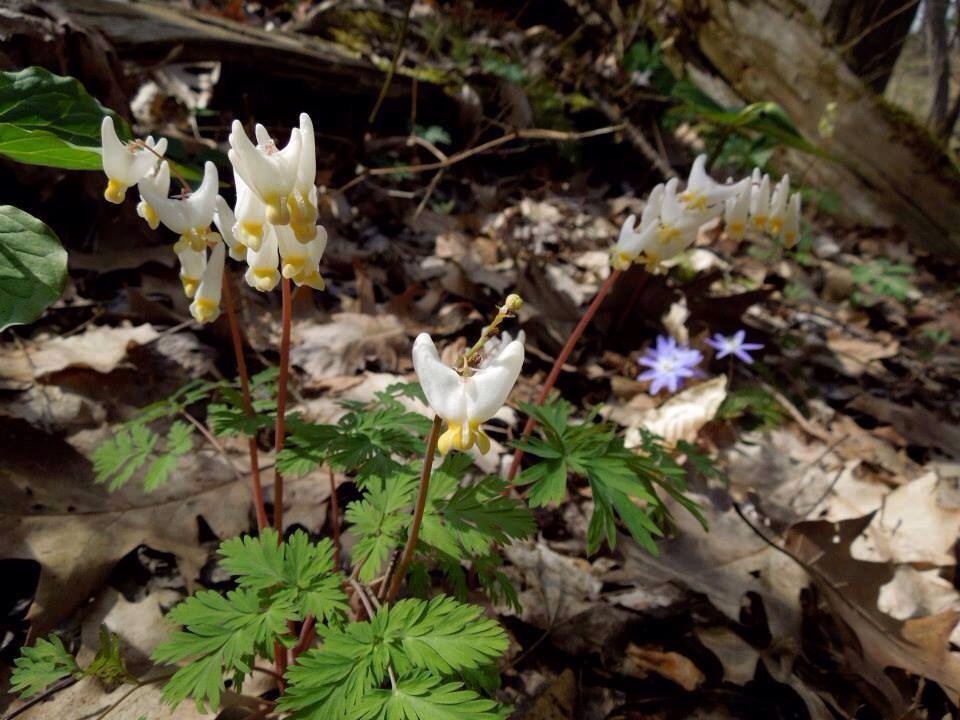
Nutrient availability is also very limited by low soil temperatures. Chemical reactions that would unlock such nutrients are not efficient at low temperatures. Again, spring ephemerals get around this via their increased mycorrhizal associations. It should be noted that some species such as those belonging to the genus Dicentra, do not have these associations. In this situation, these species do in fact develop extensive root hairs as a coping mechanism. Despite specific adaptations for nutrient uptake, you will rarely find spring ephemerals not growing in deep, nutrient-rich soils.

Again, we must keep in mind that all of this is happening so that the plant can quickly complete what it needs to do in the few weeks before the canopy closes and things heat up. It has been observed that high temperatures are associated with slowed growth in most of these species. As temperatures increase, the plants begin to die back. Another adaptation to this ephemeral lifestyle is an increased ability to recycle nutrients in the leaves. As spring temperatures rise, the plants begin to pull in nutrients and store them in their perennial organs. They also show specific compartmentalization of energy stores. In many species, seed production is fueled solely by energy reserves in the stem. Some underground storage structures then receive nutrients to fuel autumn and winter growth while others receive nutrients to fuel leaf and stem growth in the early spring.

upload.jpg

Despite all of these amazing adaptations, life is still no cake walk and growth is painstakingly slow. Many species, like trout lilies (Erythronium spp.), can take upwards of 8 years to flower! 8 years!! Think about that next time you are thinking of harvesting or picking some. Even worse in some areas are white tailed deer. East of the Mississippi their populations have grown to a point in which their foraging threatens the long term survival of many different plant species. Especially hard hit are spring ephemerals as they are the first plants to emerge after a long winter of near starvation. 

I hope this post wakes people up to how truly badass these species really are. As our climate warms, we can only speculate how things are going to change for many of them. Some research suggests that things may get easier whereas others suggest that conditions are going to get harsher. It's anyone's guess at this point. As populations are wiped out due to development or invasive species, we are losing much needed genetic diversity and corridors for gene transfer. This is yet another reason why land conservation efforts are so vital to resilient ecosystems. Support your local land conservancy today!

Spring is here and things are getting underway. Get out there and enjoy the heck out of the spring ephemerals! In a few short weeks they will be back underground, awaiting the next cold, damp spring.

Further Reading: [1] [2]

A Strange Gymnosperm From Africa

Photo by Petr Kosina licensed under CC BY-NC 2.0

Photo by Petr Kosina licensed under CC BY-NC 2.0

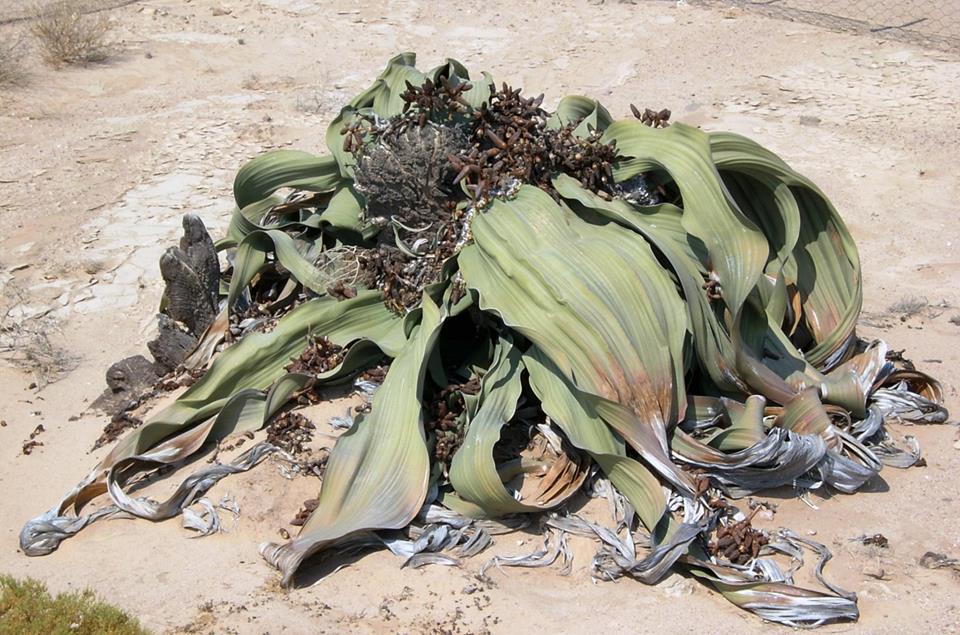
What you are looking at here is not just a pile of discarded leaves. It is indeed a living plant. Would you believe me if I told you that it is a distant relative of pines, spruces, larches and firs? It's true! This right here is Welwitschia mirabilis, a representative of an ancient lineage of gymnosperm!

Photo by Petr Kosina licensed under CC BY-NC 2.0

Photo by Petr Kosina licensed under CC BY-NC 2.0

Welwitschia is endemic to the Namib Desert of Africa. It is hard to picture any plant living in such a dry area. In some years it never even rains. Welwitschia persists despite this fact. It tends to grow in watercourses and outcrops, thus enabling it to gather what precious little rain does fall. It has a deep taproot suggesting that it relies heavily on ground water. The leaves of Welwitschia also have high amounts of stomata on both surfaces enabling it to absorb water directly from the fog that regularly blows through when colder air currents mix with hot air from the desert.

For a long time it was believed that Welwitschia represented true neoteny, which is the retention of juvenile characteristics into adulthood. It was thought that Welwitschia was nothing more than a sexually mature seedling with exaggerated cotyledons. This idea was later abandoned when Martens showed that Welwitschia do develop further than the seedling stage. What really happens is the apical bud, which is responsible for vertical growth in plants, dies quite early on in development. In essence, Welwitschia has lost its "head."

I was not kidding when I said that Welwitschia is a gymnosperm. Once sexual maturity is reached, cones are produced. Individual plants are either male or female and unlike many of its relatives, Welwitschia is not wind pollenated. Instead it relies on insects to transfer pollen from male cones to female cones.

Probably the most remarkable aspect of Welwitschia ecology is its longevity. Individual plants can live well over 1000 years. Some individuals are estimated at around 2000 years old! In such a harsh desert environment, persistence is the key to survival for Welwitschia.

Photo Credit: Petr Kosina

Further Reading:
http://www.jstor.org/discover/10.2307/2442386…

http://www.plantzafrica.com/plantwxyz/welwitschia.htm

Something Smells...

image.jpg

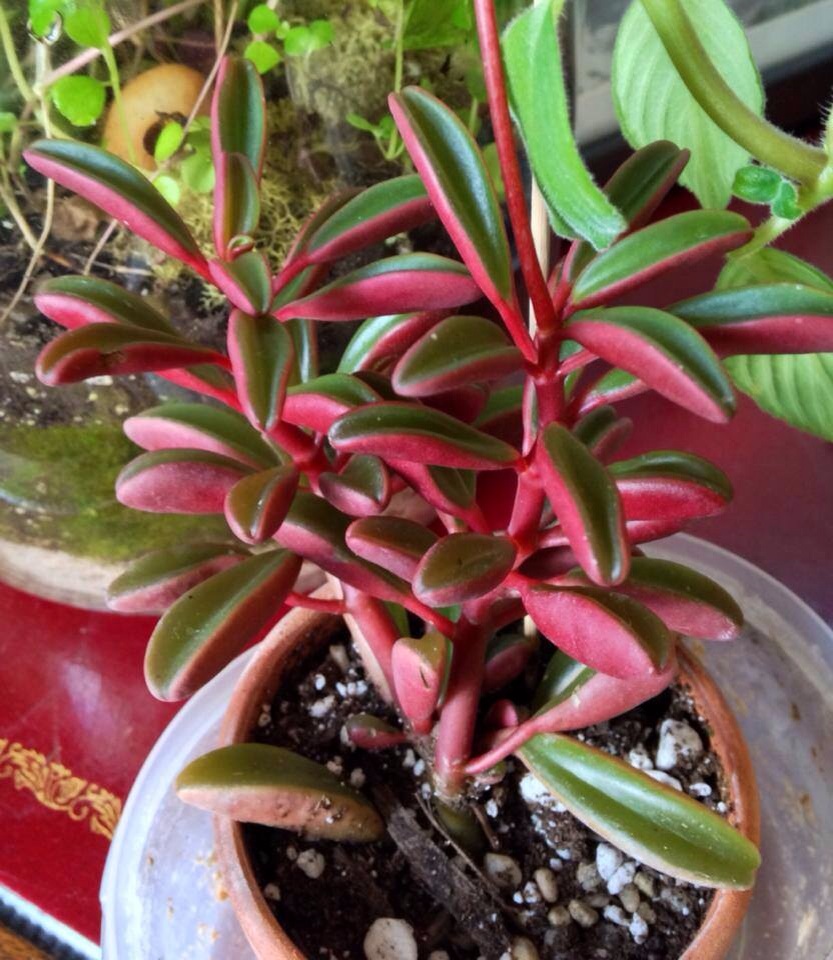
Plant nurseries are a dangerous place for me. Well, not really me so much as my wallet. I am always on the lookout for new and interesting plant friends to bring home. I recently visited a local nursery that has 4 hoop houses worth of plants to ogle. As I was walking the crowded alleyways between row after row of botanical treasures, something tucked away in a back corner caught my eye. There was a stark juxtaposition between burgundy and deep green that I simply could not ignore. I tip toed around a variety of succulents, dracaena, and gesneriads to investigate this colorful curiosity. 

As I approached this odd little plant I realized there was a long spike jutting out of the top. Ah, so this was some sort of peperomia. At this point I could see why it was kept among succulents. The leaves of this peperomia are quite succulent. Like fat little canoes, the leaves appeared to have green window-like surfaces that quickly gave way to a red bilge. This was truly unique. I had to have it. 

Despite the fact that it was the only one of its kind, I got it for a steal. It wasn't planted very well so I had to be quite careful getting it home. Mixing up soil can be fun, especially when you know the plant you are catering to. This was not one of those cases. Regardless, the succulent nature of the plant hinted at a need for a well drained mix. Three parts gravel to one part compost should do the trick. Despite its size, the plant had an under-developed root system. This explains why it was so floppy on the ride home. Once it was in its new pot, I had to go about picking out a perfect spot on the shelf. I knew that plants like Crassulas and aloes turn colors under high light so I figured this would be my best bet at preserving the beauty of this specimen. I watered it and sat back to enjoy its beauty among all the other plants in the collection. 

Later that day I began noticing an odd smell. It wasn't necessarily offensive yet it wasn't easily ignored either. It was also restricted to one area near the plant shelf. My nose didn't reveal the source. I put shoes outside and checked the area for anything that may be starting to rot. Nothing. After a while I must have gotten used to it and after a couple hours I forgot about it. Days went by and every once in a while the smell would creep its way into my nose. I was very confused and yet too busy to be serious about locating the source. 

I like to show off my plants so I made sure to draw attention to this new peperomia any time someone dropped by for a visit. It seemed to resonate well with friends. After a series of inquiries into this plants identity I decided to do my homework. Simply referring to it as a mystery peperomia wasn't satisfying enough. Luckily the internet exists. A quick image search for "succulent red peperomia" gave me my answer. 

My beautiful plant friend was none other than Peperomia graveolens, an endemic of mountainous forests in Ecuador. To my surprise, this is not a species that enjoys a lot of sun. The burgundy undersides are thought to assist the plant in soaking up as much sunlight as possible as it ekes out a living under the canopy. I guess I was going to have to move this plant to a lower shelf. The good news is that the soil mixture I made was going to work. There was no need to disturb the meager root system any more than I already had. 

Apparently this species is only known from two wild populations. All of the plants in cultivation are descendants of collections made in 1973 by some German botanists. This is truly a special plant! As I was reading various plant care websites, a recurring theme in the writing caught my attention. The inflorescence of this species is said to have a "mousey odor." I have seen that term before but, even after years of working in pet stores, I couldn't quite picture what a mousey odor would be like. Urine perhaps? Then I realized something. That strange odor was still present in and around the plant shelf. Could this be what I was smelling? I carefully picked up the plant and gave it a sniff. Yep! There is was. I still don't think of mice when I smell it but I can see how such descriptive terms could be applied. Regardless, my introduction to this wonderful little plant has made it all the more interesting. This is one of the main reasons I keep house plants. My collection is my own little botanical garden that I fill with species that capture my imagination. 

Further Reading:
http://www.iucnredlist.org/details/45780/0

Unlikely Allies

Photo by emmapatsie licensed under CC BY-NC-ND 2.0

Photo by emmapatsie licensed under CC BY-NC-ND 2.0

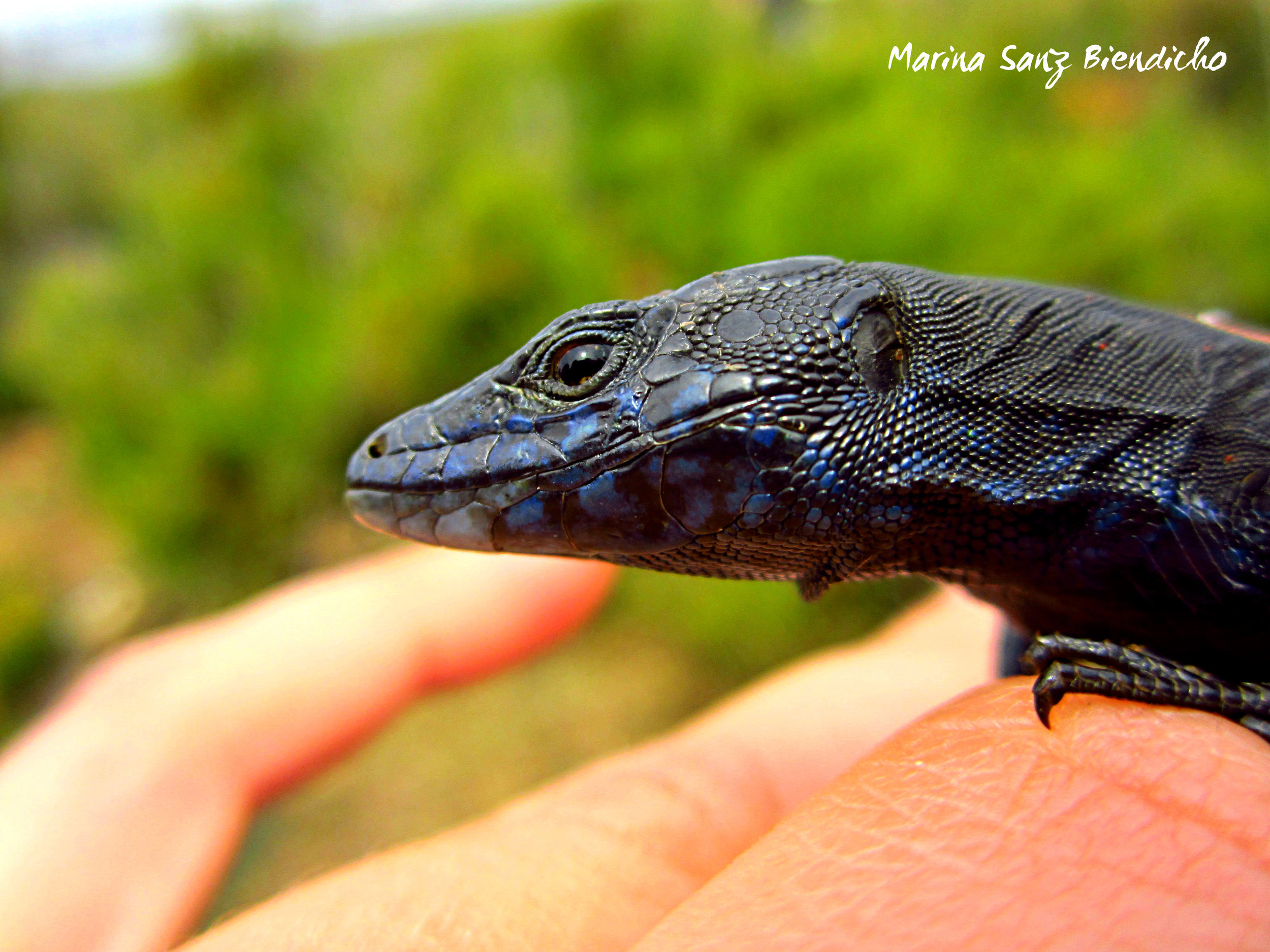
On the Balearic Islands of Spain, an interesting relationship has developed between a plant and an animal. What's more, this relationship seems to have developed relatively recently in the history of these two species. The players in this story are the dead horse arum (Helicodiceros muscivorus) and an unsuspecting lizard known as Lilford’s wall lizard (Podarcis lilfordi).

Podarcis lilfordi is a lot like other fence lizards. They spend their days basking in the sun’s warmth and hunting for insect prey. They also have a tendency to feed on nectar and pollen, making them important pollinators of a handful of plant species around the island. For the dead horse arum, however, its not about pollination.

Like most members of its family, the dead horse arum relies on trickery for sex. As its common name suggests, the dead horse arum both looks and smells like rotting meat. Unsuspecting flies looking for a meal and a place to lay their eggs find the dead horse arum quite attractive in this regard. The plant even steps up its game a bit by producing its own heat. This helps volatilize its smell as well as to make it a cozy place worth investigating. Studies have found that during the peak flowering period, the inflorescence can be upwards of 24 °C (50 °F) warmer than its surroundings.

Photo by Marina Sanz Biendicho licensed under CC BY 2.0

Photo by Marina Sanz Biendicho licensed under CC BY 2.0

As one would expect, this has caught the attention of the cold blooded lizards. Enticed by the heat source, lizards basking on the spathe quickly realize that the plant is also a great place to hunt. Flies attracted to and trapped by the flowers make an easy meal. On the surface this would seem counterproductive for the dead horse arum. What good is an animal hanging around that eats its pollinators?

The relationship doesn't end here though. At some point in recent history, a handful of lizards figured out that the seeds of the dead horse arum also make a great meal. This behavior quickly spread through the population to the point that Podarcis lilfordi regularly break open the seed heads and consume the fleshy berries within. Here's the catch, seeds that have passed through a lizards gut are twice as likely to germinate.

Researchers have been studying this interaction since 1999. Since then, the dead horse arum has gone from being relatively rare on the island (~5,000 individuals per hectare) to a density of roughly 30,000 individuals per hectare during the 6 year span of the study! Even though the lizards eat their pollinators, the dead horse arums of Aire Island have nonetheless benefited from interactions with their cold blooded companions.

Sadly, this novel relationship may not last too long. The introduction of cats and rats to the islands has drastically reduced the population of these lizards to the point that the IUCN has listed them as an endangered species. Research will be needed to see if the dead horse arum follows in their wake.

Photo Credit: [1] [2]

Further Reading: [1] [2]
Do You Smell Skunk?

Do you smell that?

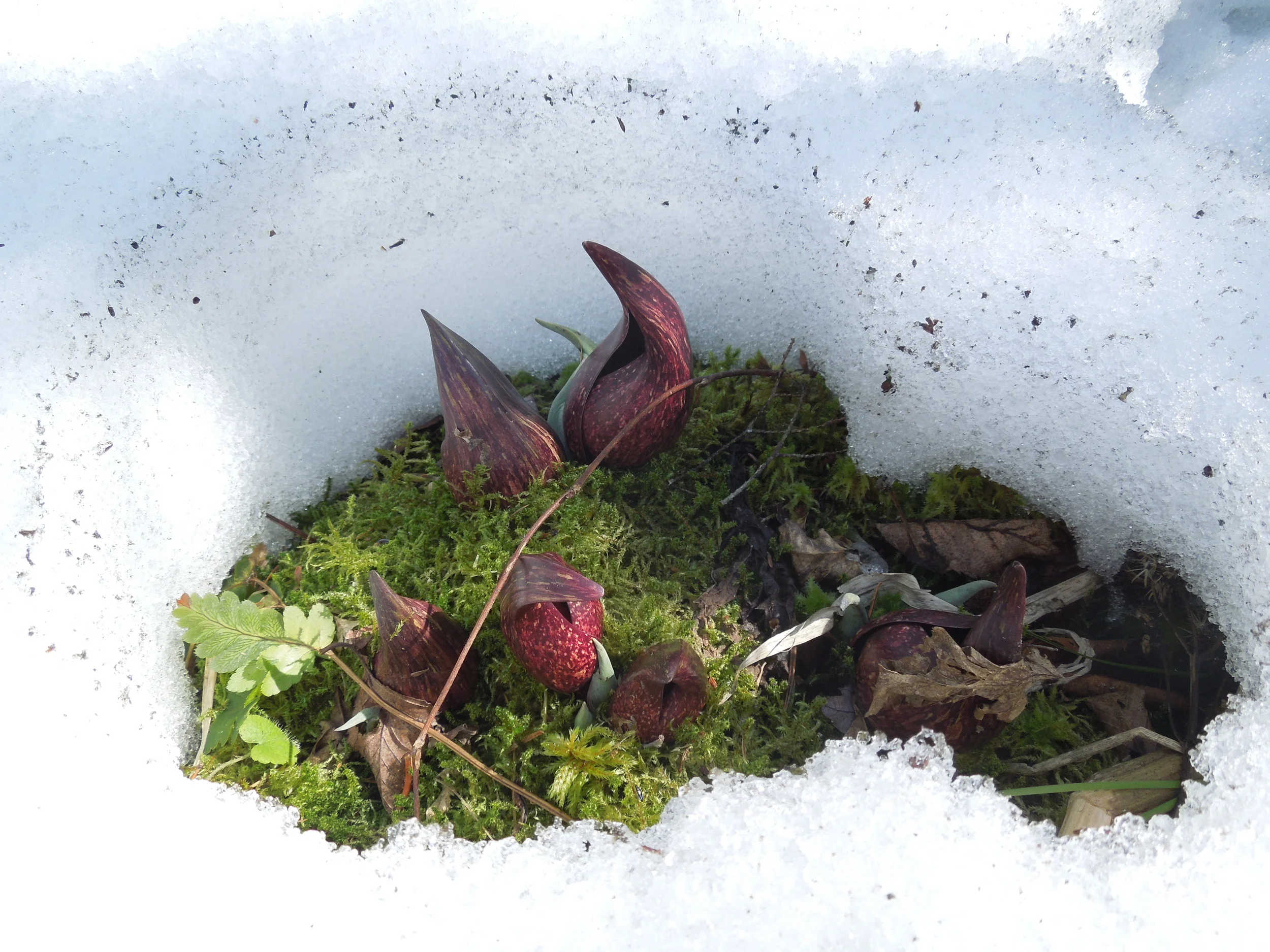
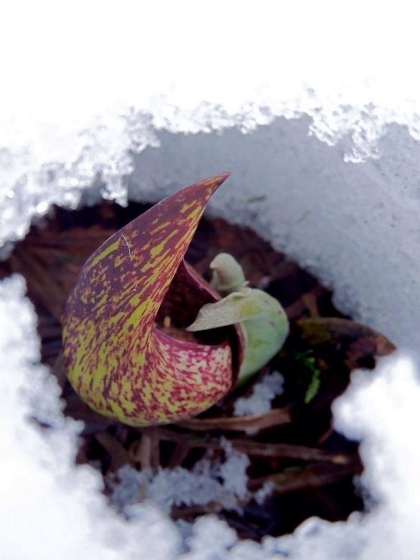
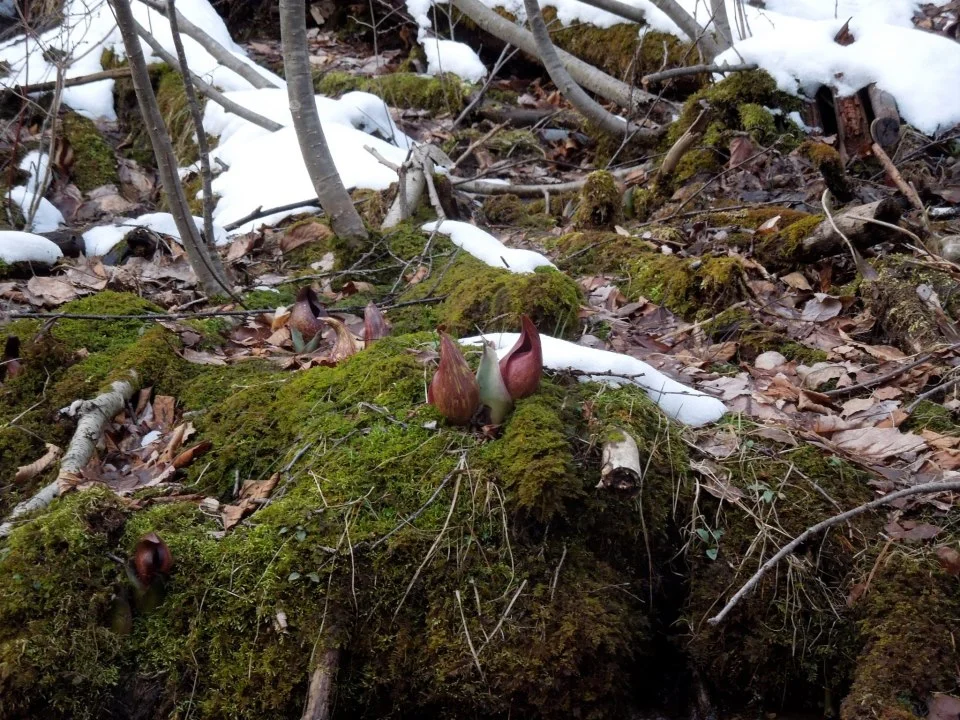
All around northeastern North America, a strange smell is starting to hang in the air. The skunky odor could easily be mistaken for an actual skunk but it isn't quite that strong. Some say garlic is a more apt description. If you are in a wet area you may notice small chimneys in the snow or what looks like a red and yellow parrot beak poking up from the ground. The smell gets stronger as you bend down to get a closer look. What you are seeing is Symplocarpus foetidus, better known as eastern skunk cabbage.

Skunk cabbage is a true spring wildflower. It is also one of those small groups of plants that can generate their own heat. This aroid can literally melt its way through the snow cover. Skunk cabbage hails from the same family of plants as the titan arum, Araceae. The inflorescence emerges in early spring, oten before the snow (if there is any) has had a chance to melt. Using heat generated via a unique form of metabolic activity, the inflorescence can reach temperatures of 15-25°C (59-77°F).

So, why the heat and smell? Well, if you like to bloom before the snow melts, you better hope you can at least melt through some of it. In deeper areas, skunk cabbage flowers create chimneys in the snow, which helps channel the scent up into the air. Though it may seem surprising, there are in fact insects out and about during the early days of spring. The smell attracts pollinators such as carrion flies and gnats. The heat also aids in volatilizing the odor, thus causing it to spread out farther. By blooming this early, skunk cabbage assures that its flowers get a majority of the attention.

After flowering is finished, the plant then throws up its large, green, elephant ear leaves. They are unmistakable. As the plant continues to grow throughout the season, its roots contract into the soil, digging the plant deeper and deeper. In effect, skunk cabbage grows down, not up. This is advantageous if you live in an area prone to flooding. The deeper you go, the harder it is to get pulled out.

I love this plant. It is wonderful to see its blooms poking up from underneath the snow. After so many months of drab colors and short days, this harbinger of spring is a breath of fresh, albeit stinky, air.

Further Reading: [1] [2] [3] [4] [5]
The Largest Seed in the World

Photo by Reed Wiedower licensed under CC BY-SA 2.0

Photo by Reed Wiedower licensed under CC BY-SA 2.0

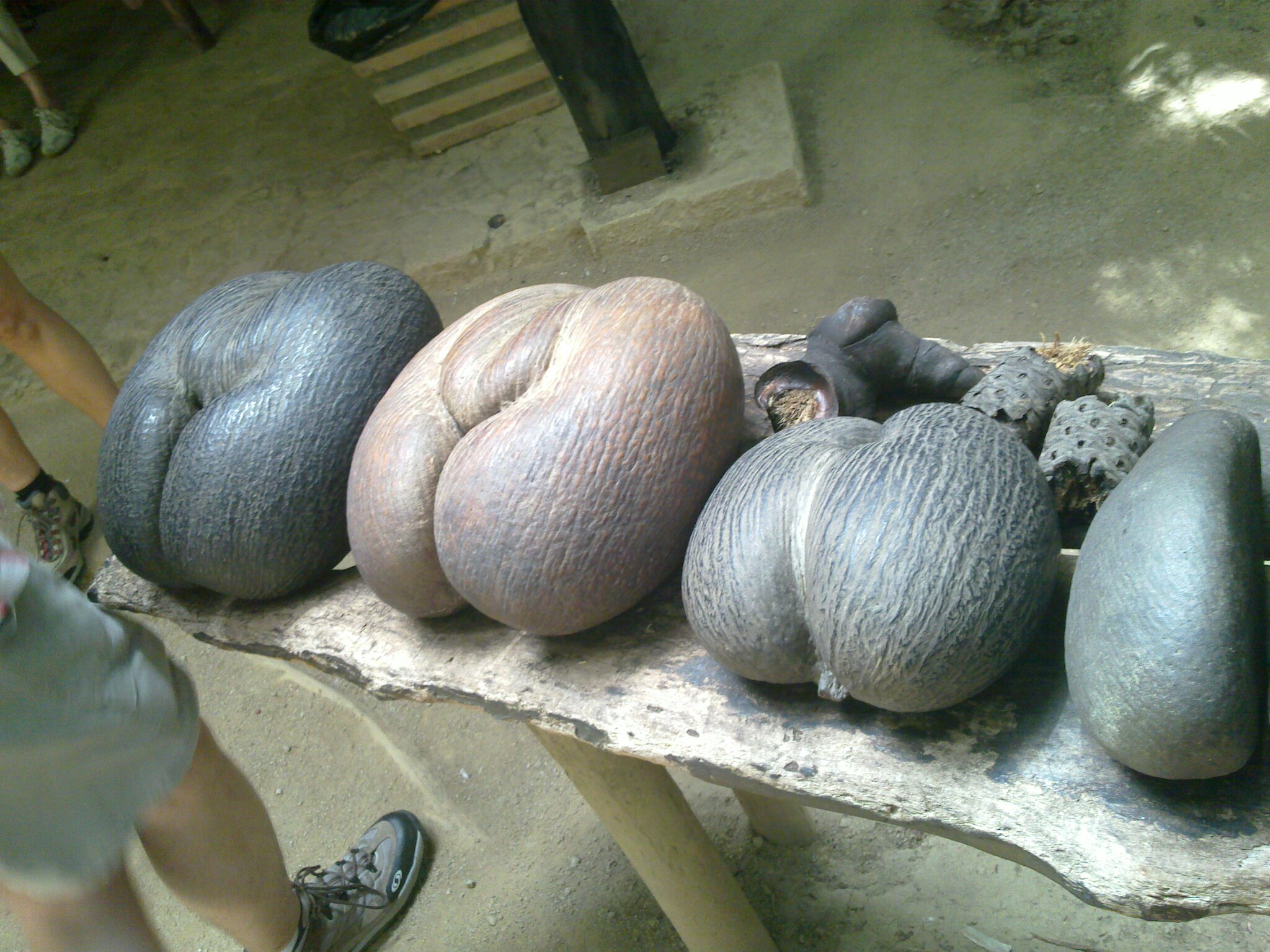
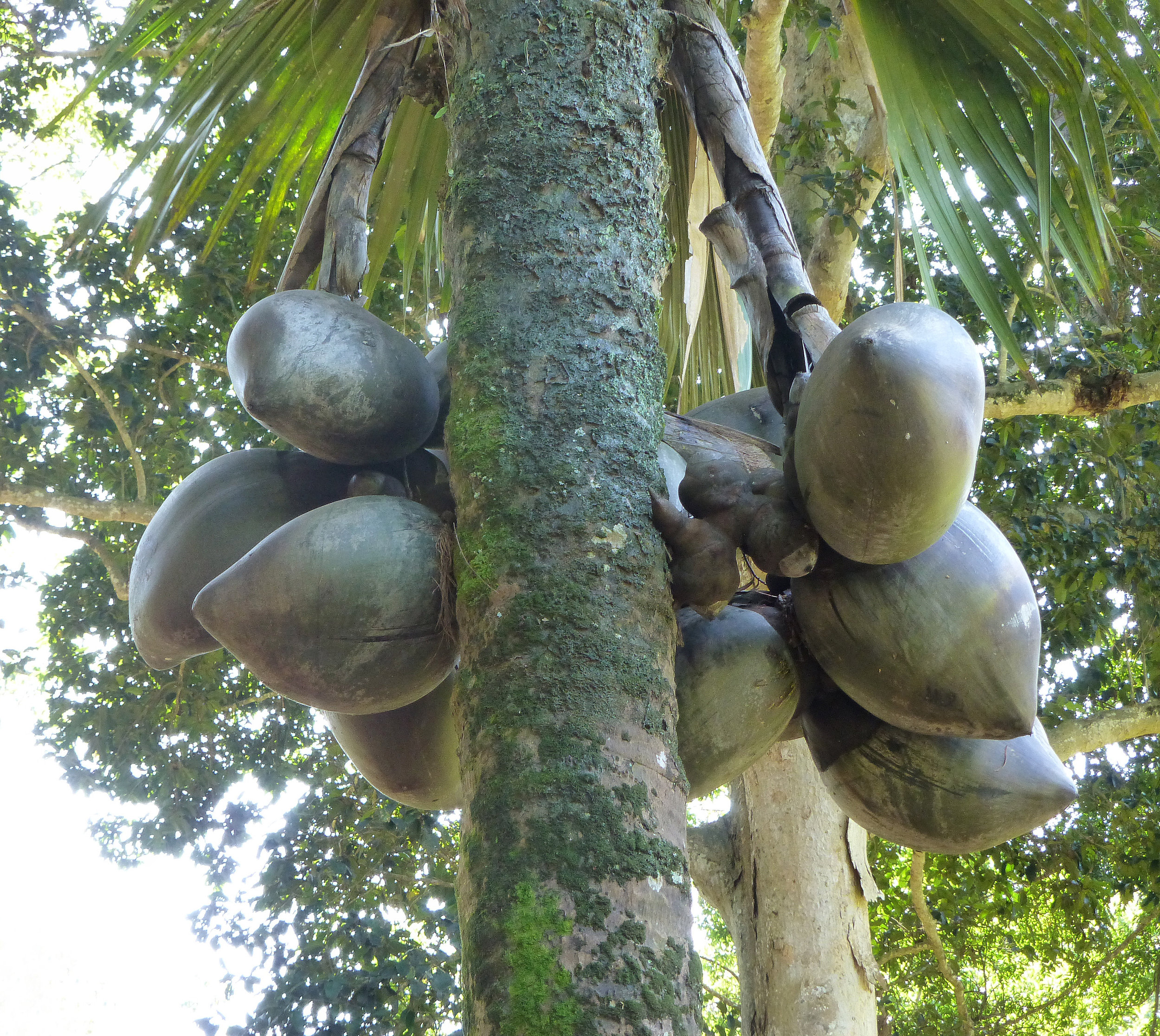
For Lodoicea maldivica, better known as coco de mer, producing the largest seeds in the world may seem like a cool fact for the record books but it certainly has its drawbacks. However, as with anything in nature, selection would not allow for wasteful traits to be passed on. Costs must be offset by a reproductive advantage on some level. A recent study looked at what these tradeoffs might be for L. maldivica and what they found is pretty incredible.

With seeds clocking in at upwards of 30 kg (66 lbs.) one has to wonder what L. maldivica is up to. It was long thought that, like the coconut, seeds of this palm must be dispersed by water. However, they are simply too dense to float. Instead, seed dispersal for this peculiar species of palm is actually quite limited. They simply fall from the tree and germinate below the canopy.

Photo by Wendy Cutler licensed under CC BY 2.0

Photo by Wendy Cutler licensed under CC BY 2.0

This may explain why L. maldivica is endemic only to the islands of Praslin and Curieuse in the Seychelles. It's not just the seeds that are huge either. The female flowers, which are borne on separate trees than the males, are the largest female flowers of any species of palm. At 10 m (32 ft.) in diameter, the leaves are also massive, fanning outwards on petioles that can reach 2 m to 4 m (6.5 - 13 ft) in length. It goes without saying that L. maldivica is a palm full of superlatives.

Counterintuitively, the habitats in which they grow are notoriously low in nutrients. Why then would this palm invest so much energy into growing these gigantic structures? Because they tend to germinate and grow beneath their parents, the offspring of L. maldivica would appear to be at a disadvantage from the start. A recent study suggests that the answer lies in those massive leaves.

Researchers found that the areas directly beneath the adult trees were wetter and had more soil nutrients compared to the surroundings. As it turns out, L. maldivica modifies its own habitat. Those massive leaves do more than just collect sun, they also act as giant funnels. In fact, most of the water that rains down onto the canopy is collected by the leaves. In this way, everything from water, debris, and even excess pollen is funneled down to the base of each tree.

Photo by Ji-Elle licensed under CC BY-SA 3.0

Photo by Ji-Elle licensed under CC BY-SA 3.0

Not only is this good for the parent tree, it is also a boon for the dispersal-limited offspring. Coupled with the considerable endosperm in those massive seeds, all of this additional water and fertilizer means that seedling L. maldivica enter into the world at a distinct advantage over many other plants on the islands. All of that endosperm serves to help fuel seedling growth while it is still shaded by its parent.

Sadly, over-harvesting of the seeds has crippled natural reproduction for L. maldivica. This coupled with habitat destruction paints a bleak picture for this record-holding palm. It has already been lost from three other Seychelles islands. Luckily there are many conservation efforts underway that are aimed at saving L. maldivica. The Seychelles are now considered a World Heritage Site and many of the wild populations of this palm lie within national parks.

Photo Credits: [1] [2] [3]

Further Reading: [1] [2]

A Tenacious Little Mustard

image.jpg

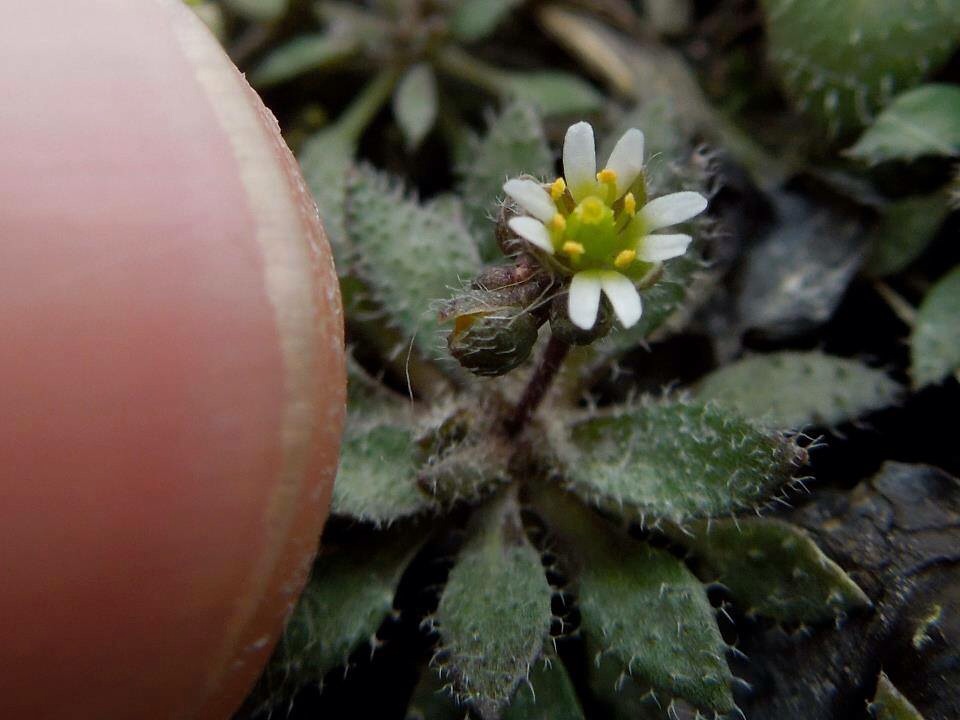
If you are looking to place a bet on what the first flower sighting of early spring will be, then a safe pick would be Draba verna. Known commonly as early Whitlow grass, the small stature of this tenacious mustard is quite deceiving. It is one tough cookie, certainly one of the toughest little plants I know. Though it is originally native to parts of Eurasia, encountering this little beauty after a long winter is a welcome treat. 

If you want to find this species, you have to look where humans are. It excels in disturbance. I most often see it growing along the edges of gravel parking lots. It is quite variable in appearance but is nonetheless recognizable due to its early flowering period and bright white, four petaled flowers. It is not uncommon for there to be plenty of snow still on the ground when these little plants begin throwing up flower buds. 

Like most winter weary denizens of the northern hemisphere, the flowers of Draba verna only seem to open on during bright, sunny days. There is good reason for this too. For starters, the few pollinators active this early in the season are only really out on fair weather days. Also, since dark and cloudy spring days are often cold and full of precipitation, it isn't worth the risk of damaging sensitive flower parts from wind, rain, or frost. Plants set seed by late spring but by that time ambient temperatures are too high for successful germination. Instead, seeds require a warm summer dormancy before they will begin germinating later in the fall. Sometimes the most interesting things come in very small packages. 

Further Reading:
http://plants.usda.gov/core/profile?symbol=DRVE2

http://www.jstor.org/discover/10.2307/2483459?sid=21106125483663&uid=2&uid=4

Salamanders in the Trees

Photo by John P Clare licensed under CC BY-NC-ND 2.0

Photo by John P Clare licensed under CC BY-NC-ND 2.0

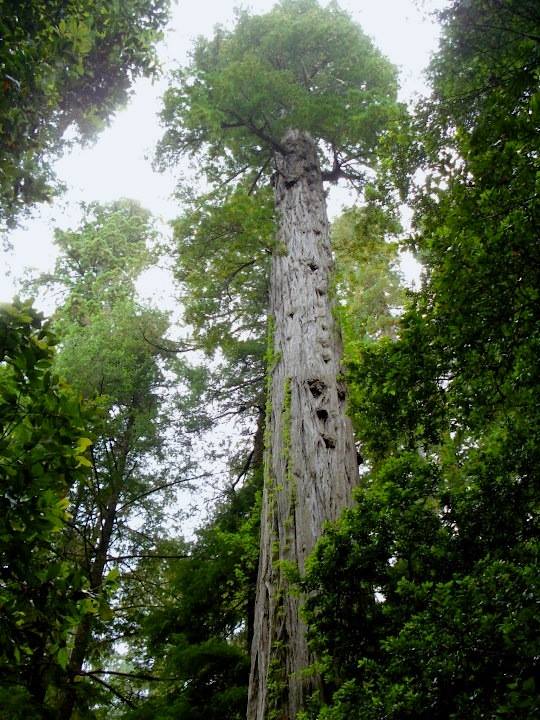
Redwoods are tall. Known scientifically as Sequoia sempervirens, this species is home to the tallest tree known to science. Even the branches of most redwoods would put all but the tallest trees to shame. It is no wonder then that the branches and crotches of these trees can sustain a lot of canopy debris. As debris builds up, it soon begins supporting entire floral communities of ferns, forbs, shrubs, and even other trees.

These epiphytic communities are hot spots of diversity among the redwood canopy. The sheer mass of these mats, with some weighing hundreds of kilograms, means they can hold a lot of water. Organisms that otherwise could not exist in such exposed areas find a safe haven free of desiccation. Everything from microbes to aquatic copepods call these places home. It is no wonder then that predators also haunt these microcosms.

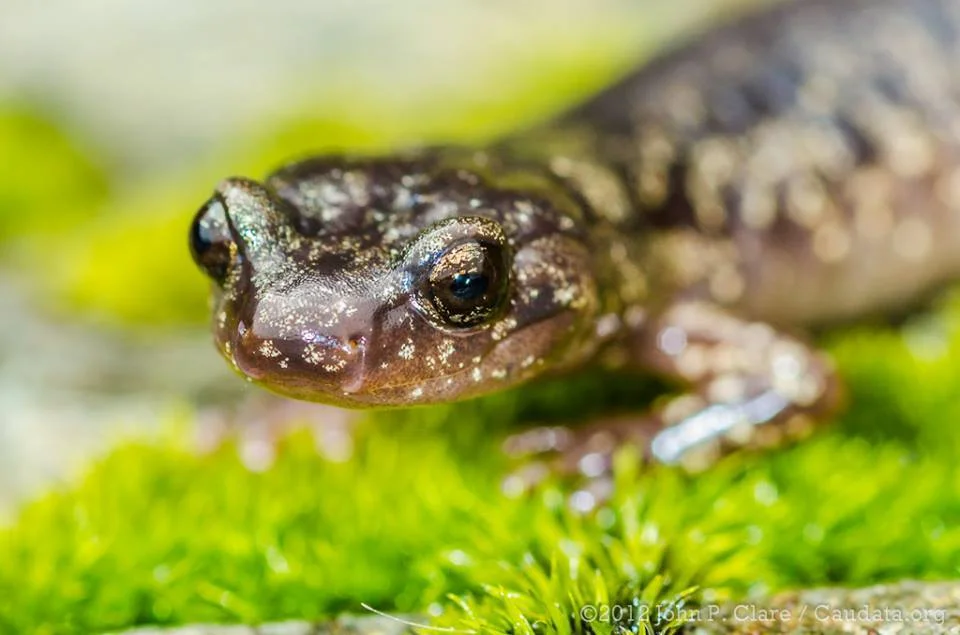
It has been discovered that at least one species of salamander, the wandering salamander (Aneides vagrans) lives at least some of its life in redwood canopies. Though it is not solely a denizen of these trees, they have been found living among these mats during both the dry and wet seasons leading some researchers to believe that at least some individuals live out their entire lives up in the canopy. The mats hold so much water that the microclimates around them stay favorable for these amphibians year round. As roots decay within the mat, small interconnected tunnels form, offering even more protection in an otherwise chaotic environment.

Cashews

Photo by Peter Nijenhuis licensed under CC BY-NC-ND 2.0

Photo by Peter Nijenhuis licensed under CC BY-NC-ND 2.0

I love cashews. I can't seem to get enough of them. Did you know that when you eat a cashew, you are only experiencing part of the fruit? Indeed, cashews are kind of weird and many of us in temperate climates never get a chance to fully appreciate what the cashew has to offer. You may also be surprised to learn that cashews and poison ivy are cousins.

Cashews or Anacardium occidentale as they are known scientifically are large trees belonging to the family Anacardiaceae. This makes them cousins of plants like poison ivy, sumac, pistachio, and mango (just to name a few). Like other members of this family, cashews produce chemicals that can cause severe skin allergies in humans. For cashews, this chemical is known as anacardic acid and is similar in its chemical makeup to urushiol. Because of this, cashews must be roasted before they can be sold. 

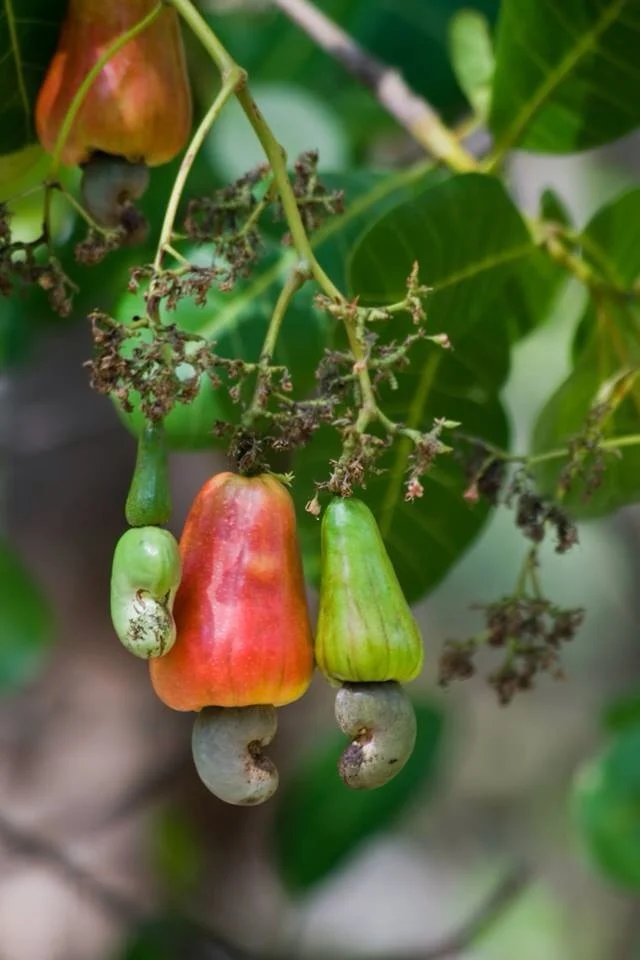
As I stated above, the cashew "nut" is only part of the reproductive effort of this species. They are not nuts in the true sense but rather a drupe similar to the pit of a cherry or peach. The drupes themselves hang from the bottom of a much larger accessory fruit called a cashew apple. This pear-shaped pseudocarp is quite juicy and does not ship well. Though it is a delicacy in tropical climates where these trees are cultivated, it rarely makes it to more temperate climates.

Cashews are currently native only to Brazil but fossils found in Eocene deposits from Germany hint at a much wider distribution. It is now believed that the group that gave rise to cashews originated in Africa and subsequently migrated outwards while South America was still attached. Today, the cashew is regaining some of its lost ground thanks to its agricultural importance. 

Speaking of agriculture, cashews are offering an interesting model for more sustainable farming practices. Cashews, like most other crops, are grown in large-scale monocultures. Thousands of gallons of pesticides are used on these crops to stave off pests. However, the pesticides kill more than just unwanted insects. What is interesting about cashews is that they naturally produce extrafloral nectaries (glands that secrete nectar) on their leaves. In the wild these glands attract ants looking for a high energy meal. The ants in turn guard these nectar sources from anything that may interfere with their feeding. As such, many potential pests are driven off by the ants. Research is being done to compare the rates of insect pests between cashew plantations that use pesticides and those that don't. It could be possible that by allowing ants to guard these nectar sources, farmers could avoid the use of pesticides to control insect damage. More work is needed but cashews are certainly a great model for developing such a system. 

Photo Credit: Peter Nijenhuis (http://bit.ly/1A0MmLI)

Further Reading:

http://www.jstor.org/stable/10.1086/520728

http://www.amjbot.org/content/85/6/835.full.pdf

Microclimates

image.jpg

How can we know exactly when and where a seed will germinate? The simple answer is we can't. Much to the chagrin of anyone who has ever tried to grow plants from seed, there seems to be an endless amount of obstacles between deposition of seed and whether or not it will germinate. At the end of the day, it seems that the land will decide where a plant is going to grow. Because of this, the seed to seedling stage of a plants life is the first and greatest bottleneck in the patterns we see in plant communities around the world. 

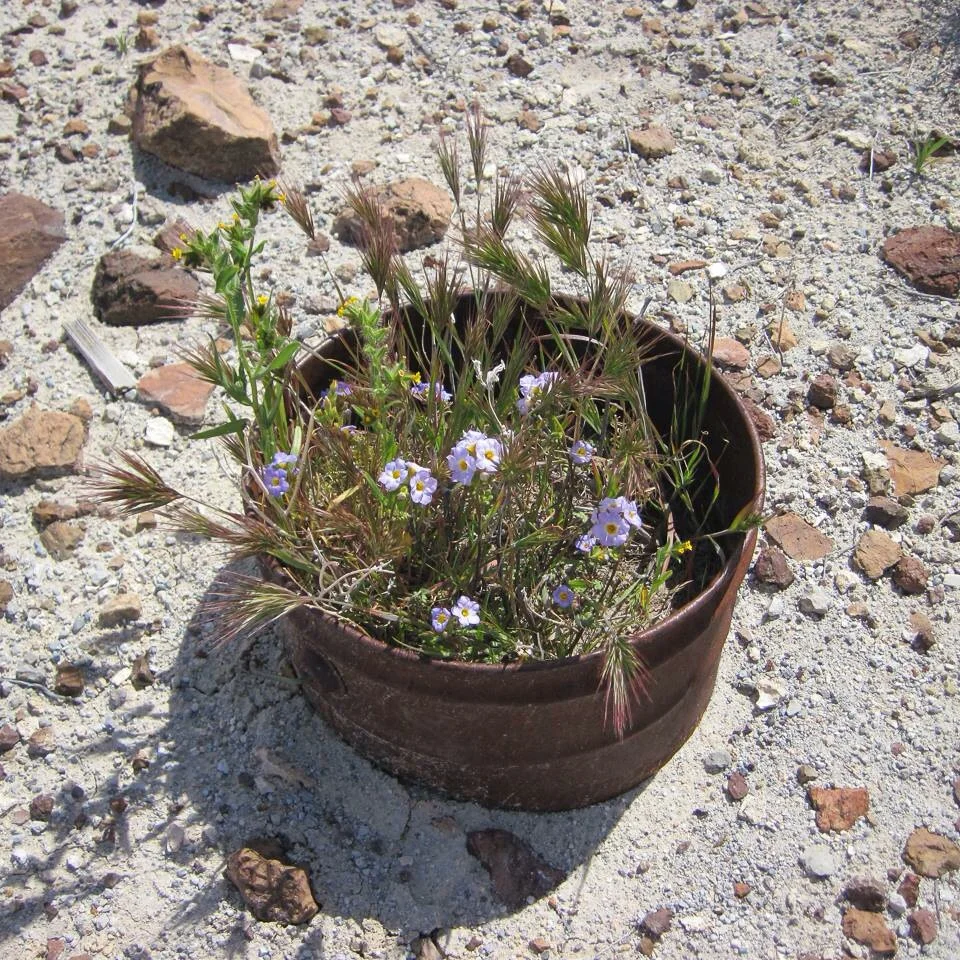
For some plants its easy. If seed makes it to a location, the plants will grow. For many (and I mean many) plant species, habitat means everything. Anyone interested in growing plants must never overlook microclimates. We all know what climate means. At least we should. Just like entire regions can have their own climates, so too can different parts of the landscape. It could be that snow melt happens slower in one area, making the ground slightly more saturated. Perhaps there is a layer of clay underneath helping to hold water longer. If you are a high desert or alpine species, perhaps a small rock or boulder provides just enough protection from violent winds. It could even be a clump of moss or a shrubs that shelters a seedling long enough for it to establish itself. Heck, it could just as easily be a rusted out old can in the middle of the Mojave Desert.   

The are limitless variations on the theme but they are all too often overlooked. There are few ways of predicting what will work and what won't. On more than one occasion I have forgotten about seeds planted years ago only to have the plants suddenly appear out of nowhere. As with everything in nature, these things are dynamic. What ecology is in need of are more studies that investigate the recruitment limitations of individual or groups of species. We need ecologists speaking with restoration practitioners and vice versa. We need to keep in mind that organisms can inform theory and then some. 

Photo Credit: Zachary Cava (https://www.flickr.com/photos/101789078@N06/)

Further Reading:

http://www.jstor.org/stable/1514074?seq=1#page_scan_tab_contents

A Real Cliffhanger

image.jpg

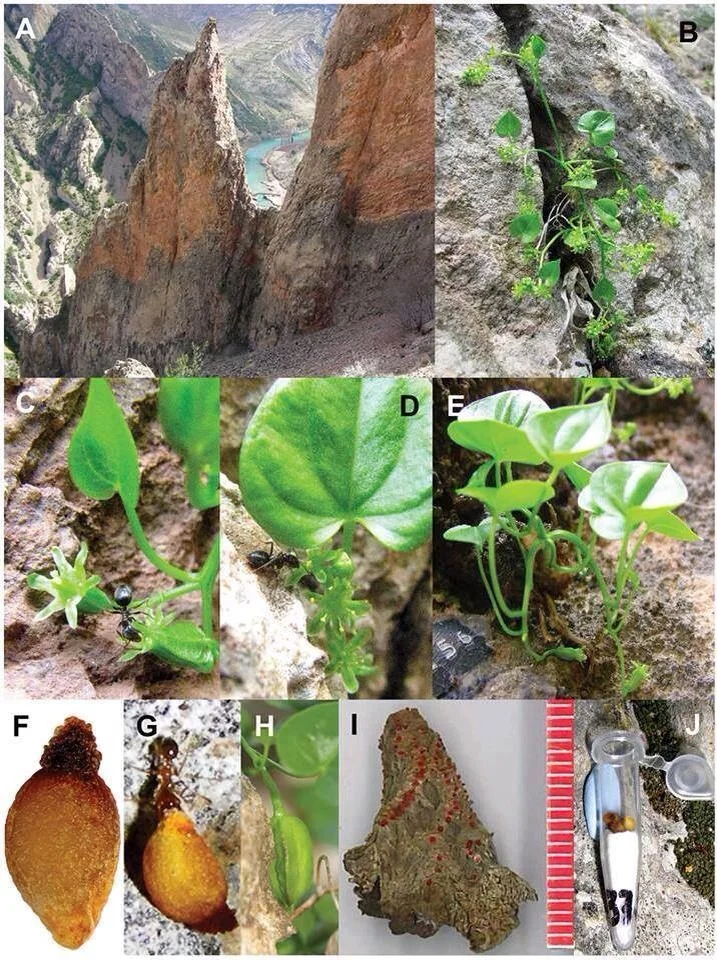
Cliff faces are some of the most interesting habitat types on the planet. Few places in the world are as inhospitable. They are low in nutrient levels, they have limited space for root growth, and offer very little for recruitment. Cliffs do offer some benefits though. They are often sheltered from extremes in climate and can be inaccessible to large herbivores. With that in mind, it is understandable how they can be a haven for some very unique and equally extreme life forms.

One such life form that comes to mind is Borderea chouardii. This strange plant grows only on a couple cliff faces in the Pyrenees mountain range in Spain. It is critically endangered as it represents a relict population of a once tropical Tertiary environment. What makes it more interesting is the double mutualism it has formed with ants. As we have touched on a few times in the past, ants are often recruited as seed dispersers. Borderea chouardii does just that. In many of the observed cases of seed dispersal, researchers found that ants were the culprit. Interestingly enough, a majority of the remaining cases were due to the plant literally planting its own seeds. Known as "skototropism," the stems of the seed cases grow into dark crevices, which are perfect spots for seed to germinate and grow. Surprisingly, gravity plays a very small role in the reproduction of this species.

Let me back up for a bit here. I did mention this plant has a double mutualism with ant species after all. Based on years of observation, researchers found that ants actually served as the most efficient pollinator for Borderea chouardii. This is not a common thing. Generally speaking, ants do not make for effective pollinators. Most species have glands that secrete substances that destroy pollen. However, in a mountainous cliff setting, winged insects are relatively rare, so Borderea chouardii and ants have evolved together into this oddball double mutualism. To add an extra layer of complexity to the system, dare I mention that it isn't just one ant species that Borderea chouardii relies on, but rather 3. Two ant species serve as the pollinators while a a third ant species serves as a seed disperser. This is one risky plant species. The plant gets around the rarity of successful recruitment by living a long time. Individual plants can live upwards of 300 years, which is quite possibly the record for a non-clonal forb species.

Photo Credit: María B. García, Xavier Espadaler, Jens M. Olesen

Further Reading:

http://www.plosone.org/…/info%3Adoi%2F10.1371%2Fjournal.pon…

http://www.iucnredlist.org/details/162110/0

Seeds That Plant Themselves

Photo by Matt Lavin licensed under CC BY-SA 2.0

Photo by Matt Lavin licensed under CC BY-SA 2.0

With March (and hopefully spring) just around the corner here in the northern hemisphere, I have been thinking a lot about my garden plans. Winter is a time to get your hands on seeds. What a wonderful thing seeds are. They carry within them the genetic blueprints for building a plant. They are also the means by which most plants get around. Each seed has the potential to start a new generation somewhere else. We are well aware of the myriad ways in which plants equip their seeds for dispersal but the investment doesn't stop there. Many plant species produce seeds that maximize the likelihood of successful germination once dispersed. The ways in which this is done are as diverse as they are interesting.

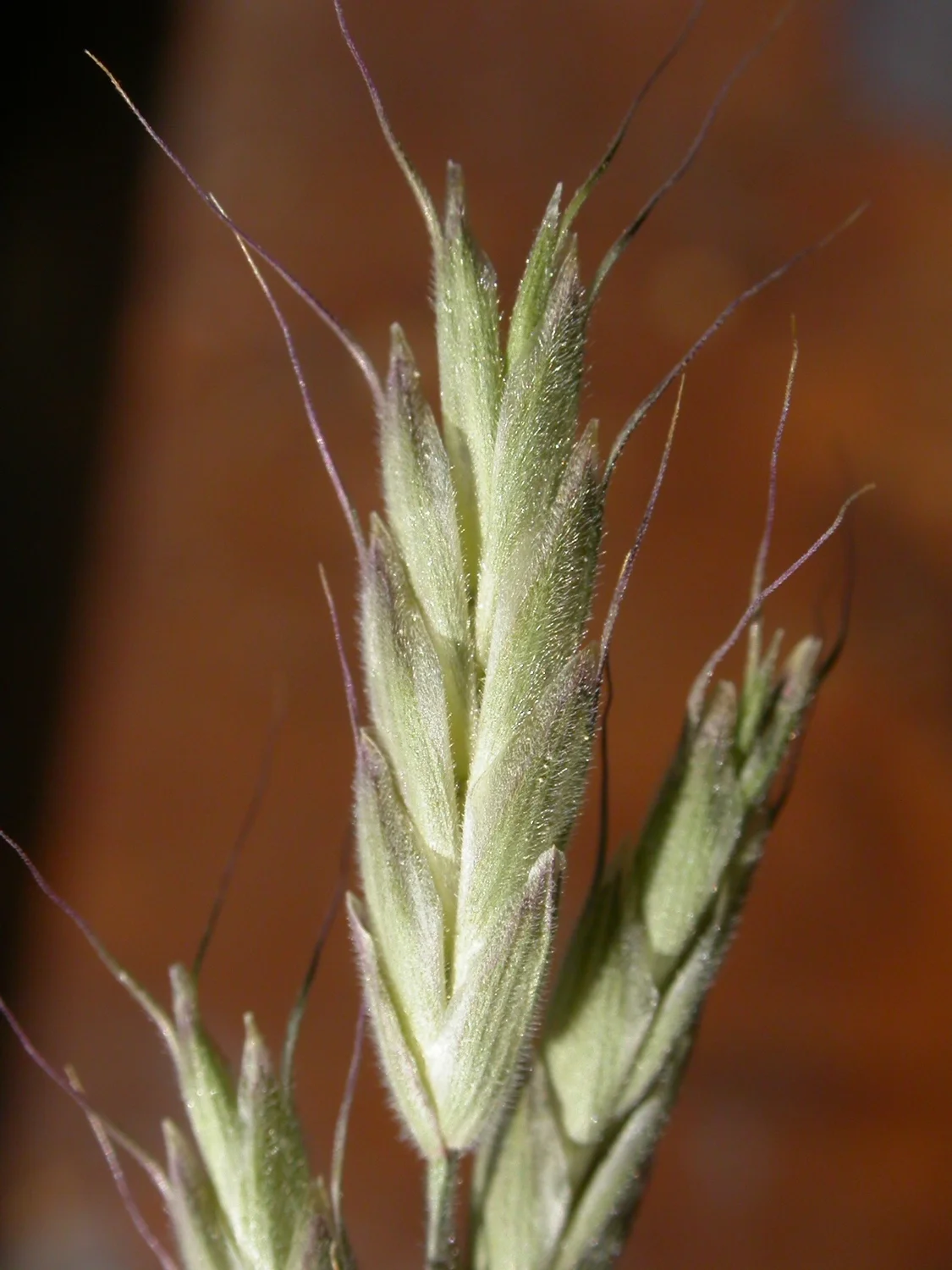
One of the most remarkable examples of this involves hair-like structures called awns. Awns can be bristly and thus can become tangled in the fur or feathers of an animal. Once on the ground, some awns serve a different purpose. They can be rather sensitive to humidity. This is referred to as "hygroscopic." Hygroscopic awns will begin to twist when humidity levels rise. This movement will actually drill the seed down into the soil where it can safely germinate. Many grasses as well as some geranium seeds behave in this way.

Other seeds have awns or pappuses (hairs) that point backward at an angle which, once driven into the soil, prevent the seed from being pushed back out. This is especially useful when the young roots begin pushing their way down into the soil. Others have pappuses that expand and contract with humidity, placing the seed at a favorable angle for germination when moisture levels are just right. These adaptations are commonly found in species of Leontodon, Taraxacum, Sonchus, Senecio, and Erigeron. Some plants even produce seeds with hairs that become mucilaginous when wet, literally gluing them to the surrounding soil. This adaptation can be seen in Polemonium viscosum.

A seed is an investment for the future. Being static organisms, plants rely on subsequent generations to maintain their presence in and migrate into new habitats. Countless seeds are produced and only a handful will ever survive to flower and repeat the process. Despite these odds, plants are nonetheless incredibly successful.

Photo Credit: Matt Lavin (http://bit.ly/1Bnh4oq)

Further Reading:
http://www.jstor.org/stable/2258879…

http://www.jstor.org/stable/1940966…

Fly Guild

Photo by Rictor Norton & David Allen licensed under CC BY 2.0

Photo by Rictor Norton & David Allen licensed under CC BY 2.0

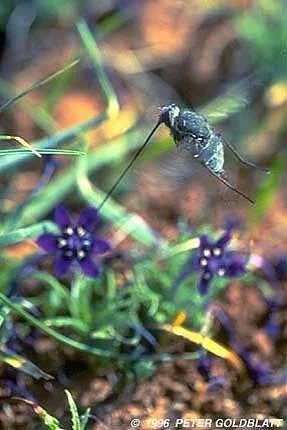
Lapeirousia oreogena grows in the western portion of South Africa. Though it may be difficult to tell by looking at it, this little plant is a member of the iris family. Decked out in its striking shade of purple, the white spots on its petals really stand out. Shaped like arrowheads, it would almost seem as if the plant was trying to advertise the perfect place to grab a sip of nectar. Indeed, that is exactly what they are doing. Those white arrows serve as guides for a rather peculiar pollinator.

Prosoeca peringueyi is a pretty incredible little fly. For starters, its proboscis is 2 inches in length! It looks rather awkward buzzing around a patch of these beautiful irises. Seeing it in action may change your mind though. It is truly an ariel acrobat as it maneuvers itself above a flower and expertly dips its long proboscis down the slightly longer nectar tube of the flowers. How is the fly so adept at hitting its target every time? The answer lies in those white arrows. 

A team of researchers performed a series of experiments in which they covered up the white arrows of some flowers. As it turned out, the flies still approached the flowers but, with no arrows visible, successful insertion of the proboscis was drastically reduced. The arrows serve as a guide for the flies to tell them exactly where they are going to be able to get an energy rich drink.

How exactly does a system like this evolve? A clue to the answer lies in the fertility of these irises. Plants that aren't visited sequentially by these long-tongued flies do not set seed. As it turns out, the plants need the flies to be just out of reach of the bottom of the nectar tube for efficient transfer of pollen. Over time, an evolutionary arms race developed in which the proboscis of the flies gradually got longer to get as much nectar as possible and thus selecting for irises with longer and longer flower tubes.

This system seems to have had an effect on other plant species growing in this region too. Lapeirousia oreogena is only in bloom for a small window of time during the growing season. What happens to these long tongued flies when this window is closed? Interestingly, other plant species form what is referred to as a guild with L. oreogena. They all cater to these flies with varying lengths of elongated nectar tubes. In total, at least 28 plant species in this region have seemed to have converged on this pollination syndrome. To see more of these plants, click here.

Photo Credits: Rictor Norton, David Allen (http://bit.ly/1jzvHeK) and Peter Goldblatt

Further Reading: [1] [2] [3] [4] [5]

Noble Rhubarb

The Himalayas. If there was ever a natural wonder worthy of the title "epic" it would certainly be these towering peaks. Home to some of the tallest points on our planet, these ragged peaks are best known for the near insurmountable challenges faced by adventurers from all around the world. Considering their elevation, it would seem that permanent life simply isn't possible on these mountains. However, this could not be further from the truth. Among sprawling shrubs and diminutive herbs towers one of the most peculiar plants known to the world. To make things more interesting, it is a relative of rhubarb, a denizen of gardens and pies throughout much more hospitable climates. 

Rheum_nobile.jpg

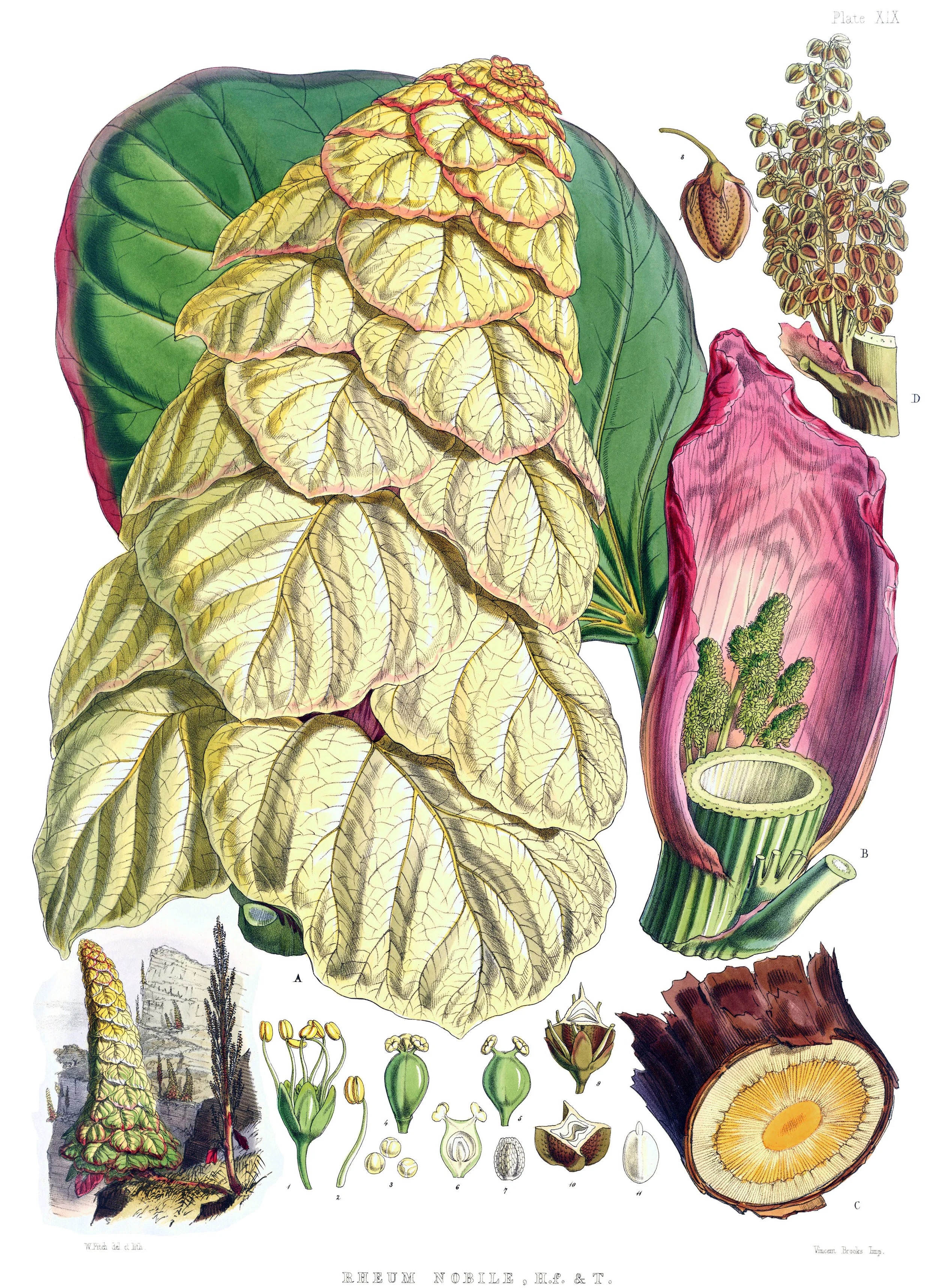
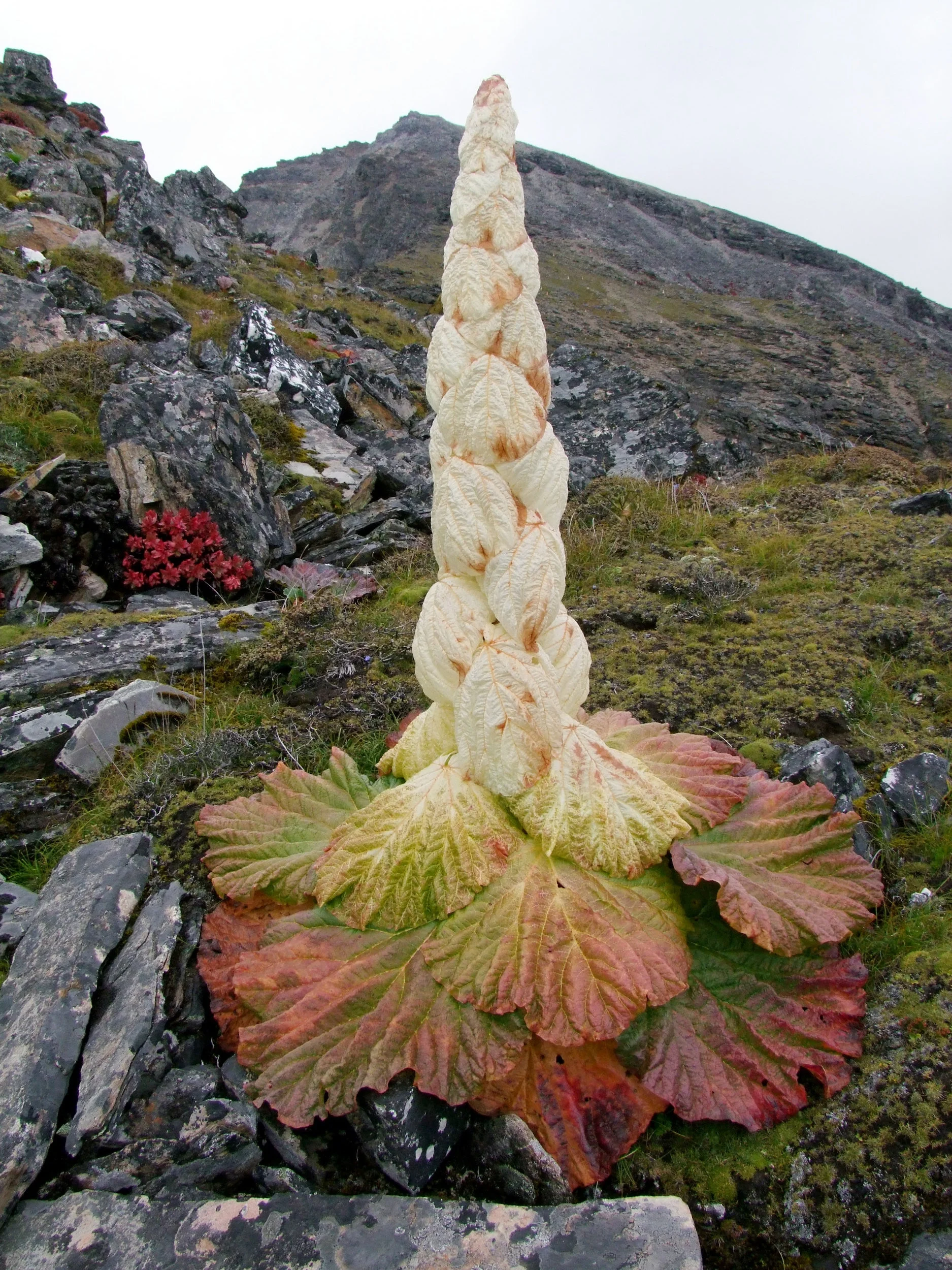
Meet the noble rhubarb, Rheum nobile. Growing at elevations between 13,000 and 15,000 feet (4000–4800 m), this species is quite deserving of its noble status. Plants growing at such elevations face some serious challenges. Temperatures regularly drop well below freezing and there is no shortage of damaging UV radiation. As with most alpine zones, a majority of plants cope with these conditions by growing prostrate over the ground and taking what little refuge they can find behind rocks. Not Rheum nobile. This member of the buckwheat family can grow to heights of 6 feet, making it easily the tallest plant around for miles. 

The most striking feature of this plant is the large spire of translucent bracts. These modified leaves contain no chlorophyll and thus do not serve as centers for photosynthesis. Instead, these structures are there to protect and warm the plant. Tucked behind the bracts are the flowers. If they were to be exposed to the elements, they would either freeze or be fried by UV radiation. Instead, these ghostly bracts contain specialized pigments that filter out damaging UV wavelengths while at the same time creating a favorable microclimate for the flowers and seeds to develop. In essence, the plant grows its own greenhouse.

Photo by Mark Horrell licensed under CC BY-NC-SA 2.0

Photo by Mark Horrell licensed under CC BY-NC-SA 2.0

As a result, temperatures within the plant can be as much as 10 degrees warmer than the ambient temperatures outside. At such elevations, this is a real boost to its reproductive efforts. Even more of a challenge is the fact that at this elevation, pollinators are often in short supply. Plants have to do what they can to get their attention. Not only does Rheum nobile offer a visual cue that is in stark contrast to its bleak surroundings, it also goes about attracting pollinators chemically as well.

Rheum nobile has struck up a mutualistic relationship with fungus gnats living at these altitudes. The plant produces a single chemical compound that attracts the female fungus gnats. The females lay their eggs in the developing seeds of the plant but, in return, pollinate far more flowers than they can parasitize. These organisms have managed to strike a balance in these mountains. In return for pollination, the fungus gnats have a warm place to raise their young that is sheltered from the damaging UV radiation outside. 

Photo Credits: [1] [2] [3]

Further Reading: [1] [2] [3] [4] [5]